Horse Sensitive After a New Saddle Pad? What Owners Should Check
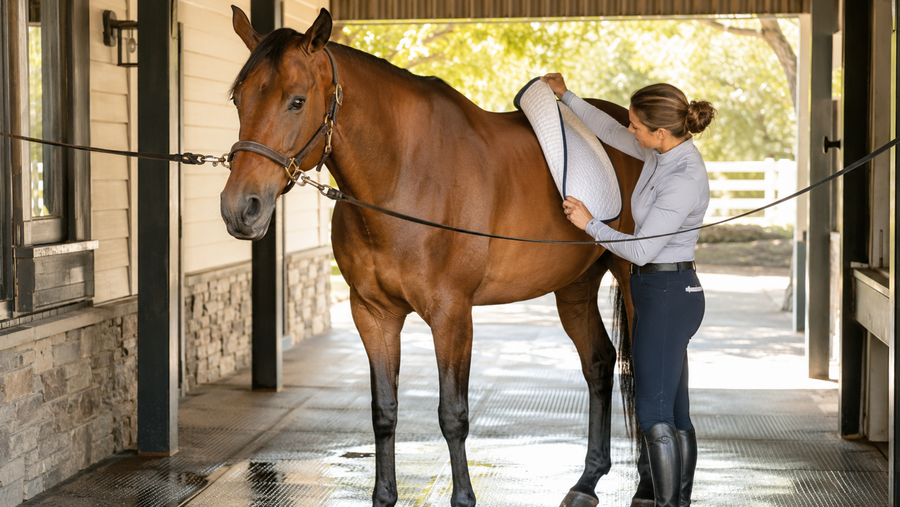
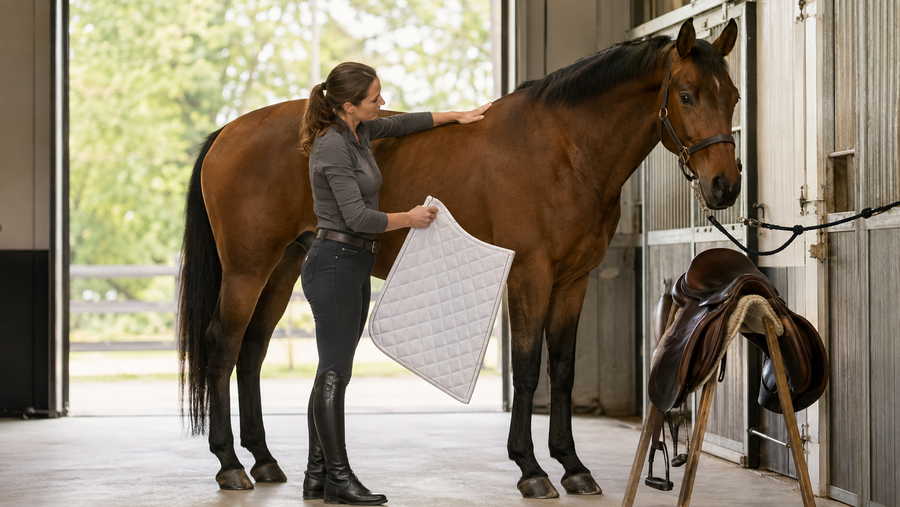
A practical horse health guide for sensitivity after a new saddle pad: sweat marks, dry spots, pad edges, saddle balance, and when to call for help.

Dry lots can make hoof wall chips show up fast. Hard ground, sharp gravel, trim timing, moisture swings, and workload all affect the hoof before owners see a real problem.
If your horse’s hoof wall is chipping in dry lots, check trim timing, wall length, cracks, shoe fit, sole tenderness, digital pulse, footing, water access, and whether chips are cosmetic or affecting soundness. Call your farrier for repeated chipping, cracks, loose shoes, or hoof balance concerns, and call your veterinarian for lameness, heat, pulse, or pain.
Dry ground is unforgiving. A hoof that was fine in spring mud may chip on summer hardpack. Chips can be minor, but they can also signal that trim timing, hoof balance, or environment needs attention.
Pick feet daily in dry weather. Photograph chips so you can track change. Talk with your farrier before the next appointment if the wall is breaking away faster than normal. Avoid waiting until a shoe is half gone or a crack has climbed.
Use What Does My Horse Need? when hoof clues appear, and use the Horse Health Library for practical hoof-care education.
Small chips can be cosmetic, but repeated chips, cracks, loosened shoes, heat, pulse, or lameness deserve professional help.
Call your farrier for hoof balance, trim, cracks, or shoe concerns. Call your veterinarian for pain, heat, pulse, or lameness.
Hooves tell the story of footing, trim, and workload. Read them before the chip becomes a crack.
A practical horse health guide for sensitivity after a new saddle pad: sweat marks, dry spots, pad edges, saddle balance, and when to call for help.
A practical horse health guide for fetlock puffiness after deep sand: heat, pain, symmetry, boot marks, footing depth, and vet red flags.
Heat rash under tack can involve sweat, friction, moisture, dirt, pressure, fit, or skin disease. Inspect the area and stop friction before reuse.
!