Horse Flinches When Brushed Over the Back: What to Check
A new grooming flinch is information, not attitude. Use this calm checklist to separate skin irritation, pressure sensitivity, tack clues, and veterinary red flags.

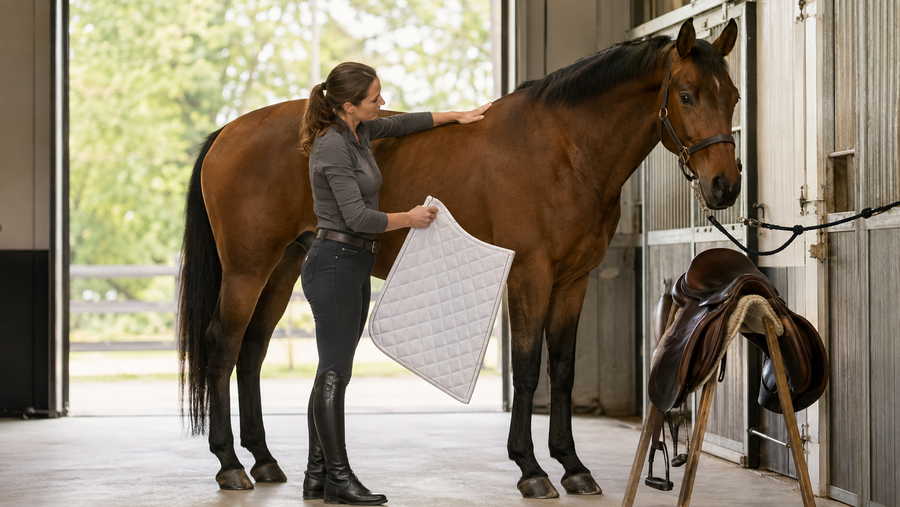
Wither soreness after a long ride can point to saddle fit, pad pressure, rider balance, hills, fatigue, or a horse that carried tension longer than usual. It deserves a hands-on check before the next ride.
If your horse is sore over the withers after a long ride, check saddle clearance, pad placement, sweat marks, hair rubs, swelling, heat, sensitivity, rider balance, terrain, and whether soreness repeats with the same tack. Call your veterinarian or saddle fitter for swelling, pain, open skin, repeated soreness, or movement changes.
The withers sit under constant motion and pressure. Long rides, hills, deep footing, poor pad placement, or a saddle that shifts can make the area tender. Sometimes the horse tells you by flinching during grooming. Sometimes the first clue is refusing to stand for saddling the next day.
Untack and check before the sweat dries. Run your hands evenly over both sides of the withers and back. If the horse reacts, shorten the next ride and inspect tack. Repeating soreness deserves a saddle fit conversation.
Use the Horse Health Library to understand post-ride checks. For appropriate external post-ride support, review the active horse liniment collection.
Saddle fit, pad pressure, long work, rider balance, hills, or back tension can all contribute.
Not until you understand the cause. Do not saddle over swelling, open skin, or clear pain.
Long rides leave evidence. Good owners read it before asking again.
A new grooming flinch is information, not attitude. Use this calm checklist to separate skin irritation, pressure sensitivity, tack clues, and veterinary red flags.
A practical horse health guide for sensitivity after a new saddle pad: sweat marks, dry spots, pad edges, saddle balance, and when to call for help.
A practical horse health guide for fetlock puffiness after deep sand: heat, pain, symmetry, boot marks, footing depth, and vet red flags.
!