


Jul 19, 2026
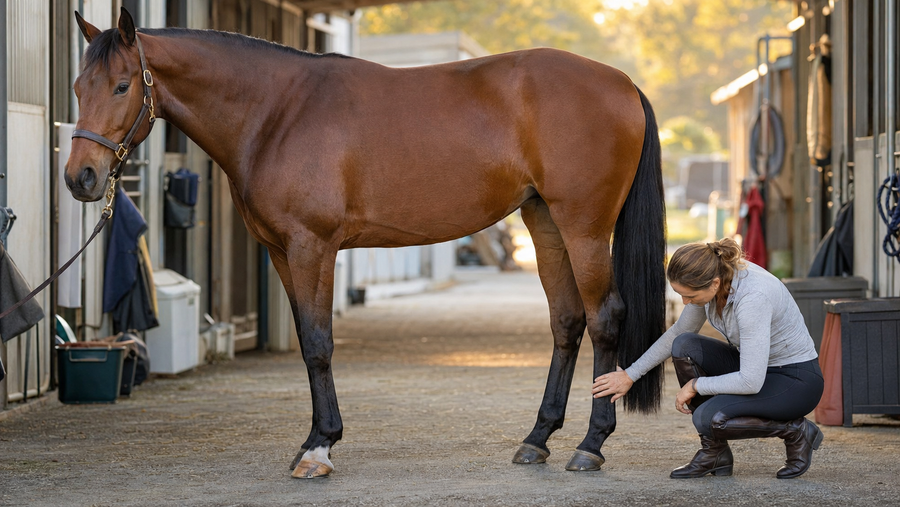
Horse Hind Legs Filled After Standing at a Show? What to Watch
Check symmetry, heat, pain, wounds, wraps, movement, hydration, and lameness when a horse’s hind legs fill after standing at a show.

Horse color guide
Flea-bitten gray describes a gray coat sprinkled with small pigmented speckles. The marks are normal color, not evidence of fleas or a skin disease, but the light coat still deserves careful grooming and skin inspection.
Quick answer: Look for stable, flat speckles that are part of the hair color. Treat new scabs, hair loss, swelling, raw skin, drainage, spreading lesions, or sensitivity as a separate skin concern.
A horse may be called dapple gray earlier and flea-bitten gray later. Both labels can describe different points in the same progressive graying process.
Good grooming makes the normal pattern easier to see and gives the rider a better chance of noticing real skin changes early.
Do not diagnose a skin condition from coat color or a photograph alone. Distribution, texture, pain, history, and laboratory testing may matter.
The goal is a comfortable, healthy horse. A bright coat follows from that foundation.
Products support routine care. Lameness, severe pain, heat, marked swelling, punctures, open wounds, eye concerns, fever, breathing changes, neurologic signs, or a horse that is getting worse need veterinary or farrier guidance.
No. It is a coat-color term describing small pigmented speckles in a gray coat.
Yes. Gray coats continue to evolve, and flea-bitten markings may become more noticeable with age.
Raised or painful areas, scabs, crusting, hair loss, swelling, raw skin, drainage, and rapidly changing spots deserve closer evaluation.
Written by Jon Conklin for Draw It Out® Horse Health Care Solutions. Educational support only. This article does not diagnose, treat, cure, or prevent disease. Follow current product labels and professional guidance.
Check symmetry, heat, pain, wounds, wraps, movement, hydration, and lameness when a horse’s hind legs fill after standing at a show.
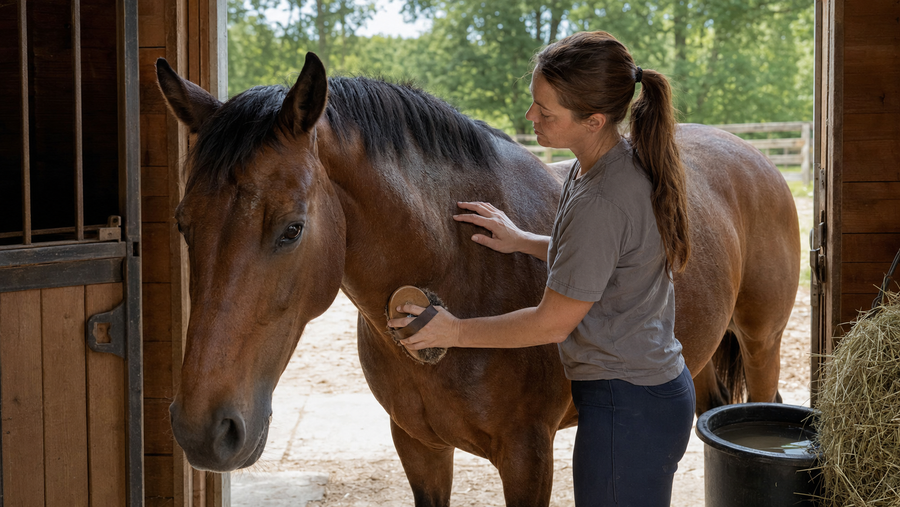
A dull summer coat can reflect sweat, dust, sun, skin, nutrition, parasites, stress, or health. Use this head-to-hoof checklist before ch...
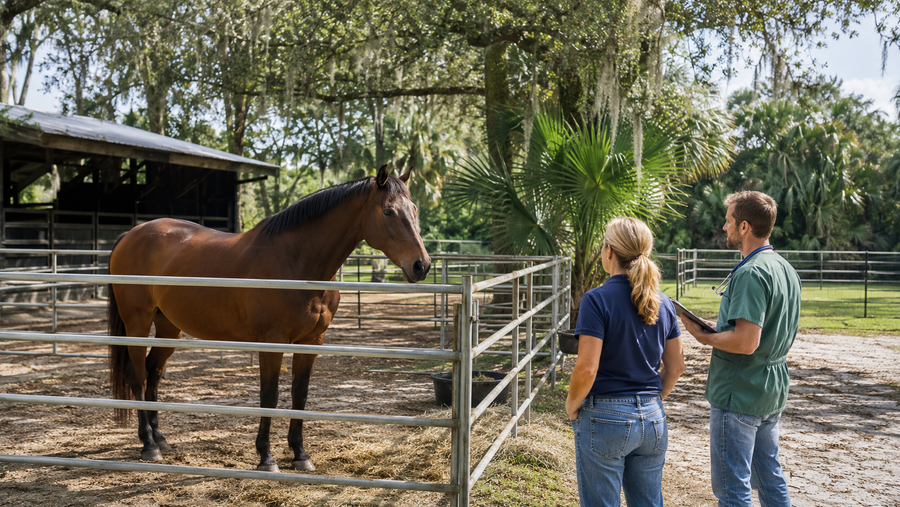
Florida has reported its first equine infectious anemia case of 2026 at a quarantined Hillsborough County property. Here is what riders s...
!