Horse Health
Fly Sheet Rubs on Horses: Fit and Skin Checks
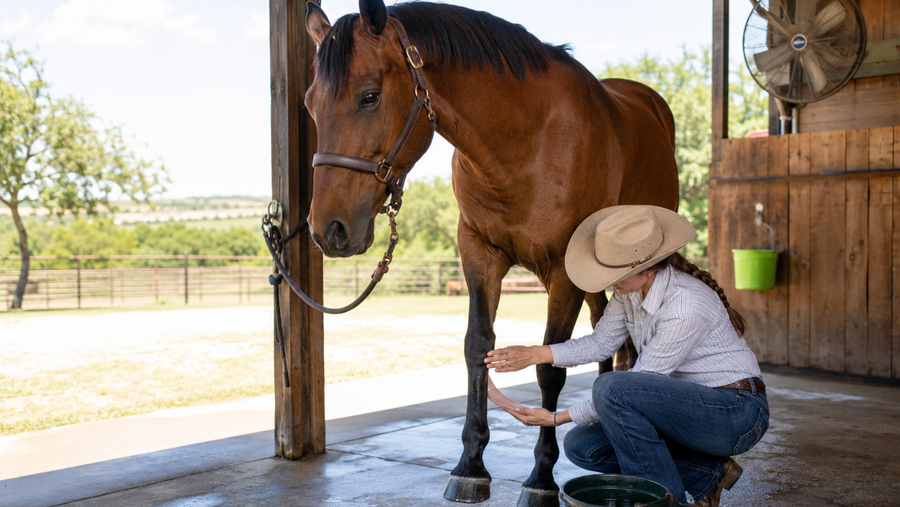
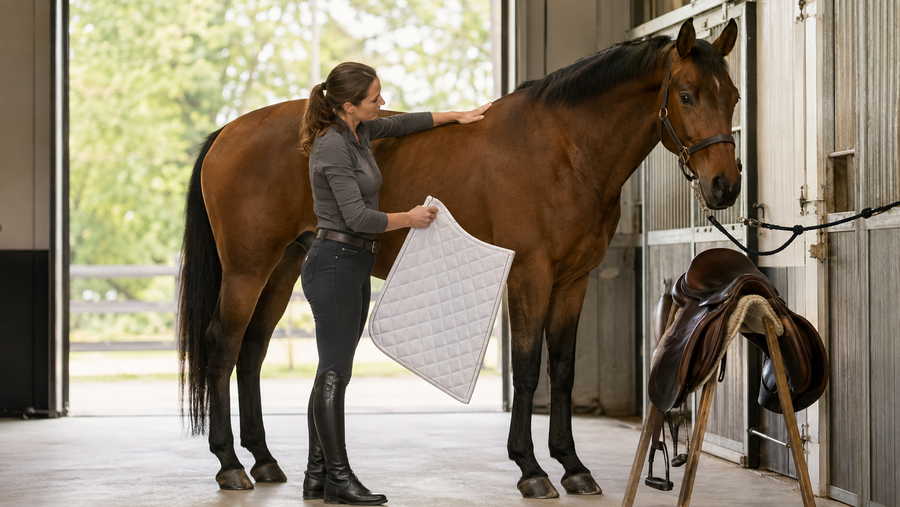
A fly sheet should be removed every day for a full skin and fit check. Small shoulder marks, wither pressure, damp seams, and poorly adjusted straps can become larger problems when heat, sweat, dirt, and repeated movement are added.
Quick answer: Take the sheet completely off at least daily and inspect the shoulders, chest, withers, back, hips, tail, belly, and every strap path. Check fit while the horse stands and walks. Clean or repair rough, dirty, or damaged areas, and give rubbed skin relief from the source of friction. Do not place the sheet back over open, hot, swollen, draining, or painful skin without veterinary guidance.
Skin and safety red flags
Call the veterinarian for a deep or gaping wound, uncontrolled bleeding, marked heat, rapidly increasing swelling, pus, foul odor, fever, severe tenderness, hives with breathing difficulty, eye involvement, sudden lameness, or a horse that seems ill. Remove unsafe equipment if you can do so without being kicked or trapped. A horse caught in a strap or distressed by a tangled sheet is an immediate handling emergency.
Where fly sheets usually create trouble
Begin at the front closure. The sheet should sit in a stable position without pulling tightly across the chest or dropping backward onto the withers. Separate the hair at the point of each shoulder and along the neckline. Broken hair, polished patches, thinning coat, warmth, or flinching can be early friction clues. Check the withers and spine for pressure, bunching, dampness, or a seam sitting directly on a sensitive area.
Continue over the ribs, hips, and tail flap. Look under belly straps and around leg straps, especially where hardware, elastic, or dirty webbing touches skin. A loose strap can snag a foot or fence; an overly tight strap can rub with every stride. Follow the manufacturer's adjustment instructions because strap design and safe clearance differ.
Fit must work in motion
With a capable handler, check fit as the horse walks, turns, and lowers its head. The shoulder should move without the fabric sawing across one spot. The neckline should not press into the mane or withers. The back of the sheet should remain centered rather than twisting to one side.
Size labels are only a starting point. Body shape, shoulder action, wither height, sheet cut, lining, closures, and prior repairs all affect fit. Adding a guard or liner can sometimes help, but it also changes bulk, heat, and pressure. If the same place repeatedly rubs, the better answer may be a different cut or no sheet during certain conditions.
Heat, sweat, dirt, and weather
Fly protection should not come at the cost of overheating or constantly damp skin. Feel beneath the sheet during the hottest part of the day, not only at morning turnout. Notice sweating, unusually hot skin, rapid breathing, lethargy, or a horse seeking relief. Fabric marketed as breathable still needs to be evaluated on that horse in that humidity, sun, workload, and airflow. For heat-index, breathing, recovery, and active-cooling decisions, use the Hot Weather Horse Care guide.
Sweat, dust, skin oils, manure, and plant material make seams more abrasive. Rotate sheets so a used one can be cleaned and dried according to its care label. Rinse detergent fully, repair rough edges and exposed fasteners, and replace damaged hardware. Never return a damp, sour, or gritty sheet to already sensitive skin.
A daily fly-sheet decision routine
- Remove it fully. Do not inspect only what is visible around the edges.
- Look before brushing. Note sweat patterns, flattened hair, dirt lines, rubs, swelling, and sheet position.
- Use your hands gently. Compare temperature, moisture, sensitivity, and tissue feel on both sides.
- Inspect the sheet. Check seams, lining, closures, straps, elastic, hardware, repairs, embedded debris, and odor.
- Watch movement. Refit only if skin is intact and the sheet remains safe while the horse walks, turns, and grazes.
- Choose protection for today's conditions. Insects, sun, heat, rain, turnout hazards, and the horse's skin all matter. The same answer may not fit every day.
What to do with a small rub
Remove the friction source first. Photograph and measure the area, gently clean only as appropriate for intact or broken skin, and avoid aggressive scrubbing. Do not pick scabs or apply multiple products. For an intact-skin question, the Horse Skin Spot Finder can help organize what you see. If the skin is open, painful, hot, swollen, draining, worsening, or in a high-motion area, ask the veterinarian for a care and equipment plan before covering it again.
A topical product cannot correct a poor fit. If a finished formula is appropriate for routine intact skin, follow its exact label and spot-test directions. Keep it away from eyes and mucous membranes, and make sure it will not trap heat or create more friction beneath fabric. For broader care questions, use the Horse Health Library.
Common mistakes
- Leaving the sheet on for days because the horse looks clean.
- Checking fit only while the horse stands square.
- Ignoring broken hair until skin is raw.
- Tightening straps to stop shifting without fixing the underlying fit.
- Putting a clean-looking but gritty seam back over a rub.
- Using topical care while leaving the friction source unchanged.
Fly sheet rub FAQ
How often should I remove a horse's fly sheet?
Remove it fully at least once each day, and more often when heat, rain, heavy sweating, changing weather, or a known fit concern calls for another check. Inspect both the horse and the sheet.
Where should I check for fly sheet rubs?
Check the chest, points of the shoulders, neckline, withers, spine, ribs, hips, tail area, belly, and every strap or hardware path. Separate the hair so early broken hairs and skin changes are visible.
How do I know if a fly sheet fits?
It should remain centered and allow the shoulders, neck, and back to move without concentrated pressure or repeated sliding. Evaluate it while the horse stands, walks, turns, and lowers the head.
Can I put a fly sheet over a small rub?
Remove the friction source first. Do not cover open, hot, swollen, draining, worsening, or painful skin without veterinary guidance. Even an intact-skin rub may require a different sheet or time without one.
Does a topical product prevent fly sheet rubs?
No topical product can make poor fit safe. Correct the sheet, seams, straps, heat, moisture, and cleanliness first. Use any finished skin-care formula only as its label directs and only on an appropriate area.
Educational note: This guide supports routine equipment and skin checks. It does not diagnose skin disease or replace veterinary advice for wounds, infection, pain, or systemic illness.