How Long Does a 16oz Horse Liniment Gel Bottle Last?
There is no universal application count. Use this seven-day bottle-life test to choose between 16oz single, two-pack, four-pack, and 64oz Gel.

Draw It Out® Horse Health Care News
By Jon Conklin · August 3, 2026
A liniment can announce itself to the rider's nose and hands without telling you much about what the horse needs. Heat, cold, tingle, color, and smell are sensory effects. They are not a performance score.
No. Horse liniment does not have to burn, tingle, smell medicinal, or create a dramatic hot-and-cold sensation to fit into a useful care routine. Those sensations come from formulation choices. Judge a liniment by its current label, the horse's skin response, the job it is designed to do, and whether the routine helps you observe the horse consistently. Never use a stronger sensation to cover unexplained pain, heat, swelling, or uneven movement.
Traditional liniments often rely on ingredients that produce an obvious sensation for the person applying them. That experience is memorable. If the hand tingles and the barn smells medicinal, it feels as if something important is happening.
But the rider's sensory experience is not the horse's report card. A strong smell does not measure recovery. A hot feeling does not identify the source of soreness. A cooling sensation does not prove that a horse is ready to work. Sensation may be part of a particular formula, but it should never replace observation.
A useful routine gives the rider a consistent way to check the horse before and after work. It should make it easier to notice changes, not easier to ignore them.
| Weak Signal | Useful Signal |
|---|---|
| Your hand tingles after application | The horse accepts the routine and the skin stays comfortable |
| The aisle smells strongly medicinal | You can repeat the same check across legs, back, and major muscle groups |
| The product feels hot or cold | You notice baseline changes in heat, swelling, stride, attitude, and recovery |
| More product creates more sensation | You follow the current label and use the directed amount |
| The routine feels aggressive | The routine fits the horse, the workload, and the equipment used |
No. Non-heating describes the sensory profile, not a universal strength scale. Horse liniments are not interchangeable, and the category name does not standardize the ingredients, concentration, directions, or suitable uses.
The better questions are practical:
Any topical product can be a poor fit for an individual horse. Read the label, start conservatively, and stop if you see redness, swelling, hives, unusual warmth, discomfort, or a behavior change around application. Recently clipped, sunburned, broken, or already irritated skin deserves extra caution.
Draw It Out® liniment is made for routine use, including sensitive-skinned horses, without the burn-and-blister approach found in many traditional liniments. That does not mean no horse can react. It means the product was designed for a quieter, repeatable care lane.
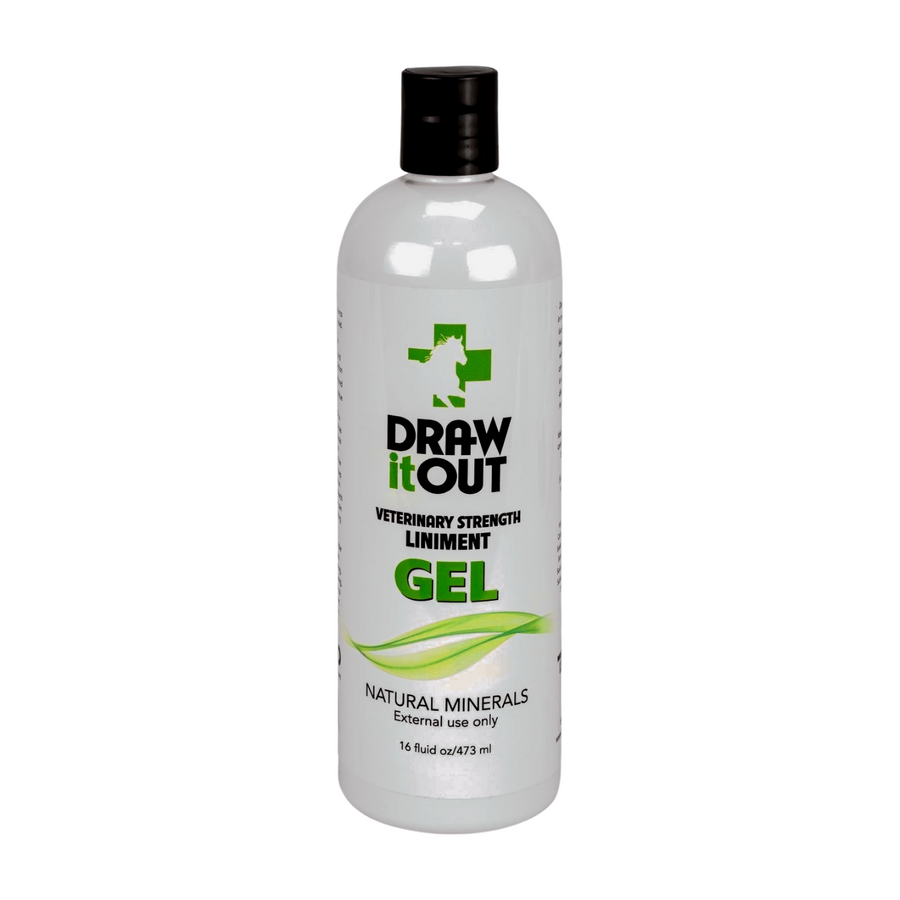
Draw It Out® liniment is odorless and colorless and is made without menthol, camphor, capsaicin, alcohol, or witch hazel. The 16oz Liniment Gel is the ready-to-use targeted route. It can be used under properly fitted pads, boots, and wraps when used according to the current label.
That quieter profile is deliberate. The horse-care value is not hidden inside a dramatic smell or a sensation transferred to the rider's hand. See the original bottle and why riders call it the OG Motion Potion.
Start with the flagship 16oz Gel, compare the current liniment formats, or use the Solution Finder when the horse's pattern is not clear.
Shop 16oz Liniment Gel Compare Horse Liniments Use the Solution FinderNot necessarily. Heating is a formulation effect, not a requirement for every horse liniment. Follow the exact label and judge the routine by the horse's response, not by the sensation on your hand.
No. Tingling shows that certain ingredients are creating a sensory effect. It does not diagnose the horse or measure recovery.
Only when the exact product label allows it. Draw It Out® liniment can be used under properly fitted pads, boots, and wraps when used according to the current label.
Stop use and follow the label's removal and safety directions. Contact your veterinarian when irritation is marked, spreading, painful, or not settling promptly.
There is no universal application count. Use this seven-day bottle-life test to choose between 16oz single, two-pack, four-pack, and 64oz Gel.
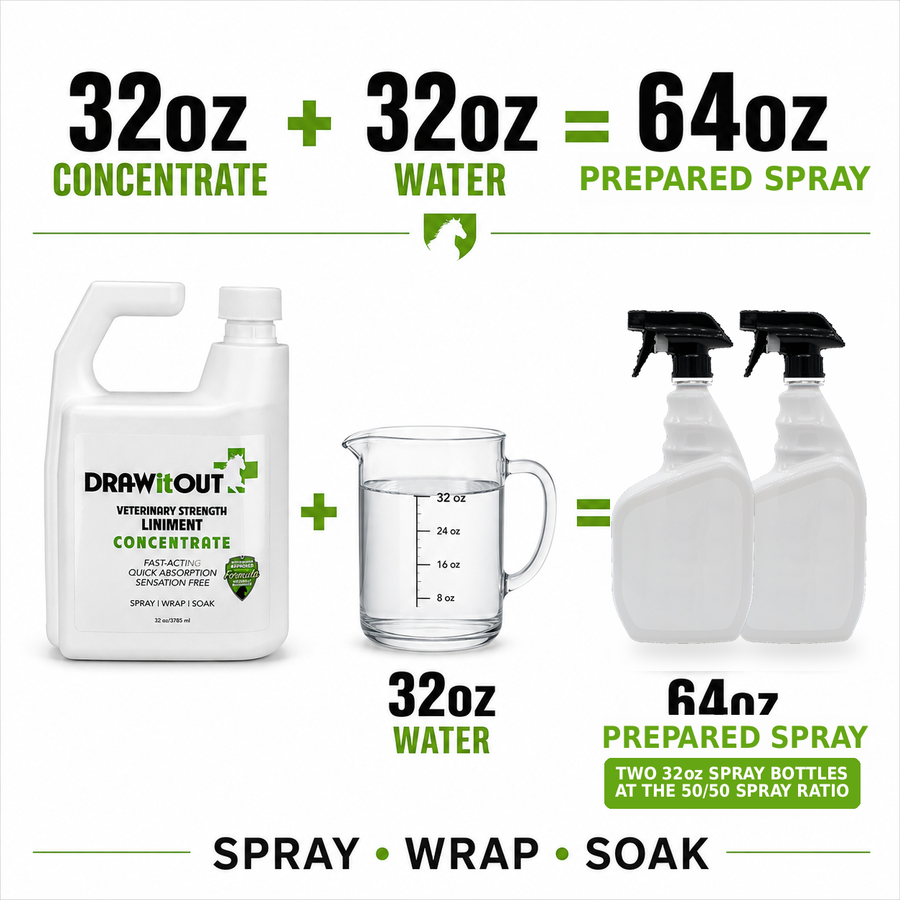
See the 32oz horse liniment concentrate math, cost per prepared ounce, mixing discipline, and the exact barn routines where concentrate earns its space.
Meet Courtney Sabral of Chico, California, an experienced barrel racer and gymkhana rider whose care routine for Diamond and 26-year-old Ricky is built around consistency.
!