Horse Sensitive After a New Saddle Pad? What Owners Should Check
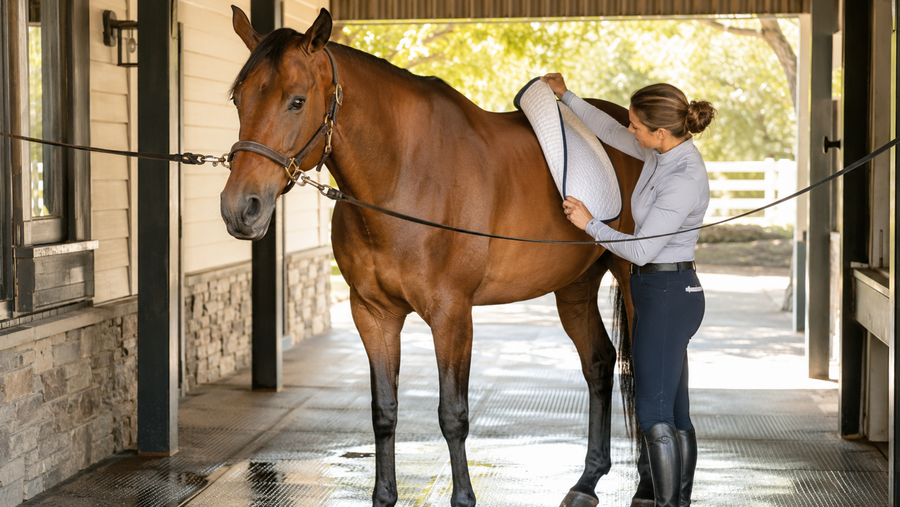
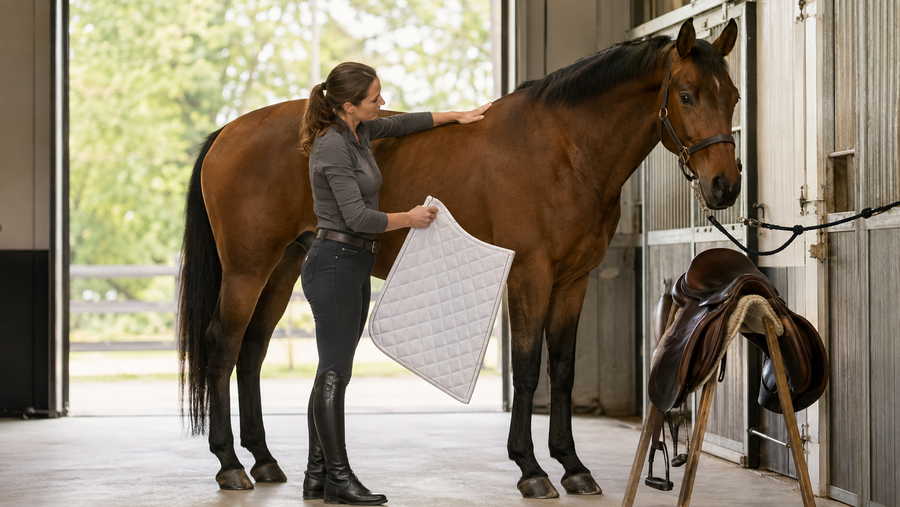
A practical horse health guide for sensitivity after a new saddle pad: sweat marks, dry spots, pad edges, saddle balance, and when to call for help.

Fireworks night is not the time to discover a weak gate, an empty water trough, a loose shoe, or a horse already tense from the day. Fourth of July horse health starts before dark.
Before fireworks, check water, hay, fencing, stall safety, turnout footing, legs, feet, heat recovery, wounds, fly irritation, and whether the horse has a calm place to settle. The next morning, check appetite, water, manure, first steps, legs, feet, sweat marks, and any signs the horse paced, spun, pawed, or ran fences overnight.
Do not assume everything is fine because the horse is standing. Look for pacing tracks, disturbed bedding, sweat, fence rubs, new cuts, filled legs, hoof tenderness, appetite changes, water changes, and abnormal manure. Watch the first steps before saddling or hauling again.
Draw It Out® belongs in a thoughtful care routine after the horse has been checked. Use the Horse Health Library and What Does My Horse Need? guide to sort stiffness, skin, hoof, travel, or uncertainty. For appropriate external post-ride support, review the active horse liniment collection.
It depends on the horse and property. Choose the safest familiar setup with secure fencing or stall space, water, hay, and reduced hazards.
Check appetite, water, manure, first steps, legs, feet, sweat, cuts, fence marks, bedding, and whether the horse seems normal.
The safest fireworks plan is built while the barn is still quiet.
A practical horse health guide for sensitivity after a new saddle pad: sweat marks, dry spots, pad edges, saddle balance, and when to call for help.
A practical horse health guide for fetlock puffiness after deep sand: heat, pain, symmetry, boot marks, footing depth, and vet red flags.
Heat rash under tack can involve sweat, friction, moisture, dirt, pressure, fit, or skin disease. Inspect the area and stop friction before reuse.
!