
Quick Answer
If a horse stumbles more on dry ground, stop using unsafe footing and track when, where, and how it happens. Check feet, shoes, trim timing, surface, fatigue, tack, rider balance, vision, and movement. Call the veterinarian for repeated stumbling, falling, weakness, dragging toes, lameness, neurological signs, or a sudden change.
One trip over a rut may be footing. A repeated pattern is different. Dry conditions can create hardpack, loose dust, hidden rocks, and uneven grooves, but the ground should not be used to explain away a horse that is becoming less coordinated.
Describe the Pattern
- Front feet, hind feet, or unclear?
- Straight lines, circles, downhill, transitions, or after fatigue?
- One direction or both?
- Only on hard or rocky ground, or also on soft level footing?
- A light toe drag, a deep stumble, or an actual fall?
Check Feet and Shoes
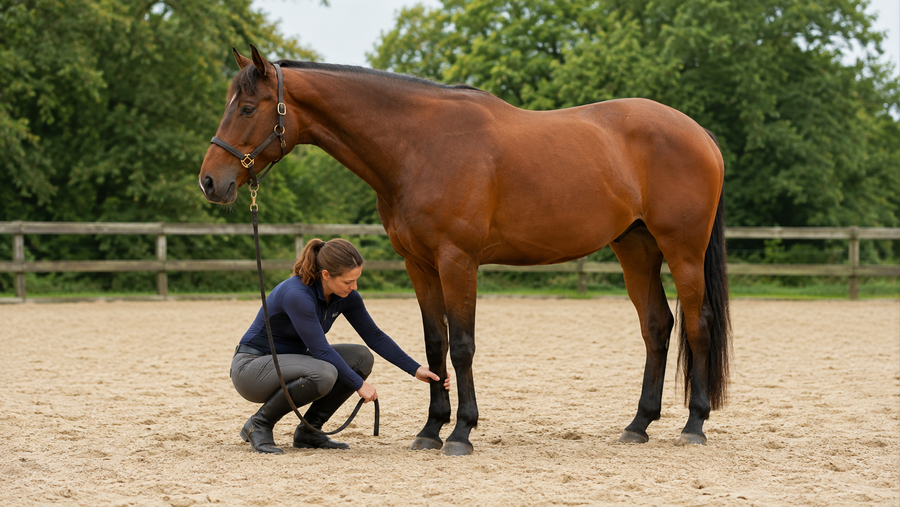
Pick out all four feet and look for long toes, loose or shifted shoes, packed material, hoof-wall damage, unusual heat, and stronger digital pulses. Review trim or shoeing timing and talk with the farrier about changes in breakover or wear.
Review the Surface
Walk the track yourself. Look for ruts, rocks, slick dust over hard ground, holes, and abrupt depth changes. Move to safer footing instead of riding through a surface that repeatedly catches the horse.
Check the Whole Horse and Rider
Fatigue, pain, altered vision, tack balance, and rider position can affect how the horse organizes the front end. Note shortened stride, weakness, head carriage changes, asymmetry, reluctance to turn, or stumbling that begins after a certain workload.
Know the Neurologic Red Flags
Repeated stumbling, dragging toes, crossing limbs, weakness, abnormal tail tone, difficulty backing, leaning, or falling needs veterinary attention. Do not attempt your own neurological tests or put the horse in a dangerous situation.
Plan the Next Ride
Stop work when stumbling is repeated, worsening, or unsafe. Contact the veterinarian and farrier as appropriate. Keep notes on footing, direction, workload, shoeing, and video that was captured safely.
Where Draw It Out® Fits
The Horse Health Library can support your observation process. No topical product corrects neurologic disease, unsafe footing, hoof imbalance, vision problems, or an unexplained stumble.
FAQ
Why does my horse stumble more on hard, dry ground?
Surface irregularities, feet, shoeing, fatigue, tack, pain, vision, and neurological issues can all contribute.
Should I keep riding if the horse only stumbles once?
Assess the footing and horse. Stop when the stumble is significant, repeated, worsening, or paired with another abnormal sign.
When should I call the veterinarian?
Call for repeated stumbling, falling, weakness, dragging toes, lameness, neurological signs, or a sudden change.
General horse-care education only. This article does not diagnose a horse and does not replace veterinary or farrier advice.