
Aug 10, 2026
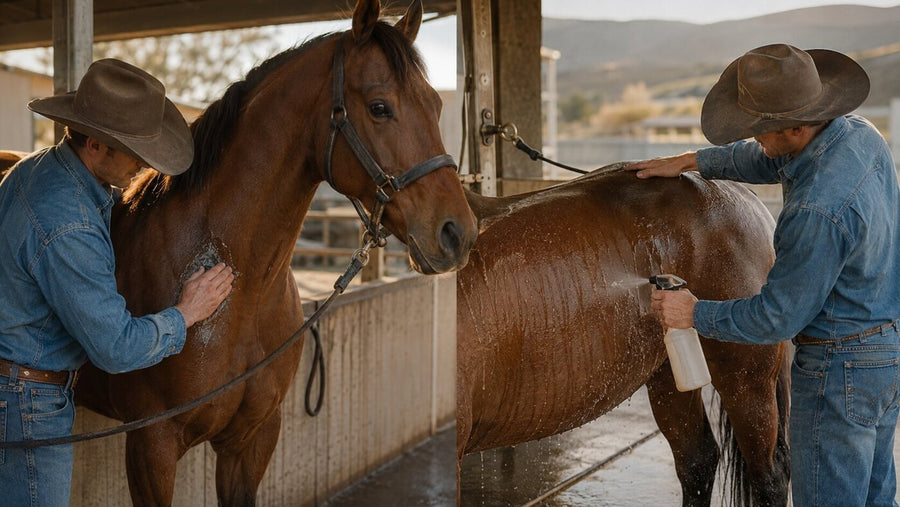
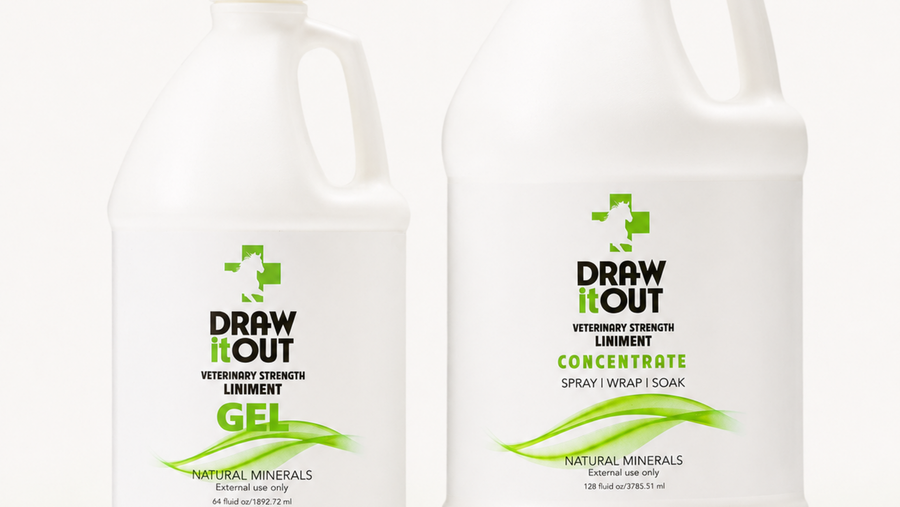
Horse Liniment Gel vs Concentrate: Which Format Fits Your Barn?
Compare horse liniment gel and concentrate by coverage, mixing, routine, and barn size, then choose the Draw It Out® format that fits.

Swelling in the girth area after riding should be taken seriously. It may come from pressure, pinching, rubs, bites, allergic reaction, dirty tack, heat, or a deeper discomfort pattern.
If your horse has girth area swelling after riding, remove tack, check both sides, look for heat, pain, rubs, bites, skin breaks, hives, girth marks, and whether the swelling changes after cooling. Call your veterinarian for painful, hot, spreading, one-sided, sudden, open, oozing, or severe swelling.
The girth area sits where pressure, sweat, dirt, motion, and breathing all meet. A horse may tolerate mild pressure for a while, then start pinning ears, biting, kicking, hollowing, or refusing to stand because the area has become sensitive.
Remove tack. Clean and dry the area gently. Let the horse rest from pressure until the skin and swelling normalize. Check tack before using it again. If the swelling is painful, hot, severe, or worsening, call your veterinarian.
Use the Horse Health Library for tack and skin-care education. If the pattern points toward skin or stiffness concerns, use What Does My Horse Need? to sort the next step.
Pressure, rubs, bites, hives, dirty tack, heat, sweat, poor fit, or sensitivity can contribute.
No. Check the cause first and call the vet for painful, hot, open, spreading, or severe swelling.
The girth area is too important to ignore. Check it, rest it, and fix the cause.
Compare horse liniment gel and concentrate by coverage, mixing, routine, and barn size, then choose the Draw It Out® format that fits.
A practical guide to sequencing equine red light therapy, massage and Draw It Out® Liniment without confusing separate tools or overstati...
Why do equine bodyworkers, massage therapists and chiropractors choose Draw It Out®? Compare Gel and Concentrate, professional workflows,...
!