
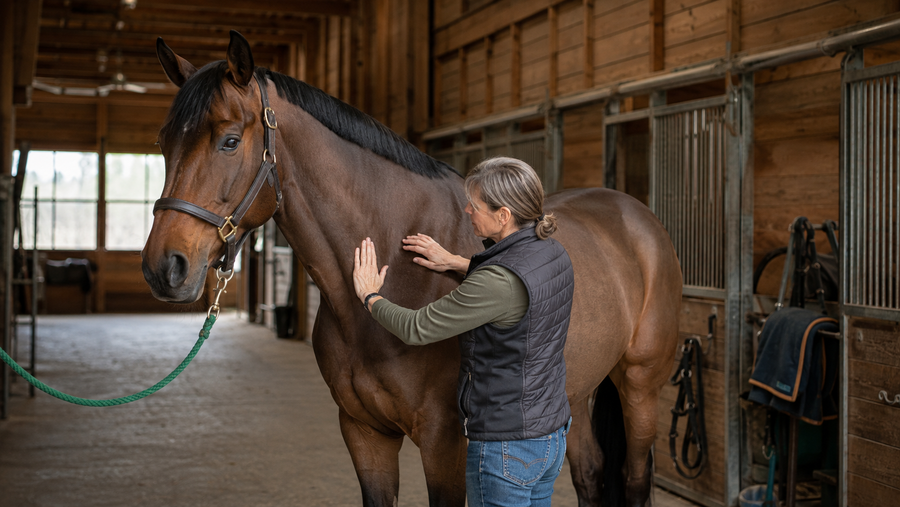
Can You Use Horse Liniment After Body Clipping? A Skin-First Guide
Before applying horse liniment after body clipping, use this clean, dry, intact skin check to spot clipper burn, rubs, and other reasons to wait.

A bee, wasp, or hornet sting can look minor at first and turn serious fast. Before you ride, decide whether this is a small local irritation or a horse health issue that needs your veterinarian.
If your horse is stung, move away from the insect area, remove tack if safe, and check the sting location, swelling, breathing, hives, attitude, movement, and whether tack or gear will rub the spot. Do not ride if swelling is near the face, throat, muzzle, eyelid, or airway; if hives spread; if breathing changes; if there are multiple stings; or if the horse acts abnormal.
Lead the horse away from the nest, feeder, trailer, gate, brush line, water trough, or barn corner where the sting happened. Check under tack, fly sheets, blankets, mane, belly, tailhead, and legs for more insects before you focus only on the bump.
Only consider riding if the horse is breathing normally, acting normally, moving normally, has no spreading hives, has only a small localized swelling away from the face and airway, and the sting site will not be rubbed by tack. Keep the ride light and recheck afterward. If you are debating hard, skip it.
A sting is first a horse health decision, not a product moment. Citraquin® belongs in the prevention conversation for turnout, trail days, and barn chores. It is not a treatment for an allergic reaction. For intact-skin support after the horse is stable and the situation is no longer an emergency, use only products that fit the label and the condition of the skin.
Call your veterinarian for swelling around the muzzle, throat, eyelids, lips, or airway; labored breathing; coughing; wheezing; weakness; collapse; spreading hives; multiple stings; rapid worsening; or any horse that is dull, frantic, unstable, or not acting normal.
Only after the horse checks clean and the sting is not under tack. Do not ride through hives, swelling near the airway, breathing changes, or abnormal behavior.
Move the horse away from the insect area and check breathing, face, swelling, hives, skin, movement, and tack contact.
The sting site matters. The whole-horse reaction matters more.
Before applying horse liniment after body clipping, use this clean, dry, intact skin check to spot clipper burn, rubs, and other reasons to wait.
Separate muscle loss from fat loss, record topline changes, recognize veterinary red flags, and plan nutrition and exercise around the cause.
A new grooming flinch is information, not attitude. Use this calm checklist to separate skin irritation, pressure sensitivity, tack clues, and veterinary red flags.
!

