Horse Points One Front Foot While Standing: What to Check
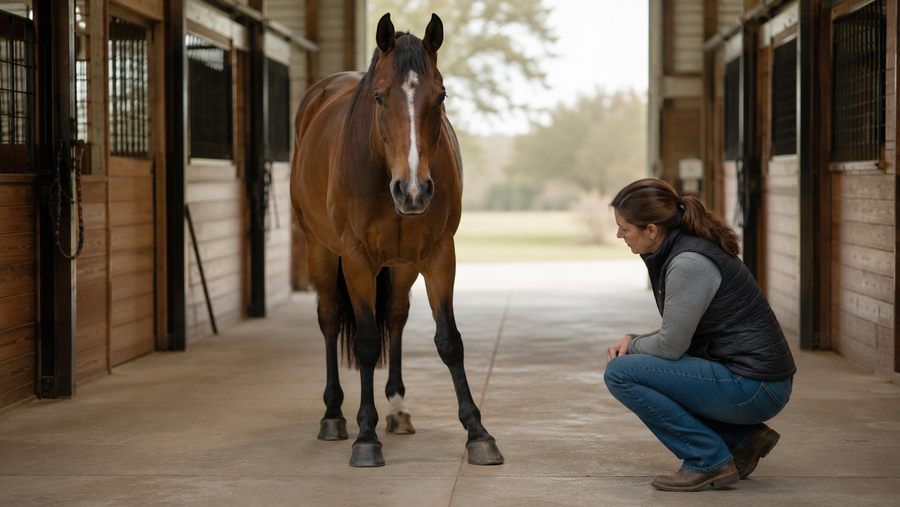
A horse that repeatedly points one front foot is giving you useful information. Compare stance, hoof heat, digital pulse, movement, and red flags before you ride or apply...

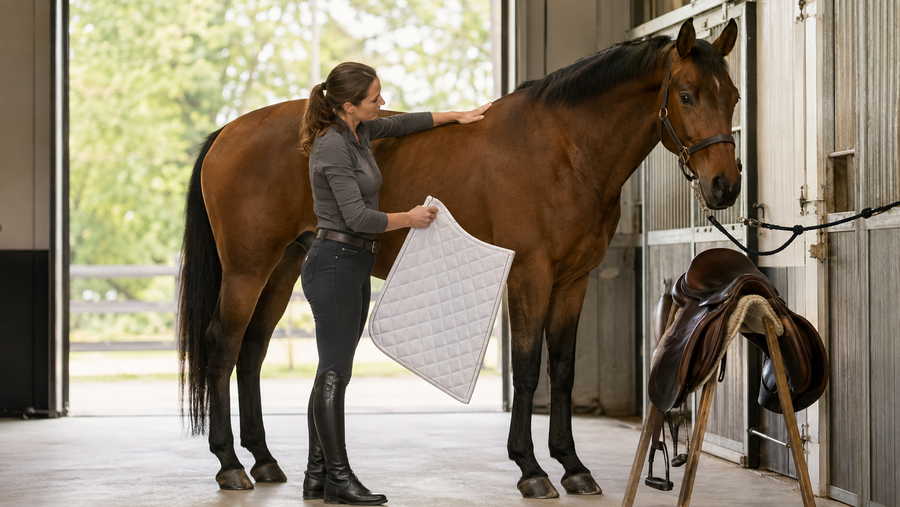
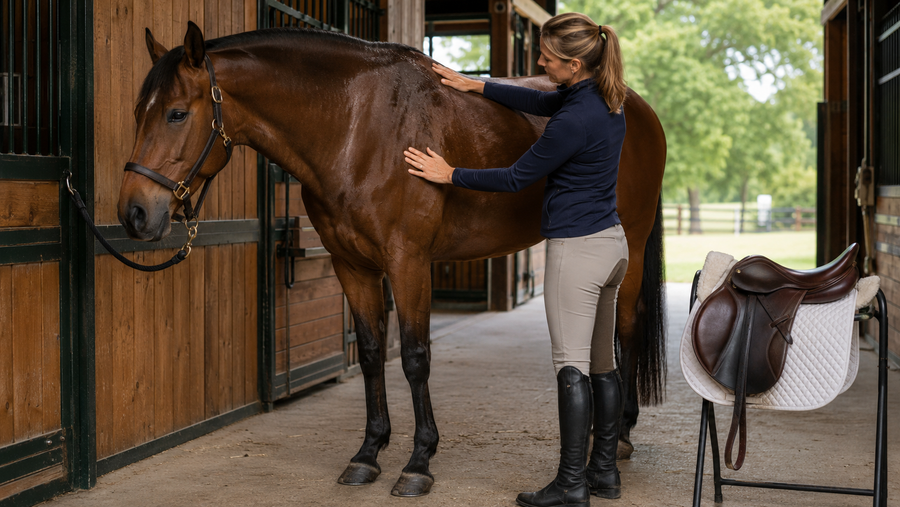
Quick answer: If a horse suddenly flinches, dips, tightens, pins the ears, or moves away when you brush over the back, stop treating it as a grooming problem. Check the skin and coat first, compare both sides with light pressure, review recent work and tack changes, and do not saddle over a painful area. A new, repeatable response deserves a veterinarian's attention, especially when it comes with heat, swelling, lameness, weakness, or a change under saddle.
One twitch can be a fly or a sensitive moment. The useful clue is a response you can reproduce in the same place without poking harder. Your job is not to prove the horse is sore. It is to notice the pattern and avoid making it worse.
A grooming flinch is a sign, not a diagnosis. Surface irritation, a dirty or damaged pad, uneven pressure, a changed workload, a slip, a new saddle, loss or gain of topline, hoof discomfort, and problems away from the back can all change how a horse responds. Horses also change shape through seasons and fitness cycles, so tack that worked earlier may need another look.
Start with facts:
If the response sits in the saddle area, leave the saddle off until the horse is comfortable and the concern is assessed. Adding a thicker pad does not reliably fix saddle fit and can increase pressure. For a deeper look at related clues, use our horse back soreness and saddle-fit checklist.
Call your veterinarian promptly if the flinch is paired with any of the following:
Do not give pain medication or try to work the horse sound unless your veterinarian directs it. Masking a response can make the next exam less informative.
Record the exact location, side, time of day, brush used, recent exercise, and any tack or hoof-care changes. A short video of the response and a calm walk on safe footing may help your veterinarian, but never repeat a painful test for the camera. Our horse symptom timeline guide shows how to organize those details.
Once skin injury, tack pressure, lameness, and a medical cause have been addressed, a normal post-work body-care routine may include Draw It Out® 16oz Horse Liniment Gel, used exactly as labeled. It is a ready-to-use option for routine equine body care, not a substitute for diagnosis and not something to apply over an unexplained painful area or damaged skin. If you compete, check current association rules and show guidance before use.
The tool may be too firm for the coat or skin that day, but check the area instead of assuming the horse is being fussy. Switch to a soft brush, look for skin changes, and stop if light contact also causes a response.
Yes, pressure or rubbing in the saddle area can be one possible factor. The same sign can come from other skin, muscle, hoof, or medical issues, so a saddle check should be part of a broader evaluation.
Not when the response is new, repeatable, or significant. Improvement with movement does not identify the cause. Pause ridden work and speak with your veterinarian if the concern persists.
No. A change after topical care does not diagnose the source. Use examination, history, and professional guidance to determine why the horse is reacting.
A horse that repeatedly points one front foot is giving you useful information. Compare stance, hoof heat, digital pulse, movement, and red flags before you ride or apply...
A practical horse health guide for sensitivity after a new saddle pad: sweat marks, dry spots, pad edges, saddle balance, and when to call for help.
A practical horse health guide for saddle pressure marks after summer riding: sweat patterns, dry spots, pad fit, saddle balance, and when to ask for help.
!