Horse Flinches When Brushed Over the Back: What to Check
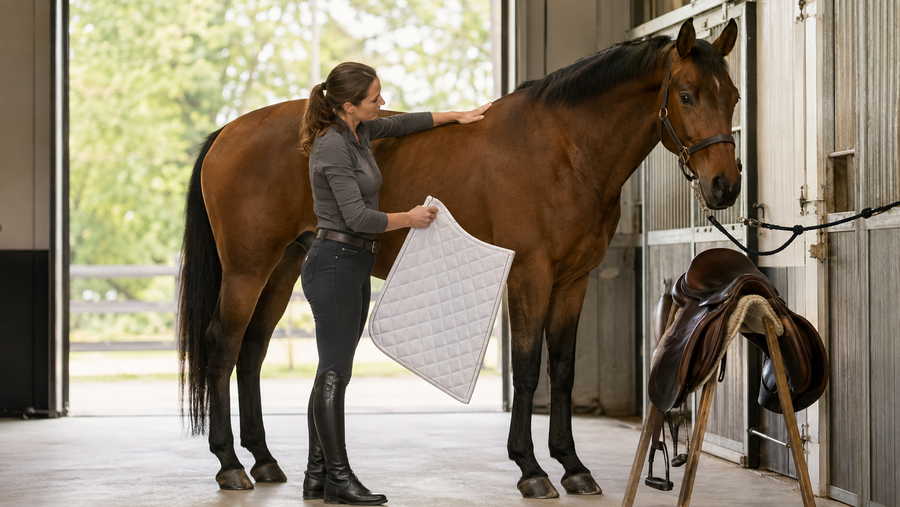
A new grooming flinch is information, not attitude. Use this calm checklist to separate skin irritation, pressure sensitivity, tack clues, and veterinary red flags.

Quick answer: A thinning horse tail can reflect broken hair, rubbing, parasites, skin disease, manure contamination, equipment friction, herd behavior, grooming damage, nutrition, or a medical problem. Identify the pattern and cause before reaching for a growth claim.
The location matters. Short broken hairs suggest a different process than hair releasing at the root, dock rubbing, a chewed tail, or generalized coat change. Photos and a hands-on skin exam provide better evidence than memory.
No grooming product can diagnose the cause or promise new growth. If the dock is actively itchy, sore, crusted, or losing hair at the root, investigate that first. If the problem is confirmed as mechanical breakage in a clean, healthy tail, protection can become part of the routine.
For confirmed grooming breakage
The ShowBarn Secret® Deluxe Tail Bag is the practical next step for a clean, dry, detangled tail that needs protection from avoidable rubbing, dirt, and breakage. It is not a treatment for parasites, skin disease, itching, or unexplained hair loss.
See the Deluxe Tail Bag Use the Horse Health LibraryBottom line: Tail thinning is a clue. Map the pattern, inspect the skin, and solve the cause before promising the hair.
Educational content only. This article does not replace veterinary diagnosis, treatment, farrier care, qualified instruction or bodywork, emergency services, or current competition rules.
A new grooming flinch is information, not attitude. Use this calm checklist to separate skin irritation, pressure sensitivity, tack clues, and veterinary red flags.
A step-by-step rubber stall mat cleaning routine for daily care and deeper resets, including seams, runoff, drying, common mistakes, and safer barn turnover.
A practical horse health guide for sensitivity after a new saddle pad: sweat marks, dry spots, pad edges, saddle balance, and when to call for help.
!