How Long Does a 16oz Horse Liniment Gel Bottle Last?
There is no universal application count. Use this seven-day bottle-life test to choose between 16oz single, two-pack, four-pack, and 64oz Gel.

Short answer: Use enough horse liniment gel to cover the intended area in a thin, even layer. The hair and skin should be evenly coated, not dripping, puddled, or buried under a heavy wet layer. More product does not make a routine more responsible. It only makes it harder to see the leg, check the skin, and judge what changed.
The thin-layer rule
Cover the area. Do not drown it. Start with less than you think you need, spread it completely, and add only enough to finish an even coat. Follow the current label for the exact product in your hand.
A fetlock, a hock, a shoulder, and a full hindquarter are not the same size. A fine-coated horse and a heavy winter coat do not take product the same way. Gel, ready-to-use spray, and concentrate are also different formats. That is why a universal teaspoon or pump count is usually less useful than a visual standard.
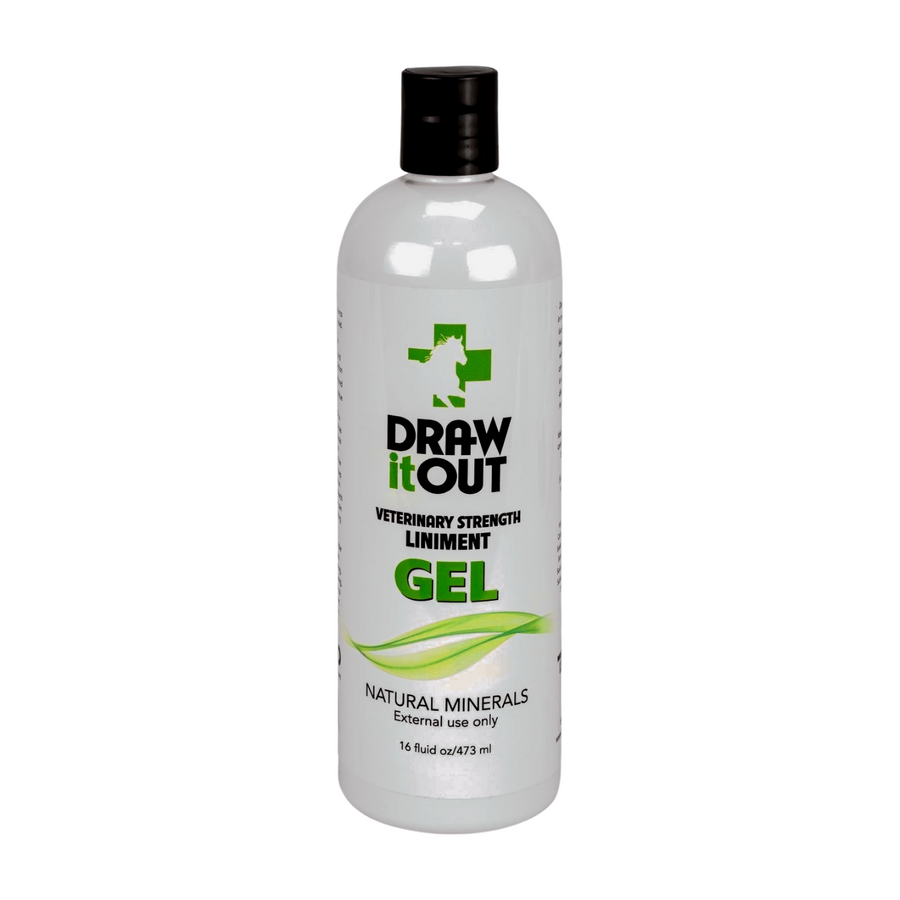
The right amount is the amount that gives complete, even coverage of the intended external area without running, clumping, or staying so wet that it transfers everywhere. With Draw It Out® 16oz Liniment Gel, the product is already ready to use. Do not dilute the gel or turn it into a spray.
| What you see | What it usually means | Next move |
|---|---|---|
| Full, even coverage with no dry gaps | You have covered the intended area | Stop adding product and follow the label |
| Drips, puddles, clumps, or a heavy wet coat | The layer is heavier than the area needs | Do not add more; review the label before the next use |
| Product disappears into dirt, mud, or a soaked coat | The area was not ready for a useful application | Clean, dry, inspect, and restart only when appropriate |
| Redness, irritation, rubbing, or a changed skin response | The routine needs to stop | Remove the product as directed and contact a veterinarian when needed |
Work deliberately around the intended section of the leg. A thin layer makes it easier to keep your hands on the horse and compare heat, texture, filling, and sensitivity. It also keeps you from hiding the leg beneath product when the real job is observation.
Larger muscle groups need more total product than one fetlock because the surface area is larger. The standard stays the same: complete, even coverage without a heavy wet coat. Divide the area into smaller sections instead of pouring out a large amount at once.
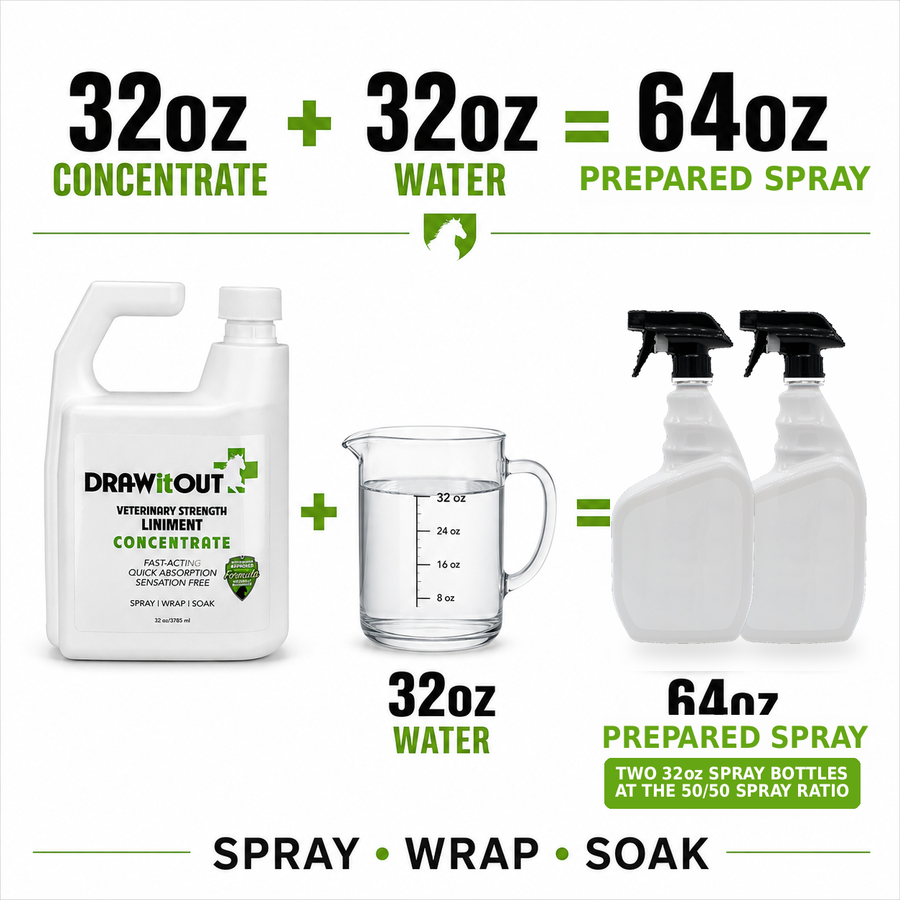
If the problem is not application but volume, choose a format that fits the barn. The 64oz Liniment Gel is the larger ready-to-use gel format. The 32oz Concentrate fits prepared spray, wrap, and soak routines when mixed exactly according to its current label. Read the gel versus concentrate guide before changing formats.
Draw It Out® Liniment Gel is designed for use beneath properly fitted pads, boots, and wraps when used according to the current product label and normal equipment practices. Apply an even layer, confirm that the skin and equipment are clean, and recheck fit and skin condition. A compatible topical does not make a poorly fitted boot or uneven wrap safe.
Before bandaging, use the horse leg wrapping checklist to compare heat, swelling, tenderness, skin, and movement.
Stop the routine and contact your veterinarian for new or marked heat, one-sided swelling, significant tenderness, a wound, fever, unwillingness to bear weight, a changed gait, rapidly worsening filling, or anything that does not match the horse's normal baseline. Liniment belongs around responsible observation. It does not diagnose the reason a horse looks or moves differently.
The Draw It Out® 16oz Liniment Gel gives one-horse homes, trailers, and tack trunks a controlled gel format with no mixing. If you are unsure which product lane fits, use the Solution Finder.
There is no universal teaspoon amount because leg size, coat, and target area vary. Use enough to cover the intended area evenly without dripping, puddling, or leaving a heavy wet coat.
No. A gel does not need to sit in a thick visible coat to complete the application. Spread it into a thin, even layer according to the label.
Do not use extra product as a substitute for a thorough cool-down and hands-on check. Apply the label-directed amount. New heat, swelling, pain, wounds, or uneven movement belongs with your veterinarian.
No. The gel is the ready-to-use, stay-put format. Choose Draw It Out® Concentrate when you need a mix-to-use spray, wrap, or soak routine and follow that product's current dilution directions.
Dripping, puddling, clumps, slow drying, or heavy transfer to your hands or equipment are signs that the layer is heavier than the area needs.
External horse-care product. Follow the current product label. This article provides general educational guidance and does not replace veterinary diagnosis or treatment.
There is no universal application count. Use this seven-day bottle-life test to choose between 16oz single, two-pack, four-pack, and 64oz Gel.
See the 32oz horse liniment concentrate math, cost per prepared ounce, mixing discipline, and the exact barn routines where concentrate earns its space.
Meet Courtney Sabral of Chico, California, an experienced barrel racer and gymkhana rider whose care routine for Diamond and 26-year-old Ricky is built around consistency.
!