
Measure the container
Know how much each bucket or trough holds. Mark the inside of buckets or use a meter on automatic waterers when possible. “The bucket looked lower” is not the same as knowing what the horse drank.

The useful number is not somebody else’s gallon target. It is your horse’s normal drinking pattern, measured against weather, workload, forage, travel, and what the horse looks like today.
Quick answer: Many adult horses drink roughly 6 to 10 gallons in a day at rest, and needs can climb sharply with heat, work, lactation, dry forage, or travel. Keep clean water continuously available, learn the horse’s baseline, and call your veterinarian when reduced drinking appears with colic signs, weakness, fever, abnormal breathing, very dry gums, or a horse that is getting worse.
Know how much each bucket or trough holds. Mark the inside of buckets or use a meter on automatic waterers when possible. “The bucket looked lower” is not the same as knowing what the horse drank.
Compare morning, afternoon, post-work, and overnight intake. A meaningful change from that horse’s usual pattern matters more than a single universal target.
Horses eating dry hay generally need more drinking water than horses consuming moisture-rich pasture. A diet change can change the water pattern even when the weather does not.
Track appetite, manure amount and moisture, urination, attitude, gum moisture, recovery after work, and whether the horse is willing to drink when offered.
Use the bucket style and placement the horse knows. Some horses drink more readily when the container, height, and routine feel familiar.
Offer water at safe stops and after arrival. Log what was actually consumed, then compare it with manure, urination, appetite, and recovery.
Do not introduce flavored water for the first time at a show. When flavoring is part of the established plan, keep plain water available too.
Wet feeds or mashes may add moisture for some horses, but introduce diet changes at home and confirm that the ingredients and amount fit the horse’s feeding plan.
There is no responsible one-size-fits-all tablespoon rule for every horse. Salt and electrolyte needs vary with body size, diet, sweat loss, weather, workload, medical history, and the product being used.
Prompt veterinary guidance is warranted when reduced drinking appears with colic signs, reduced manure, fever, weakness, depression, poor appetite, abnormal breathing, severe or persistent dehydration signs, diarrhea, dark or markedly reduced urine, or a horse that does not recover normally after heat, work, or hauling.
Many adult horses drink roughly 6 to 10 gallons at rest, but heat, work, lactation, dry forage, body size, and travel can raise the need substantially. Track the individual horse’s normal pattern.
No routine withholding is needed. Offer cool, clean water during cooldown while continuing appropriate active cooling and observation.
Most horses prefer water that is neither very cold nor very warm. Palatability matters, so keep water fresh, shaded when practical, and free of strong odors.
No. Needs vary with diet, sweat loss, workload, weather, and health. Follow the product label and the horse’s veterinarian or equine nutrition plan.
Offer water often in a familiar container, keep plain water available, record actual intake, and watch appetite, manure, urination, and attitude. Call the veterinarian when refusal persists or other concerning signs appear.
Educational support only. This article does not diagnose dehydration or prescribe salt, electrolyte, feed, or fluid-therapy amounts. Use the current product label and the horse’s veterinary and nutrition plan.
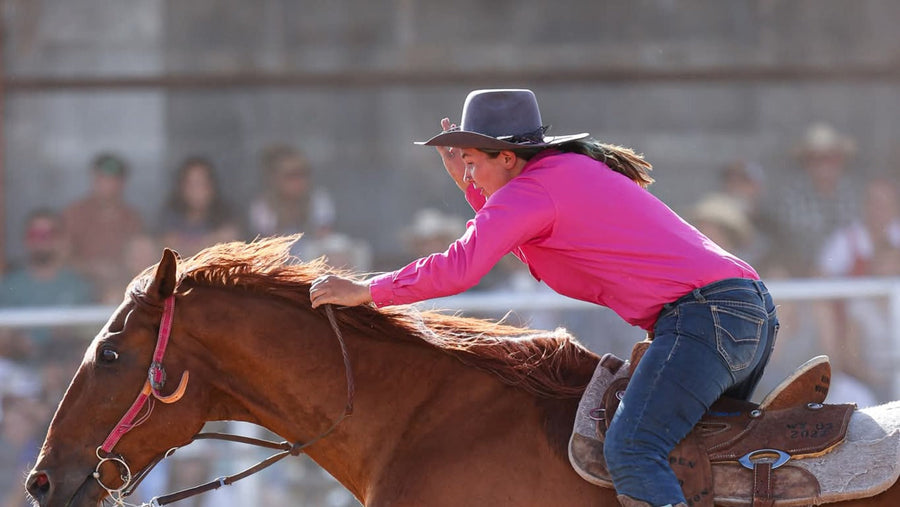
Meet Kaitlyn Schmuck of Misfit Rodeo, a Wyoming rodeo, trail and day-work horsewoman who uses EQUINE | DEFENDER™ K Tape with her barrel h...
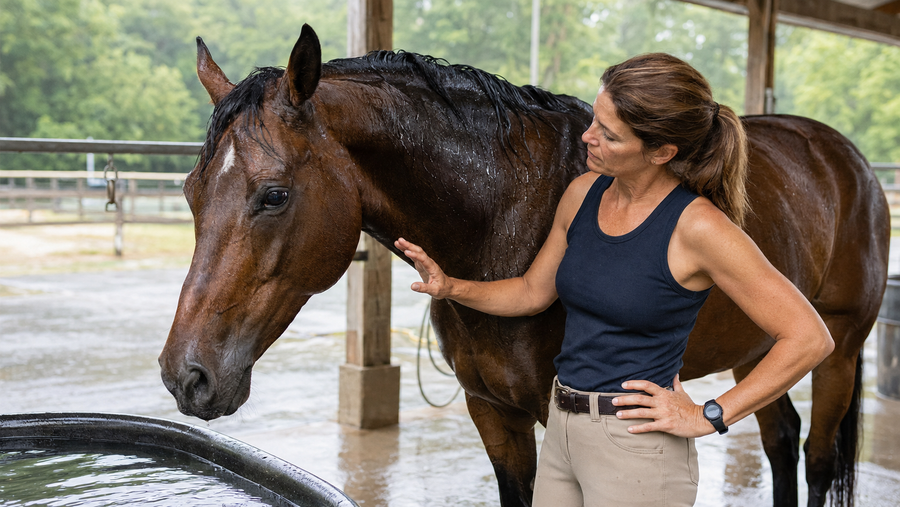
Track breathing, sweat, workload, shade, airflow, water interest, and recovery time when a horse is slow to cool after humid work.
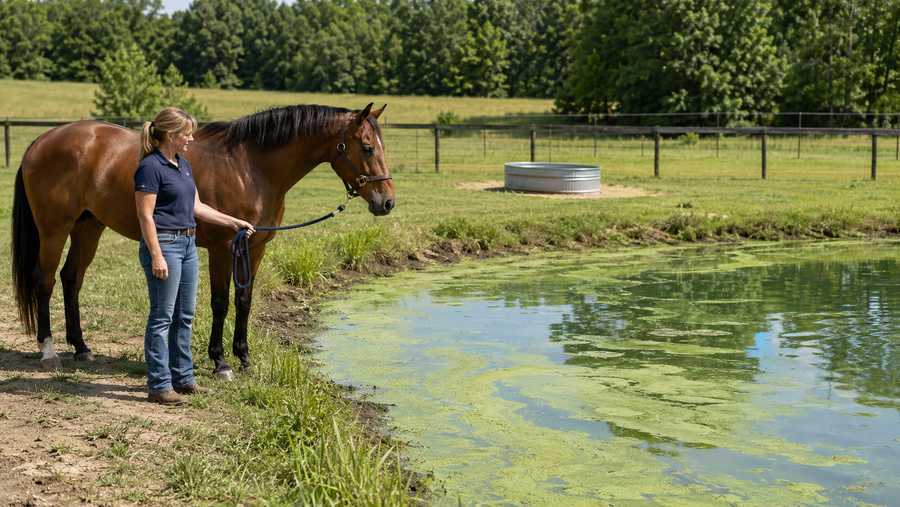
A practical horse-owner guide to blue-green algae and harmful algal blooms in ponds, lakes, troughs, and stock tanks, including warning s...
!