
Jul 31, 2026
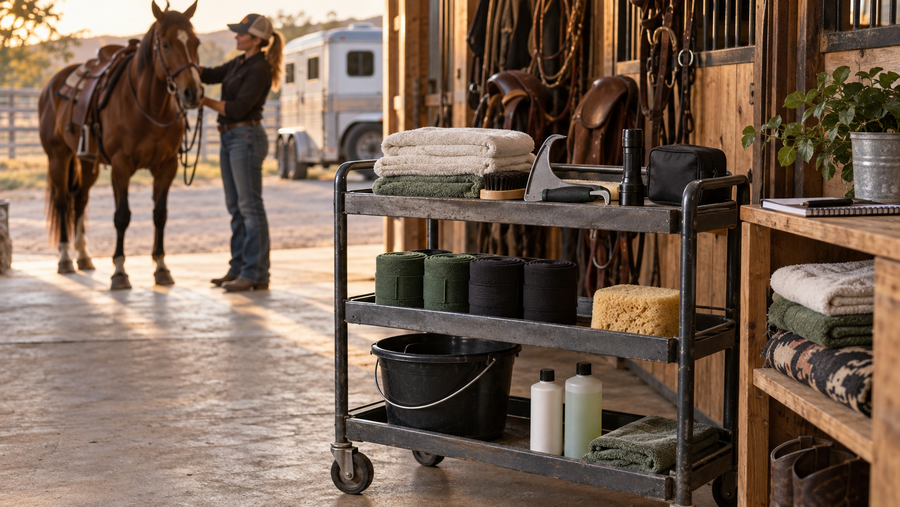
What Should Be in a Horse Recovery Station? Barn and Trailer Checklist
Build a practical horse recovery station for the barn and trailer with observation, cooling, hoof, leg, routine-care, and emergency-ready...

Draw It Out® Horse Health
A simple, repeatable recovery routine for cooling out, checking legs, removing sweat, and helping your horse come back ready for the next ride.
Short answer: A good post-ride recovery routine starts with a gradual cool-down, then a quick body and leg check, sweat removal, clean drying, hydration awareness, and targeted topical support when appropriate.
Do not treat recovery like a rush job. The few minutes after work are when riders notice heat, fill, rubs, attitude changes, and small patterns before they become bigger concerns.
Post-ride recovery is not complicated. The hard part is being consistent enough to notice change.
After work, your horse is telling you what the ride took out of them. Sweat patterns, breathing, heat, tightness, leg fill, attitude, and movement all matter. You do not need to overreact to every small sign, but you do need to look.
Do not stop abruptly after hard work. Walk your horse until breathing and effort come back down, then keep the routine calm and observable.
Simple rule: cool the horse before you start judging the horse. A tired, hot, sweaty horse may not show you the full picture yet.
Use both hands. Compare left and right for heat, fill, tenderness, and anything different from the horse’s normal.
Look for dry spots, rubbed hair, heat, swelling, sweat marks, or a defensive reaction when touched.
Remove sweat, dirt, and salt so the coat and skin can dry cleanly. Do not trap grime under sheets, pads, or wraps.
Watch the horse walk after untacking. Stiffness, short steps, toe dragging, or reluctance can be useful information.
Notice whether the horse drinks, stays dull, keeps panting, or seems slow to recover. Heat and humidity change the equation.
A horse that suddenly acts defensive, dull, anxious, or unlike themselves deserves a closer look.
Product belongs after the horse is cool enough to assess, moving normally, and free of unexplained heat, swelling, wounds, or pain. For targeted post-work support, Draw It Out® 16oz Liniment Gel is the straightforward ready-to-use starting point. It is odorless, colorless, sensation-free, and made without menthol, camphor, capsaicin, alcohol, witch hazel, or DMSO.
Use the Solution Finder when you are not sure whether the concern belongs in a stiffness, skin, hoof, or travel lane. For format differences, read Horse Liniment Gel vs Spray vs Concentrate.
Use every product according to its current label. A topical should never delay emergency cooling, wound care, or veterinary evaluation.
Call your veterinarian for non-weight-bearing lameness, sudden swelling, heat with obvious pain, wounds, fever, abnormal breathing, collapse, signs of heat stress, persistent refusal to move forward, or any change that feels serious and out of character.
Cool-down time depends on workload, fitness, weather, humidity, and the horse. Walk until breathing and effort return toward normal before putting the horse away.
Use the routine that fits the weather and workload. The main goal is to remove sweat, dirt, and salt without trapping moisture against the skin.
Use liniment gel when targeted topical support fits the routine, according to label directions, on appropriate external areas.
Only wrap when the product directions, skin condition, and your barn routine support it. Use clean wraps, even tension, and recheck the horse.
Rushing. The best recovery routine gives you time to notice heat, fill, sweat patterns, rubs, hydration behavior, and movement before the horse is put away.
Join the Draw It Out® herd for practical rider-first guidance on stiffness, hauling, skin, hoof care, and recovery.
Where to go next: Use the Solution Finder, review Prehabilitation, and build your routine around Draw It Out® Liniment Formats.
Build a practical horse recovery station for the barn and trailer with observation, cooling, hoof, leg, routine-care, and emergency-ready...
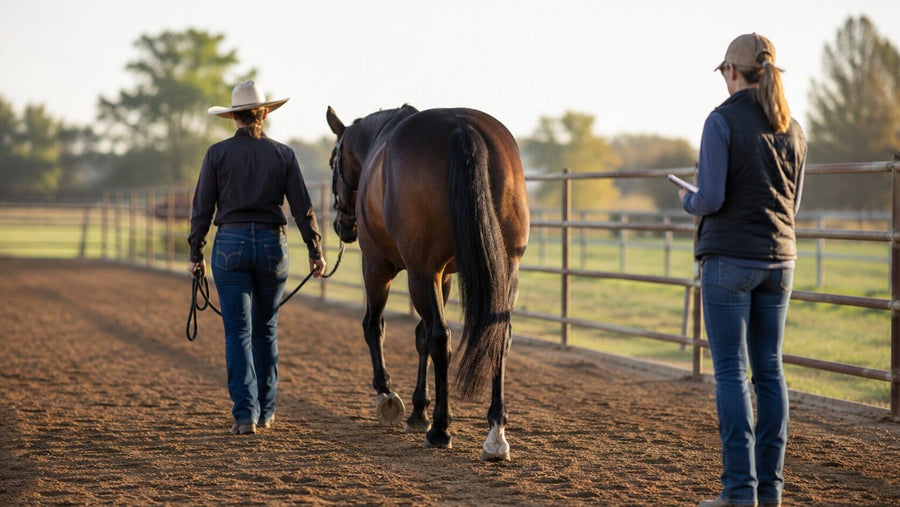
A practical rider checklist for hind-end weakness after a hard week, covering workload, movement, feet, legs, back, recovery, neurologica...
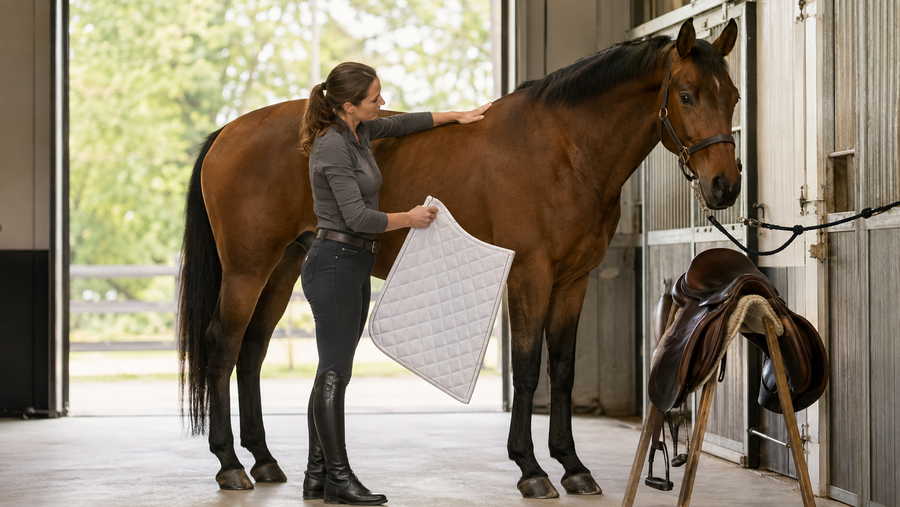
A practical horse health guide for sensitivity after a new saddle pad: sweat marks, dry spots, pad edges, saddle balance, and when to cal...
!