Quick Answer
If a horse’s coat turns dull in mid-summer, check the skin beneath it, sweat and salt buildup, grooming, sun exposure, bathing, body condition, feed, water, parasite plan, itching, and overall health. Call the veterinarian for weight loss, poor appetite, fever, severe itching, widespread skin lesions, lethargy, or a coat change that does not fit the horse or season.
A dull coat is an observation, not a diagnosis. Dust, sweat, sun bleaching, and shedding can change appearance without illness. The same look can also occur alongside skin disease, nutrition problems, parasites, stress, or a broader health change.
Look Under the Hair
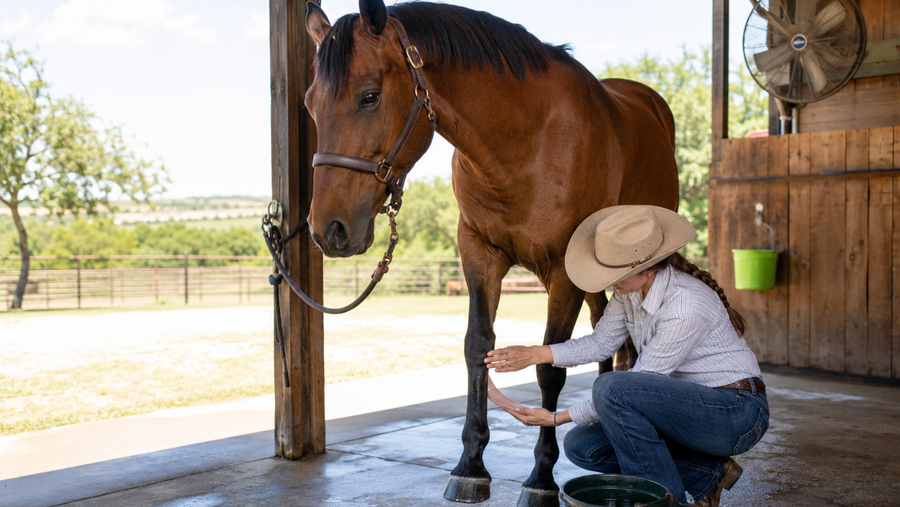
Part the coat in several places and inspect the skin. Look for flakes, scabs, crusts, hair loss, hives, rubs, moisture, odor, or parasites. Pay attention to the mane, tail, girth area, midline, face, and places where tack or blankets contact the horse.
Review Sweat, Dust, and Bathing
Dried sweat and arena dust can leave a healthy coat looking flat. Groom to the skin, rinse sweat when appropriate, and allow the horse to dry. Frequent shampooing can also dry or irritate some skin, so use products according to their labels and the horse’s needs.
Check Body Condition and Nutrition
Review weight trend, muscle, forage, concentrate, water, salt, and every supplement. Do not add several coat products at once. Ask the veterinarian or qualified equine nutrition professional to evaluate the full diet, using actual feed weights and labels.
Review the Parasite Plan
Parasite control should be based on veterinary guidance and an appropriate testing strategy, not automatic rotation or guesswork. Record the horse’s history, fecal testing, pasture management, and any weight or manure changes.
Consider Season and Sun
Sun can fade dark coats, while sweat and summer shedding change texture. Those cosmetic changes are different from broken hair, inflamed skin, itching, or a horse that is losing condition.
Where Draw It Out® Fits
Use the Horse Health Library for skin and coat education. A topical product should be chosen only after the skin is inspected and the label fits the intended use. Do not cover an unexplained rash, infection-looking lesion, or severe irritation with cosmetic care.
FAQ
Why is my horse’s coat dull in summer?
Sweat, dust, sun, shedding, grooming, nutrition, parasites, skin irritation, stress, and health changes can all contribute.
Should I bathe more often?
Not automatically. Inspect the skin, rinse sweat as appropriate, and avoid overusing shampoo that may dry or irritate the coat.
When should I call the veterinarian?
Call for weight loss, poor appetite, fever, severe itching, widespread lesions, lethargy, or a persistent unexplained coat change.
General horse-care education only. This article does not diagnose or treat a horse and does not replace veterinary advice.