Horse Leg Wrapping: What to Check Before You Bandage
Before you bandage a horse’s leg, compare heat, swelling, tenderness, skin condition, and movement first. This practical wrapping guide explains when routine bandaging fits—and when to call a...

Draw It Out® Horse Health Care
Boots and wraps can help the routine. They can also hide heat, grit, sweat, rubs, and small changes until the horse has to make them obvious.
Most riders notice the big problems.
A swollen leg. A lame step. A boot rub that finally looks ugly enough to earn attention.
That is not where good horse care starts.
Good care starts earlier, when the leg is still quiet and the signs are small: sweat packed under a boot, grit under a wrap, one tendon warmer than the other, a fetlock that feels a little fuller, or a horse that starts protecting a turn after a long day.
That is the job. Catch the whisper before it becomes the shout.
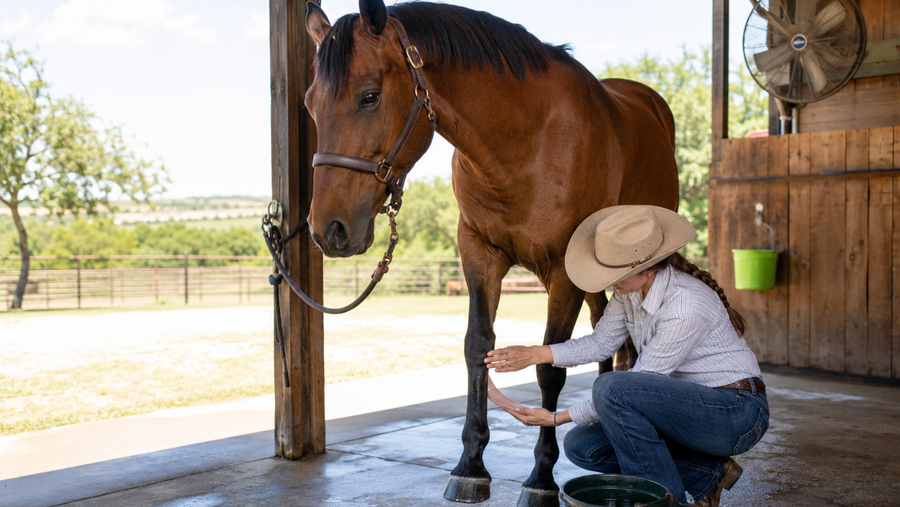
Anything that sits against a horse’s leg deserves a check when it comes off. Boots, wraps, sweat, dirt, and pressure all leave clues.
Leg protection is part of everyday barn life. Bell boots, splint boots, sport boots, shipping boots, polos, standing wraps, quilts, and therapy wraps all have a place when used correctly.
The mistake is treating them like invisible equipment.
Boots and wraps change airflow. They hold heat. They can trap grit. They can shift. They can rub. They can hide the exact area you should have checked before putting the horse away.
If the horse flinches, shifts away, snatches a foot, turns short, or shows one leg that feels different from the others, slow down and check again. Do not let a normal-looking boot fool you into ignoring an abnormal-feeling leg.
After work, hauling, turnout, or a day in boots and wraps, Draw It Out® 16oz Liniment Gel fits the practical daily-use lane for targeted leg and body care after the horse has been checked and cleaned.
For wash-rack routines, larger areas, multiple horses, or regular barn programs, Draw It Out® 32oz Liniment Concentrate gives riders a mix-to-use format for leg and body-care workflows.
Dirty boots and wraps are repeat offenders. Sweat dries into crust. Hair packs into Velcro. Grit sits along seams. Damp quilts get folded and forgotten. Then the same pressure points go right back against the same horse.
Clean the gear before it becomes the problem. Rinse what needs rinsing. Dry what needs drying. Check stitching, edges, Velcro, elastic, and lining. A clean horse under dirty gear is still wearing yesterday’s mistake.
Barn rule
The boot that worked in a dry arena may not behave the same after sweat, rain, mud, deep footing, shipping, or a hotter-than-normal ride. The wrap that looked fine at the start can shift after movement and moisture.
Real horse care is not trusting equipment because it worked last week. It is checking what happened today.
Call your veterinarian if you see obvious lameness, strong heat, swelling that worsens, severe tenderness, wounds, sudden unwillingness to bear weight, tendon or ligament concern, infection concern, or anything that does not improve with appropriate rest and routine care. Do not turn a serious leg into a product experiment.
Boots and wraps are tools. They are not excuses to stop looking. Take them off, clean the leg, feel with your hands, compare both sides, and let the horse tell you whether the routine worked.
For more help choosing the right topical format, visit the Horse Health Library or use the Draw It Out® Solution Finder.
Before you bandage a horse’s leg, compare heat, swelling, tenderness, skin condition, and movement first. This practical wrapping guide explains when routine bandaging fits—and when to call a...
Can you use horse liniment during the heat of the day? Yes, but the horse's temperature, skin condition, and recovery matter more than the clock. Here is the...
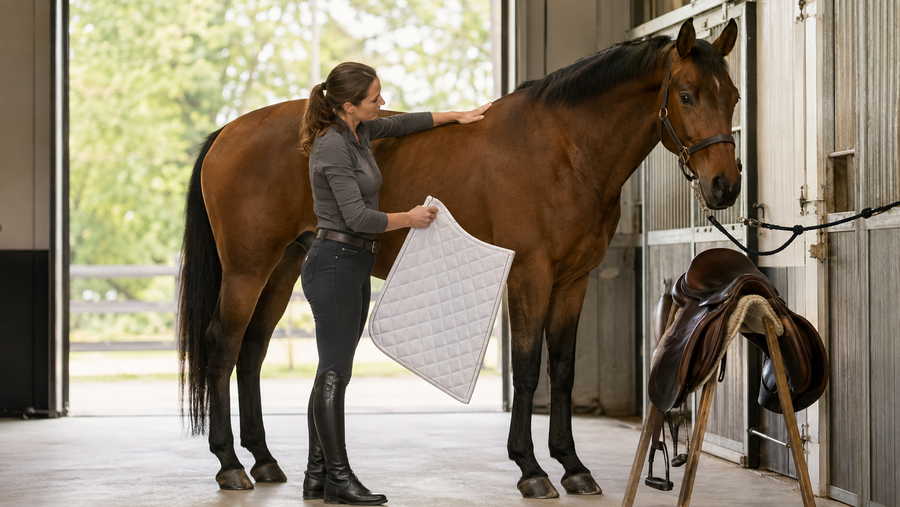
A practical horse health guide for sensitivity after a new saddle pad: sweat marks, dry spots, pad edges, saddle balance, and when to call for help.
!