What Should Be in a Horse Recovery Station? Barn and Trailer Checklist
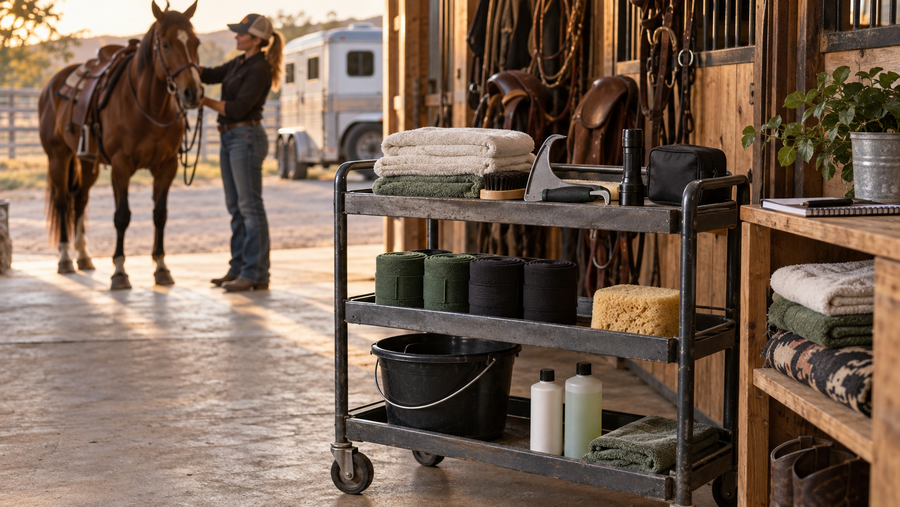
Build a practical horse recovery station for the barn and trailer with observation, cooling, hoof, leg, routine-care, and emergency-ready supplies.

Quick answer: Inspect winter turnout before horses enter it. Check gates, high-traffic paths, water and feeding areas, slopes, frozen ruts, hidden ice, packed snow, mud depth, drainage, fencing, and whether every horse can reach resources safely.
The average appearance of a field is less important than the few places every horse must cross. A safe center does not compensate for an icy gate, churned water area, trapped corner, or narrow feeding lane under herd pressure.
No topical makes unsafe footing acceptable. Use the Horse Health Library for related winter movement, hoof, turnout, and daily-observation guides.
Bottom line: Winter turnout safety is decided at the bottlenecks, then re-decided every time the weather changes.
Educational content only. This article does not replace veterinary diagnosis, treatment, farrier care, qualified instruction or bodywork, emergency services, or current competition rules.
Build a practical horse recovery station for the barn and trailer with observation, cooling, hoof, leg, routine-care, and emergency-ready supplies.
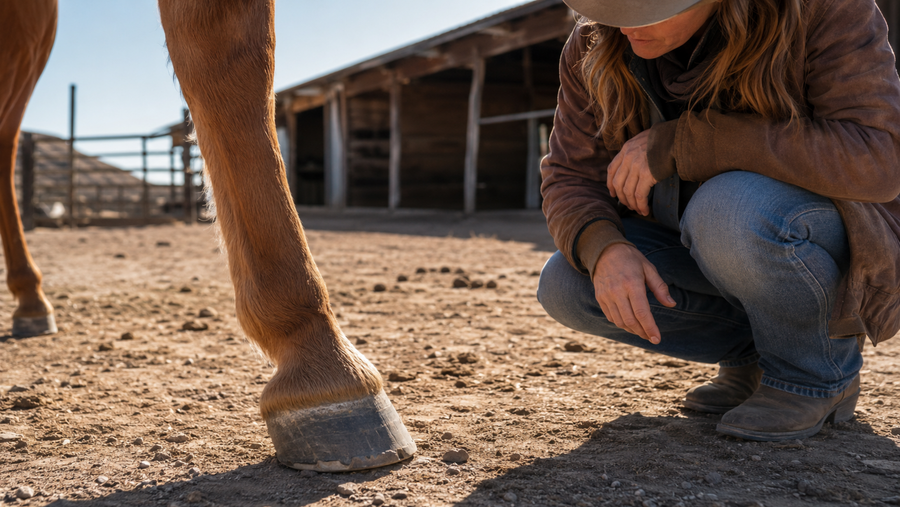
A practical horse health guide for hoof wall chipping in dry lots: trim timing, footing, cracks, shoe checks, and farrier or vet red flags.
Separate muscle loss from fat loss, record topline changes, recognize veterinary red flags, and plan nutrition and exercise around the cause.
!