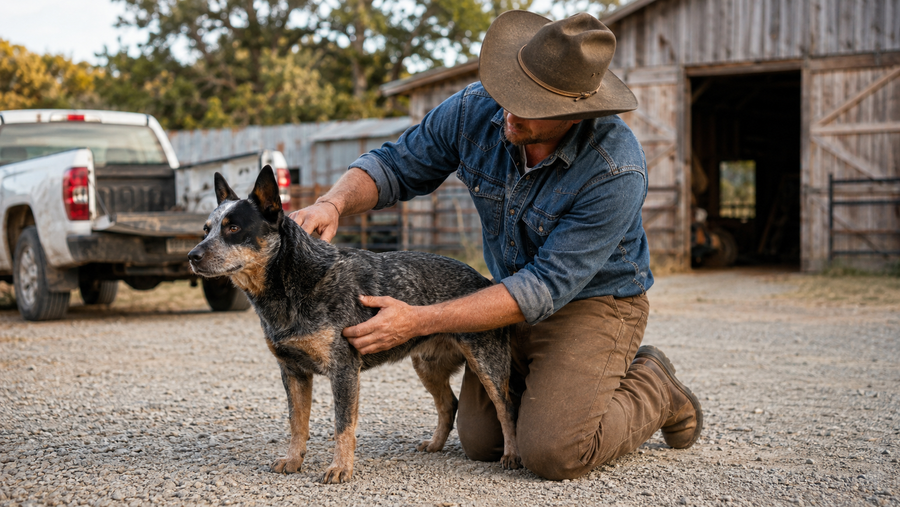
Quick answer: If horse liniment is already on your dog, stop further exposure, prevent licking and contact with other animals, keep the original package, and call your veterinarian, emergency clinic, or animal poison control for instructions based on that exact formula. Do not induce vomiting, apply another topical product, or invent a home antidote. Go to urgent veterinary care for abnormal breathing, collapse, tremors, seizures, severe weakness, repeated vomiting, eye exposure, marked skin irritation, or rapidly changing behavior.
A dog being exposed does not prove poisoning, but the word liniment is not enough to judge risk. Ingredients, concentration, amount, application site, licking, skin condition, body size, age, health history, and time since exposure can all change the response. Product-specific guidance is safer than a universal wash-off rule.
What should you do first?
- Stop additional contact. Move the dog away from the product. Prevent licking and keep other pets, children, bedding, furniture, collars, and harnesses from spreading wet residue when you can do so safely.
- Keep the package. Photograph the front label, directions, warnings, ingredient list, lot information, and contact number. Do not discard or rinse the container.
- Record the exposure. Note the dog's weight, health conditions, body area involved, estimated amount, time, whether the dog licked it, and any change in skin, breathing, movement, alertness, or behavior.
- Call for exact instructions. Contact your veterinarian, emergency clinic, or the ASPCA Animal Poison Control Center at (888) 426-4435. A consultation fee may apply.
- Follow the product-specific plan. Ask whether and how to remove the material, what symptoms to watch for, and whether the dog needs an examination. Do not delay emergency care while waiting for a callback if the dog is already symptomatic.
What information will the veterinarian or poison expert need?
Weight, age, breed, health history, medications, skin condition, and current behavior.
Exact name, species label, ingredients, concentration, directions, warnings, and lot information.
Where it went, how much, when it happened, whether it was licked, and what has already been done.
Skin changes, drooling, vomiting, tremors, weakness, breathing changes, eye discomfort, or altered movement.
Having the package in hand helps the professional avoid guessing. If you go to a clinic, bring the container or clear photographs unless doing so would create more exposure.
Should you wash it off immediately?
Ask for product-specific instructions as soon as possible. Horse liniments do not share one formula, and a cleaning method that is reasonable for one exposure may be wrong for another. Do not use solvents, essential oils, alcohol, strong cleaners, human skin products, or another animal-care product as a neutralizer.
What should you never do?
- Do not induce vomiting unless a veterinarian or poison expert specifically directs it.
- Do not give milk, oil, salt, charcoal, food, medication, or a home antidote without instructions.
- Do not layer a dog product over the exposure in an attempt to cancel it out.
- Do not assume a mild smell, natural ingredient, or lack of tingling makes the exposure harmless.
- Do not wait for dramatic symptoms when the product, amount, or licking risk is unknown.
When is this an emergency?
Seek urgent veterinary care for:
- Abnormal or difficult breathing, pale or blue gums, collapse, or inability to stand
- Tremors, seizures, severe weakness, disorientation, or rapidly changing behavior
- Repeated vomiting, marked drooling, choking, or trouble swallowing
- Eye exposure with pain, squinting, redness, or vision concern
- Rapidly increasing swelling, severe skin irritation, blistering, bleeding, or obvious pain
- A large or unknown exposure, significant licking, or instructions from poison control to go directly to a clinic
How is this different from choosing a dog liniment?
This article owns the accidental-exposure response question. For the broader question of what dog liniment is and why species labels matter, use the canonical Dog Liniment Safety Guide. For routine dog-specific product selection after the exposure concern is resolved, use the K9 dog-care routine hub.
For fly, flea, and tick-control products, use our horse-and-barn-dog label guide before assuming one bottle can serve both species.
Do not apply K9 Advanced™ or any other dog-care product as an antidote. A routine topical product does not diagnose a reaction, neutralize another formula, or replace veterinary guidance.
Frequently asked questions
Should I wash horse liniment off my dog?
Call your veterinarian or animal poison control for product-specific instructions. Formulas differ, so do not use solvents, essential oils, human cleaners, or another topical product as a home remedy. Keep the package available when you call.
What if my dog licked the horse liniment?
Prevent more licking and contact your veterinarian or animal poison control with the exact product, amount, time, and any symptoms. Do not induce vomiting or give a home antidote unless a veterinary professional specifically instructs you.
Is any horse liniment automatically safe for dogs?
No. Do not assume a horse-labeled product is appropriate for a dog. Use the product only for the species named on its current label unless your veterinarian gives directions for that exact product and dog.
Can a dog-care product reverse the exposure?
No. Do not layer a dog-care product over an unknown exposure. A topical product does not neutralize another formula, diagnose a reaction, or replace veterinary or poison-control guidance.
When is accidental topical exposure an emergency?
Seek urgent veterinary care for abnormal breathing, collapse, tremors, seizures, severe weakness, inability to stand, repeated vomiting, marked drooling, eye exposure, rapidly increasing swelling, severe skin irritation, or quickly changing behavior.
This article provides general safety education. It does not assess a specific exposure, diagnose poisoning, or replace veterinary or animal poison-control guidance.