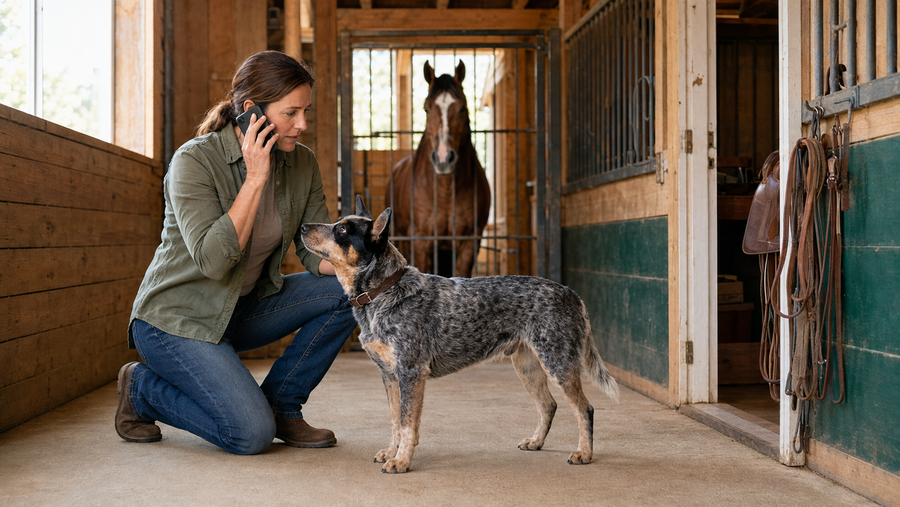

Dog Nails Clicking on the Floor: What That Sound Means
Clicking nails usually mean it is time for a closer look. Check length, dewclaws, paw pads, traction, gait, and the signs that call for a veterinarian.

Dog dandruff can look harmless. A greasy coat can look like a grooming problem. A strong skin odor can tempt you to reach for a different shampoo.
But when flakes, oiliness, crusting or odor keep returning, the skin may be showing you something deeper. Seborrhea is often the visible pattern, not the final diagnosis.
Seborrhea is abnormal scaling of a dog's skin. The coat may look dry and flaky, greasy and oily, or show a mix of both. Primary seborrhea is a rare inherited disorder. Secondary seborrhea is much more common and develops because of another problem, such as allergies, parasites, hormonal disease, or a bacterial or yeast infection. Persistent, itchy, smelly, painful, or recurring skin changes deserve a veterinary exam because controlling the flakes alone may leave the cause untouched.
Jump to home care, bath planning and remedy questions
A dog's outer skin is always renewing itself. Old cells are shed while new cells replace them. Seborrhea develops when that process, called keratinization, is not working normally. The result may be excessive scale, dandruff-like flakes, oily buildup, follicular casts around individual hairs, or rough crusting.
The Merck Veterinary Manual explains that most dogs with seborrheic changes have the secondary form. In other words, the visible skin problem is commonly being driven by an underlying condition.
The hard part is that several very different problems can leave a dog looking flaky, greasy or itchy. If you treat only what you can see, the coat may improve for a few days while the real problem continues underneath.
| Question | Primary seborrhea | Secondary seborrhea |
|---|---|---|
| How common is it? | Rare | Much more common |
| Why does it happen? | An inherited problem with skin-cell turnover | Another condition disrupts the skin and coat |
| When can it begin? | Often in a young dog, commonly before two years of age | At any age, depending on the cause |
| Is itching expected? | Primary seborrhea itself is not usually itchy, although secondary infection or inflammation can make the dog itch | May be itchy or non-itchy |
| What does treatment focus on? | Long-term veterinary management of the skin disorder | Finding and treating the underlying cause, plus managing the skin |
Breeds reported more often with primary seborrhea include American Cocker Spaniels, English Springer Spaniels, Basset Hounds and West Highland White Terriers. Breed can provide a clue, but it does not make the diagnosis. A veterinarian must first rule out more common causes of secondary seborrhea.
Seborrhea can look different from one dog to the next. Check the skin, not only the top of the coat.
Look closely at skin folds, the neck, armpits, belly, feet, groin, tail area and around the ears. Dense coats can hide a great deal until odor, matting or constant licking finally gets your attention.
There is no single seborrhea cause and no one treatment that fits every dog. Your veterinarian may consider:
That list is why diagnosis matters. An anti-itch routine will not correct a thyroid problem. A different shampoo will not remove mites. Treating bacteria while ignoring the allergy that damaged the skin may set up the same problem to return.
Your veterinarian will usually start with age, breed, how quickly the changes appeared, whether the dog is itchy, and whether the problem is seasonal or recurring. Mention changes in appetite, thirst, urination, energy, weight, diet, medication, flea prevention and ear health.
Testing may include skin scrapings for mites, cytology to look for bacteria or yeast, a flea and parasite review, blood testing for internal or hormonal disease, or a skin biopsy when the cause remains unclear. The goal is not simply to name the flakes. It is to learn why the skin is producing them.
Treatment depends on the cause. Secondary seborrhea improves by addressing the underlying problem and any infection or inflammation that developed along with it. A veterinarian may also prescribe a medicated shampoo, rinse, mousse, wipe, ear product, oral medication or a combination selected for that dog's skin.
Bathing frequency and contact time matter with medicated products. Follow the label and your veterinarian's directions exactly, then rinse thoroughly. More bathing is not automatically better. The wrong product or an overly aggressive schedule can make already troubled skin harder to manage.
Do not substitute human dandruff shampoo or baby shampoo. VCA Animal Hospitals notes that canine skin differs from human skin in thickness and pH and recommends using products formulated for dogs, with veterinary guidance when a skin condition is present.
Start with a record and a veterinary plan. Photograph the skin, list every product already used, and contact your clinic about recurring flakes, grease, odor or itching. Home care can support prescribed treatment. Lasting improvement in secondary seborrhea depends on finding its cause.
If you are searching for natural remedies for dog dandruff, first separate an ordinary dirty coat from a skin problem that keeps returning. A dog with painful, oozing or rapidly worsening skin needs prompt veterinary care rather than another trial product.
When your veterinarian recommends a shampoo, write down the exact product, any dilution, how long it must stay on the skin, the rinse instructions, bathing frequency and the next review date. Keep the bottle with those notes. A routine grooming shampoo and a prescribed skin treatment have different jobs.
Use our dog bath-day washing and drying guide for ordinary bath technique. Your veterinarian's instructions and the treatment label determine the schedule for a dog with seborrhea.
A veterinarian may include a formulated moisturizer or emollient in a skin-care plan. That does not make every kitchen oil, homemade rinse or supplement appropriate for every dog. Ask about the exact product and where it fits, especially if your dog already uses a medicated shampoo or topical treatment. Do not replace the prescribed plan with a home mixture.
The Merck Veterinary Manual's seborrhea guidance makes product selection dependent on the skin's scaling, oiliness and underlying problem.
A useful call sounds like this: “The belly is still greasy, the ear odor has returned, and we have used the prescribed shampoo on these dates. What should we change, and when should you see the dog again?”
Make an appointment when scaling, grease, odor or itching persists, keeps returning, spreads, or involves the ears. Seek prompt veterinary care for painful skin, open or oozing areas, bleeding, swelling, pustules, marked hair loss, intense scratching, a rapidly worsening odor, or a dog who is weak, feverish, unusually quiet, not eating, or otherwise acting unwell.
If the problem has not improved with prior treatment, ask whether a referral to a board-certified veterinary dermatologist makes sense. The American College of Veterinary Dermatology specifically lists dandruff, scabs, hair loss, coat changes, odor, persistent licking and scratching among signs that may justify specialty care.
This is a veterinarian-first topic. K9 by Draw It Out® products are not intended to diagnose, treat or cure seborrhea. Do not apply routine grooming or after-activity products over open, oozing, infected-looking or painful skin. Once your veterinarian identifies the cause, ask what can safely remain in the dog's normal care routine and avoid layering products over prescribed treatment unless the clinic approves it.
For repeatable coat and paw checks, use the barn dog grooming routine or browse the K9 care guide library.
When your veterinarian has cleared the normal after-activity routine, the K9 Advanced™ Relief Spray product guide explains the dog-labeled body-care format. It is not a seborrhea shampoo or a treatment for the underlying skin condition.
Dandruff describes visible flakes. Seborrhea is an abnormal scaling pattern that may also include oiliness, odor, crusting and coat changes. Flakes can have several causes, so persistent dog dandruff should not be self-diagnosed.
Seborrhea itself is not considered contagious. However, some underlying problems that can resemble or contribute to scaling, including certain parasites or infections, may affect other animals. Let your veterinarian identify the cause before assuming there is no exposure concern.
Food allergy or a true nutritional problem can contribute to skin changes, but they are only part of the larger list of possibilities. Do not change diets repeatedly or add high-dose supplements without veterinary guidance because doing so can muddy the diagnostic picture.
No. Human scalp products are not formulated for canine skin. Ask your veterinarian which dog-specific product, ingredients, contact time and bathing schedule fit the suspected cause.
There is no safe one-size-fits-all schedule. Some dogs need frequent medicated bathing at first, while others need a different approach. Follow the veterinarian's plan and the product label, including contact time and thorough rinsing.
Record the skin changes and products used, arrange veterinary assessment, and follow the prescribed care plan. Ask for exact bathing instructions and a follow-up date. Recurring flakes, grease, odor or itching need an identified cause; painful, oozing or rapidly worsening skin needs prompt care.
Coconut oil is not a cure for the underlying causes of secondary seborrhea. A veterinarian may recommend an emollient as part of care, but ask about the exact product and application rather than assuming kitchen oil fits your dog's treatment.
Do not substitute a homemade vinegar rinse for veterinary diagnosis or prescribed treatment. Ask your veterinarian whether any additional rinse is appropriate for your dog's skin and compatible with the products already in use.
Secondary seborrhea may improve substantially when its underlying cause is controlled. Primary seborrhea generally requires lifelong management. The outlook depends on the diagnosis, which is why finding the driver matters more than simply removing visible flakes.
Part the coat. Notice the pattern. Record what changed. Then give your veterinarian enough information to work backward from the skin to the cause. That is how you help the dog, not just the dandruff.
Clicking nails usually mean it is time for a closer look. Check length, dewclaws, paw pads, traction, gait, and the signs that call for a veterinarian.
On Labor Day, we honor working dogs, faithful companions and the people who train, handle, protect and care for them every day.
Horse liniment already on your dog? Stop further exposure, keep the package, call a veterinarian or poison control, and use this checklist to identify urgent warning signs.
!