
Quick answer: A 10-minute barn check should cover the horse’s attitude, water, feed, manure, legs, feet, tack, gates, and anything that changed since yesterday. The point is not to make barn life complicated. The point is to catch small changes early.
The best riders are not always the loudest riders, richest riders, or riders with the prettiest setup.
A lot of the best ones are simply consistent. They notice small things before small things become expensive things.
That is where the 10-minute barn check earns its keep. It is not flashy. It is not complicated. It is the daily discipline that keeps a rider honest.
Minute 1: Read the horse before touching anything
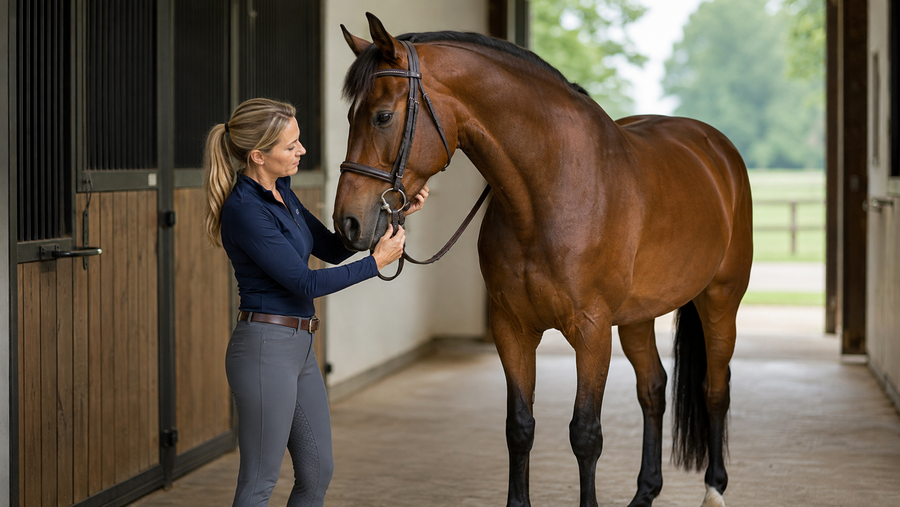
Stand back for a second. Look at the horse’s eyes, ears, posture, breathing, and attitude. A horse that greets you differently, stands differently, or moves away differently may be telling you something before your hands ever find it.
Minute 2 and 3: Check water, feed, and manure
Water level, feed cleanup, and manure are not glamorous. They are useful. Real riders pay attention to basics because basics give you facts.
Was water consumed normally? Was feed finished? Does the stall or pen look normal for that horse? Did manure volume or consistency change? Did anything in the routine change?
Minute 4 and 5: Legs, feet, and first steps
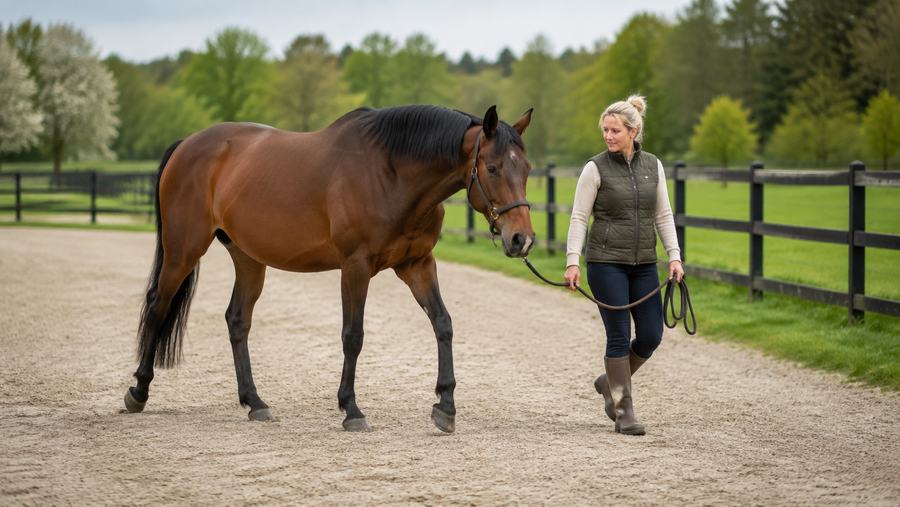
Run your eyes down each leg and compare left to right. Then watch the first few steps. You are not trying to be a veterinarian. You are trying to be an observant owner who knows when something deserves a closer look.
Minute 6 and 7: Tack, equipment, and the things people assume
Most barn problems do not come from one giant mistake. They come from the small thing everyone assumed someone else checked.
Check the halter, lead rope, girth, cinch, billets, reins, bit, saddle pad, buckets, fans, extension cords, latches, and anything the horse can rub, chew, step through, or get hung up on.
Minute 8: Gates, fences, and trailer readiness
Look at the gate like your horse is smarter than the latch. Check fence lines, sharp edges, loose panels, broken boards, open grain-room doors, and anything that changed overnight.
If you haul often, glance at the trailer too. Tires, lights, mats, dividers, lead ropes, hay bags, and emergency basics should not be a mystery when you actually need them.
Minute 9: Decide what kind of day this is
Every barn check should lead to a decision. Normal ride. Easy ride. Groundwork. Hand walk. Rest. Call the farrier. Call the vet. Fix the fence. Clean the bucket. Change the plan.
That is the whole value. You are not gathering information to feel busy. You are gathering information to make a better call.
Minute 10: Write down what changed
A rider with notes has an advantage. You do not need a fancy system. Use a notebook, phone note, whiteboard, or feed-room calendar.
Write down feed changes, turnout changes, work level, behavior, leg checks, hoof issues, weather, travel, and anything that felt off. Patterns are easier to solve when you record them before memory sands off the edges.
FAQ: 10-minute barn checks
What should I check every day at the barn?
Check attitude, water, feed, manure, legs, feet, movement, tack, gates, fences, and anything that changed from the horse’s normal routine.
Do I need to write barn notes every day?
You do not need a novel. Write down changes. Feed, turnout, behavior, movement, weather, work level, travel, and anything unusual are worth tracking.
What is the biggest mistake riders make with barn checks?
Assuming yesterday’s horse is today’s horse. Horses change. Weather changes. Footing changes. Small daily checks help riders catch those changes earlier.
When should a barn check lead to calling a professional?
Call your veterinarian, farrier, trainer, or another qualified professional when the horse shows sudden or persistent changes outside the normal pattern.
This article is general riding and horse care education. It is not veterinary advice. For sudden pain, lameness, swelling, wounds, breathing changes, or persistent changes, contact your veterinarian.