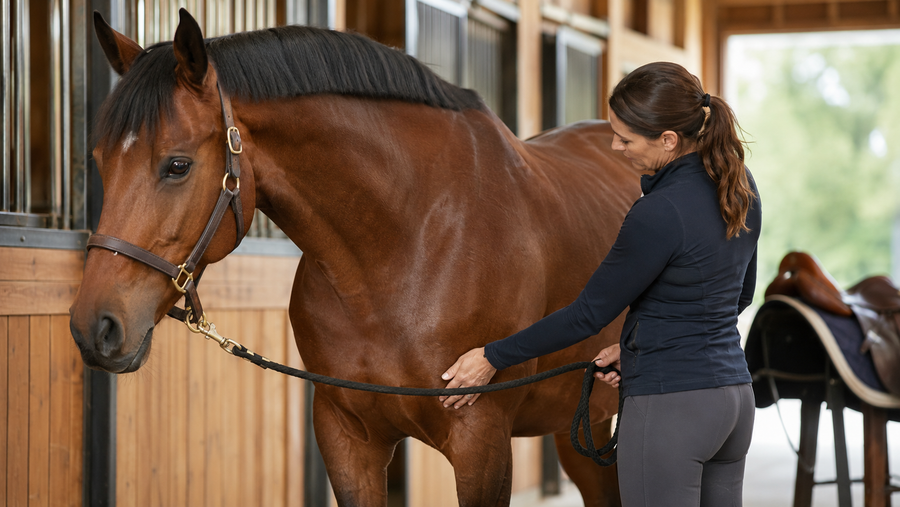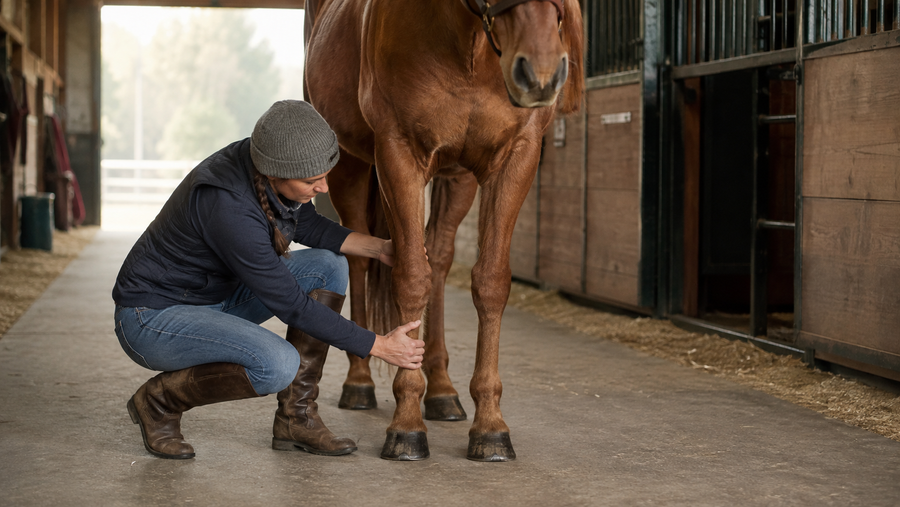
Horse Stocked Up After Standing Overnight: What to Check First
A calm check-first guide for a horse stocked up after standing overnight, including symmetry, heat, movement, skin, wrapping, and veterinary red flags.

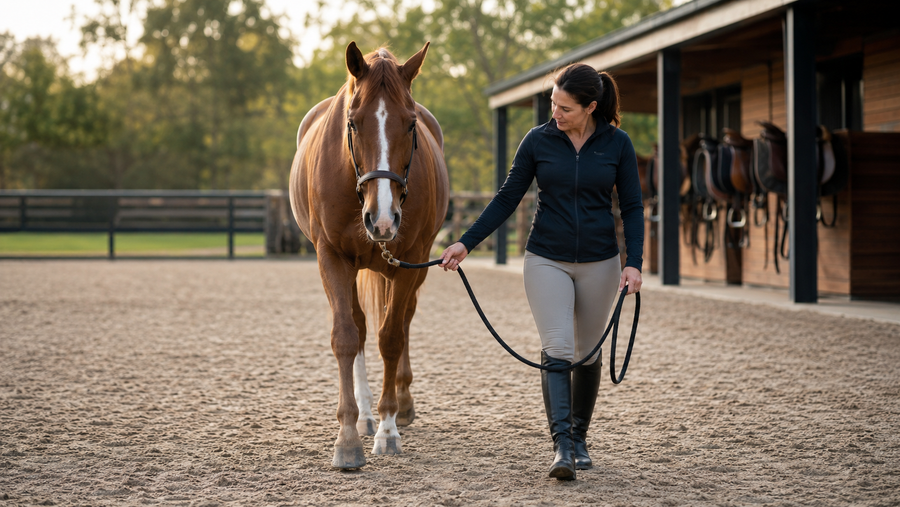
Quick answer: A useful horse trot-up video shows the entire horse at normal speed on level, well-lit footing, moving straight away from and toward a steady camera. Keep every hoof in frame, record several clean passes, and ask your veterinarian which surfaces, gaits, and angles they want. If the horse is markedly lame, unstable, unwilling to bear weight, or unsafe to handle, do not force a trot-up.
Most bad lameness videos are not bad because the phone is old. They are bad because the camera is too close, the horse disappears out of frame, the handler blocks the legs, or the clip begins after the only useful steps.
Your veterinarian does not need cinema. They need clean evidence.
Ask what they want to see. A veterinarian may request walk, trot, a circle, a hard surface, a soft surface, a ridden clip, or a view of a specific transition. Do not add circles, tight turns, flexion, backing, or ridden work on your own if the horse is uncomfortable or the footing is not safe.
A video can preserve a change that disappears at the clinic or only shows after work. It cannot replace palpation, hoof testing, diagnostic analgesia, imaging, or an in-person neurologic and lameness examination.
Safety rule: The camera operator stays out of the travel path. The handler controls the horse. Nobody runs backward in front of a trotting horse to keep the shot centered.
Record normal speed first. Slow motion can help later, but a slow-motion-only clip removes timing and rhythm that may matter. Research on remote forelimb-lameness video found that camera angle affects what an observer can detect, with straight-on views providing useful information. See the open-access study on video angle and remote detection of induced forelimb lameness.
Keep the message short and factual:
A good note sounds like this: “Recorded August 12 at 6:20 p.m. on the packed barn lane. Left hind looks shorter to me after twenty minutes of work. No visible wound. Mild warmth compared with the right. No product or medication applied before this clip.”
If the concern is new and your veterinarian wants to see the untreated movement, record before applying a topical, administering medication, wrapping, icing, or exercising further. Do not delay urgent care for the sake of a video.
After the movement is documented and a professional concern has been ruled out, a normal external-care routine may fit. For targeted, stay-put placement on clean, intact skin, Draw It Out® 16oz Liniment Gel is the ready-to-use format. It is not a diagnostic tool and it does not clear a horse to work.
Do not force a trot-up when the horse is non-weight-bearing, markedly lame, visibly unstable, severely painful, bleeding, showing signs of fracture, or displaying neurologic-looking movement. Sudden pelvic drift, crossing limbs, falling, or inability to stand normally can have serious causes. UC Davis explains one example in its overview of sidewinder syndrome in horses.
Both are useful in many cases, but ask your veterinarian what they want. Never force a trot from a horse that is unsafe or markedly painful.
Keep it steady for the straight-away and straight-toward views. A fixed frame makes asymmetry easier to compare.
Record normal speed first. You can include a slow-motion copy, but do not replace the original.
No. It can document movement and help your veterinarian triage the next step. Diagnosis may require an in-person exam and additional testing.
When a change is new or unexplained, capture the baseline first if it is safe and your veterinarian has not told you otherwise.
The Draw It Out® Solution Finder routes common body, recovery, skin, hoof, grooming, and environmental concerns while keeping veterinary red flags in the professional lane.
Educational horse-care information only. A video does not replace veterinary diagnosis, examination, or treatment.
A calm check-first guide for a horse stocked up after standing overnight, including symmetry, heat, movement, skin, wrapping, and veterinary red flags.
A rider-first guide to shoulder tightness, reduced reach, tack restriction, feet, neck, fatigue, safety checks, professional assessment, and return to work.
A short stride after work can reflect feet, legs, back, tack, footing, fatigue, or pain. Use this check-first routine before deciding on the next ride.
!