Real Rider Resource
Standing Wraps and Recovery: Safer Support From Prep to Recheck
Standing wraps can support a specific care plan, but they can also create pressure, heat, moisture, and new problems when the reason or technique is unclear. Start with the horse, not the wrap.
Quick answer: Wrap only when you know why, have suitable padding and clean materials, can apply smooth even pressure, and can recheck the horse. Do not wrap to hide heat, pain, sudden swelling, lameness, a puncture, or questionable skin. If you are unsure how or whether to wrap, ask a veterinarian or experienced qualified professional.
Do not guess-wrap
- Sudden, one-sided, hot, painful, or rapidly increasing swelling.
- Unknown lameness, tendon-area pain, fever, or a horse that is getting worse.
- A puncture, drainage, active bleeding, irritated skin, or a wound that has not been assessed.
- Any situation where the wrap would make it harder to monitor the area.
Remove the wrap and get help if the horse becomes more uncomfortable, swelling moves above or below the wrap, the wrap slips, the leg feels unusually hot, or the pressure looks uneven.
When standing wraps may fit
A standing wrap may be part of a veterinarian-directed plan, a familiar stocking-up routine, travel preparation, or monitored post-work care. The reason matters because the materials, timing, product choice, and recheck schedule can change with the situation.
Standing wraps are not a diagnosis. They do not make unexplained swelling safe, and they do not replace movement assessment, palpation, or professional evaluation.
Prepare before touching the leg
Check the horse
- Watch the horse walk and turn.
- Compare both legs for heat, swelling, sensitivity, and symmetry.
- Check the skin, heel bulbs, pastern, and any clipped or rubbed areas.
- Know whether the horse normally stocks up and what is different today.
Check the materials
- Use clean, dry padding and wraps in good condition.
- Make sure padding is wide enough and free of folds.
- Keep fasteners, seams, and damaged edges away from pressure points.
- Have a removal and recheck plan before applying anything.
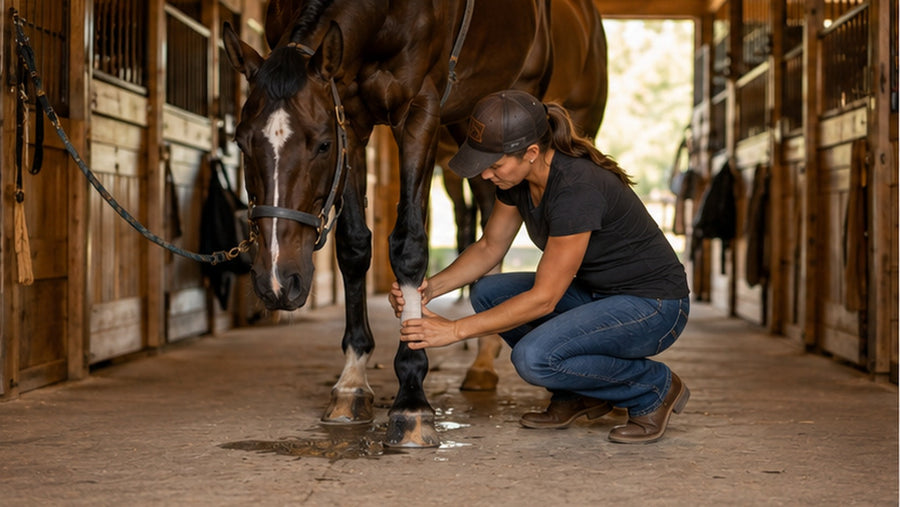
A six-step standing-wrap routine
- Clean and dry the leg. Dirt, wet hair, and debris can create friction or hide a skin problem.
- Apply only the planned topical. If liniment gel is part of the routine, use a thin, even layer according to the current label and care plan. Do not stack unknown products.
- Place padding smoothly. Keep it flat, even, and free of ridges. Padding should protect the leg instead of creating a pressure line.
- Wrap with consistent tension. Overlap evenly and avoid pulling harder at one point. If you cannot judge tension reliably, get hands-on instruction before wrapping alone.
- Secure without a hard edge. Fasten the wrap so it stays in place without creating a tight band or loose tail.
- Recheck the horse and the wrap. Look for slipping, bunching, heat, swelling above or below the wrap, moisture, or a change in comfort. Follow the recheck and removal schedule set for that horse.
Where Draw It Out® fits
Draw It Out® Liniment Gel may fit a thin, controlled under-wrap routine when the current label and the horse's care plan support that use. Draw It Out® Concentrate fits broader, label-directed spray or sponge routines when coverage is the job.
A product does not make wrapping automatically appropriate. Clean preparation, correct padding, even pressure, and rechecking still decide whether the routine is responsible.
Open skin and wounds change the bandaging decision
Draw It Out® products may have directed uses on open skin or wounds. Follow the current label and qualified care plan for the specific situation. Do not assume that product use also means the area should be covered. Open, draining, irritated, or questionable skin changes the bandaging decision because moisture, pressure, contamination, and access for monitoring all matter.
If a wound or skin problem is involved, confirm the cleaning, product, dressing, padding, pressure, and recheck plan before wrapping.
Common wrapping mistakes
- Wrapping both legs automatically without identifying the reason.
- Using dirty, damp, stretched, or damaged materials.
- Applying thick liniment gel or several topicals under padding.
- Using uneven tension or leaving folds in the padding.
- Wrapping over unexplained heat, pain, or lameness.
- Leaving a wrap on without a scheduled recheck and removal time.
- Assuming a horse that stands quietly is comfortable.
Standing-wrap FAQ
Can I put liniment gel under standing wraps?
Use liniment gel under a wrap only when the current product label and the horse's care plan support it. Apply a thin layer, use clean dry materials, and recheck the wrap and horse.
How tight should a standing wrap be?
The pressure should be smooth and consistent, never tight in one band or loose enough to slip. Hands-on instruction is the safest way to learn correct tension.
Should I wrap sudden swelling?
Do not guess-wrap sudden, hot, painful, one-sided, or rapidly increasing swelling. Stop and contact a veterinarian or qualified professional.
Can I wrap over an open wound?
Only with a clear care plan for cleaning, product, dressing, padding, pressure, and rechecks. Open or questionable skin changes the bandaging decision.
What should I do if a wrap slips?
Remove and reapply it correctly if wrapping is still appropriate. A slipped or bunched wrap can create uneven pressure and should not be left in place.
Educational support only. Improper wraps can cause injury. Follow current product labels and ask a qualified professional when the reason, technique, or skin condition is uncertain.
Read the under-wrap liniment guide | Review the horse leg swelling guide | Browse product use guides