


Reason for break
Seasonal downtime, weather, schedule, injury, illness, and mental burnout all call for different returns.

Return-to-conditioning checklist
The break changed the horse. Start smaller than your ego wants. Track the next day. Add work only when the horse proves they are ready.
Quick answer: When bringing a horse back after a break, check why the horse had time off, current fitness, hooves, body condition, attitude, leg changes, and next-day recovery before adding more work. If the horse was off for injury or illness, follow your veterinarian’s return-to-work plan.
A comeback is not the old schedule with a fresh calendar.
A horse coming back from a seasonal break is not the same as a horse coming back from injury, illness, surgery, lameness, or prescribed stall rest. If your veterinarian gave restrictions or a rehab plan, that plan leads. Everything else is secondary.
If the break was from weather, schedule, pasture rest, owner time, or a quiet season, the comeback still deserves structure. Fitness fades faster than pride admits.
Vet-plan rule: If the horse was off because of injury, illness, lameness, surgery, or veterinary restriction, do not use a generic conditioning schedule. Follow the professional plan.
Seasonal downtime, weather, schedule, injury, illness, and mental burnout all call for different returns.
Watch breathing, recovery, balance, willingness, and how quickly the horse tires.
Check farrier cycle, hoof balance, shoeing, cracks, sole comfort, and footing tolerance.
Look at topline, weight, muscle tone, saddle fit, and whether the horse has changed shape.
Some horses come back fresh. Some come back dull. Both tell you something about the plan.
Check heat, filling, swelling, cuts, rubs, and next-day changes after each increase.
The mistake is adding everything at once. Longer rides, trot sets, canter work, hills, poles, circles, collection, hauling, and lessons all create load. A good return plan adds one stressor at a time.
| Layer | What to add | What to watch |
|---|---|---|
| Baseline movement | Walking, turnout, quiet handling, short sessions | Soundness, attitude, breathing, next-day comfort |
| Light work | Short trot sets, simple lines, easy footing | Fatigue, unevenness, fill, reluctance, recovery time |
| Strength work | Gentle hills, poles, transitions, larger figures | Back soreness, hind-end fatigue, balance, rhythm |
| Discipline-specific work | More turns, stops, jumps, collection, speed, or pattern work | Repeated resistance, lead issues, next-day stiffness |
| Travel and showing | Hauling, clinics, lessons, multi-day work | Stocking up, dehydration, flat attitude, slower recovery |
Simple rule: Add duration before intensity. Add intensity before complexity. Add travel last.
The first week back is not where you prove how fit the horse still is. It is where you learn what changed. Walking, grooming, hoof checks, short rides, controlled turnout, and simple lines can tell you a lot.
Walk long enough to observe rhythm, attitude, breathing, and body feel before asking for more.
End while the horse still feels good. Do not wait for fatigue to tell you the session was too long.
Look for heat, filling, cuts, boot marks, rubs, and changes from the pre-work baseline.
Morning-after stiffness, swelling, attitude, and movement tell you whether to repeat, reduce, or progress.
If a step was hard, repeat it until it is easy before increasing difficulty.
A horse can lose fitness during a break, but they can also change shape. Topline, weight, hoof balance, shoeing, and saddle fit may not be what they were before time off.
Most horses do not fail because the first session was hard. They struggle because riders ignore the second-day answer.
Do not train through the warning: If the horse is telling you the increase was too much, believe them.
Conditioning is not only exercise. Water, electrolytes, forage, protein, body condition, temperature, and sweating all matter, especially when the horse returns during hot weather or after a long layoff.
Talk with your veterinarian or nutrition professional when feed changes, weight loss, sweating, dehydration, or electrolyte strategy are part of the comeback.
Draw It Out® 16oz liniment gel can fit a return-to-work routine as a controlled, hands-on body-care step when the horse has been checked and the target area is clean, dry, and intact.
It should not be framed as a shortcut for soreness, inflammation, circulation, tendon support, or conditioning. The value is routine: touch the horse, check the horse, apply thinly where appropriate, and let the next-day response guide the plan.
You do not need a fancy app. You need honest notes. The horse either handled the step or did not.
Best question: “Did this horse earn the next increase?”
Prehabilitation is the bridge between time off and consistent work. It is not dramatic. It is warmup, cooldown, hoof care, hydration, leg checks, gradual load, and enough discipline to stay boring until the horse proves they are ready.
Start by knowing why the horse had time off, checking current fitness, hooves, body condition, tack fit, attitude, and baseline movement. Begin with short, easy sessions and track the next-day response.
It depends on the length of the break, reason for time off, age, fitness, discipline, and health history. A horse coming back from a seasonal break is different from a horse returning after injury or illness.
Use caution. Lunging adds circles and torque, especially if the horse is fresh or unfit. Many horses do better starting with walking, turnout, groundwork, or straight-line work before harder circles.
Liniment gel can fit routine care when the horse is sound, acting normal, and the skin is clean, dry, and intact. Do not use product to push through lameness, swelling, heat, pain, or poor recovery.
Heat, filling, swelling, lameness, unevenness, back soreness, girthiness, attitude changes, longer recovery, or next-day stiffness can all mean the workload increased too quickly.
Call your veterinarian if the horse shows lameness, heat, swelling, sharp pain, fever, weakness, behavior changes, appetite changes, or poor recovery after small workload increases.
Add more only when the horse handles the current step comfortably during work and the next day. If the horse is tired, sore, filling, or reluctant, repeat or reduce the step.
For controlled, targeted body-care routines on clean, dry, intact skin, Draw It Out® 16oz liniment gel is the practical starting point. Use it as part of a broader routine, not as a substitute for conditioning judgment.
Start smaller. Track honestly. Add work one layer at a time. Use Draw It Out® where the routine fits, but let the horse’s next-day answer decide the plan.
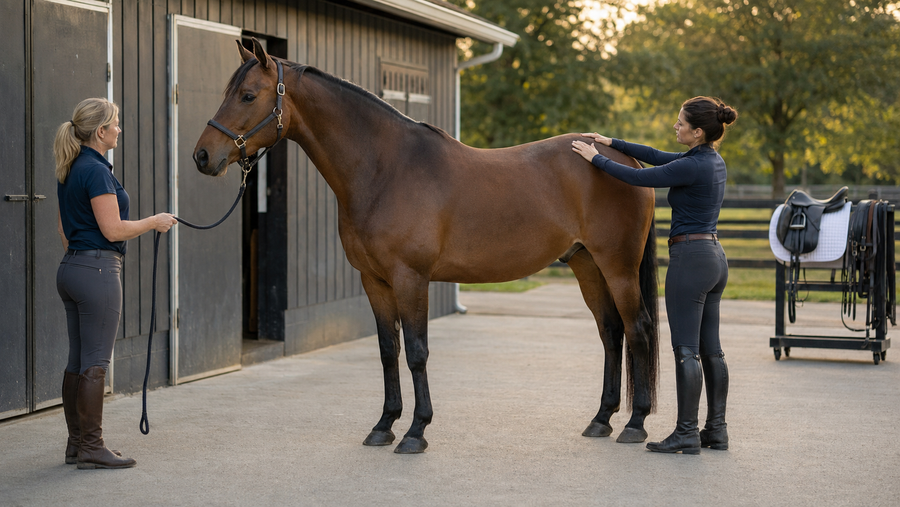
A practical rider-first guide to lower back tightness after canter work: what to check in the saddle, loin, hind end, footing, transition...
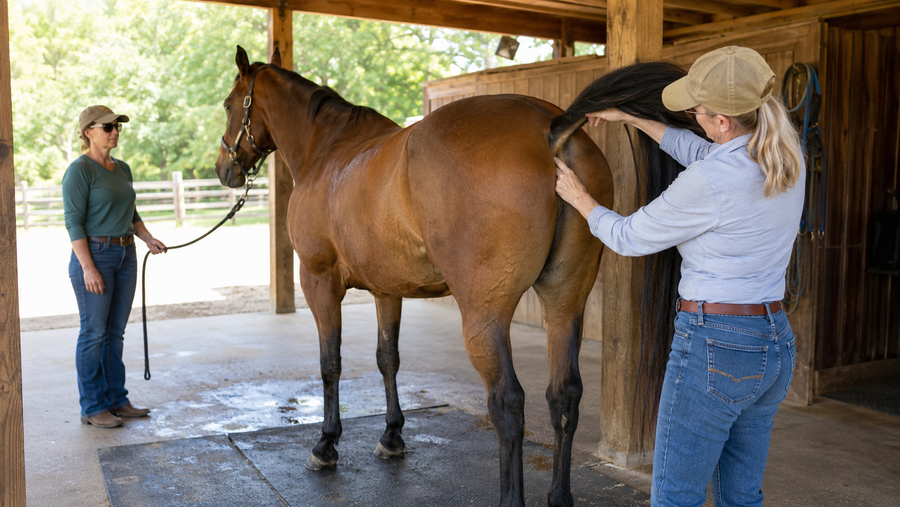
A practical horse-health guide to tail rubbing in hot weather, covering skin, insects, sweat, gear, parasites, hygiene, and veterinary re...
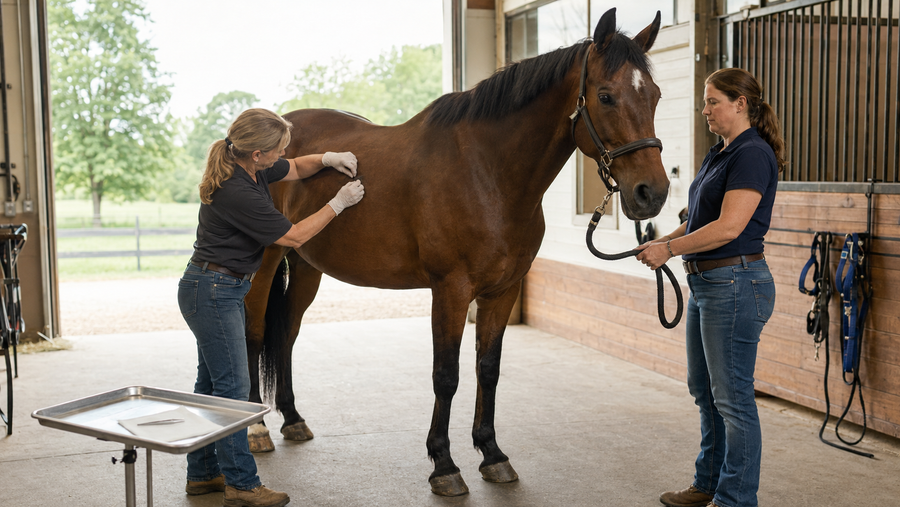
Found a tick on your horse? Inspect the site, remove it safely when appropriate, record the exposure, watch red flags, and know where Cit...
!