Draw It Out® Horse Health Care News
Horse Has Girth Rubs After Hot Rides? What to Check Before You Saddle Again
Summer rides create the perfect friction problem: sweat, dust, hair, tack pressure, heat, and repeated movement under the girth. A small rub can look minor in the aisle and feel like a hard no once the horse is asked to work again.
Short answer: if your horse has girth rubs after a hot ride, do not just saddle over them. Clean and dry the area, check for broken skin, heat, swelling, drainage, or a sharp behavior change, then inspect tack fit, hair direction, dirt buildup, and girth placement before the next ride. Use skin-care products only after the area is clean and dry, follow label directions, and call your veterinarian when the rub is open, spreading, painful, swollen, or paired with lameness or fever.
Real riders know this one. The horse rode fine yesterday. Today you reach for the girth and the horse pins an ear, steps away, humps his back, or gives you that look that says, “You missed something.”
That is not attitude until you have checked the skin. Hot weather makes small tack problems louder because everything under the saddle becomes damp, gritty, and mobile. Sweat softens the skin. Dust turns into paste. A girth that was fine in April may start acting different in July when the horse is sweating harder, changing shape, or carrying a slightly different coat.
Start with the skin, not the product shelf
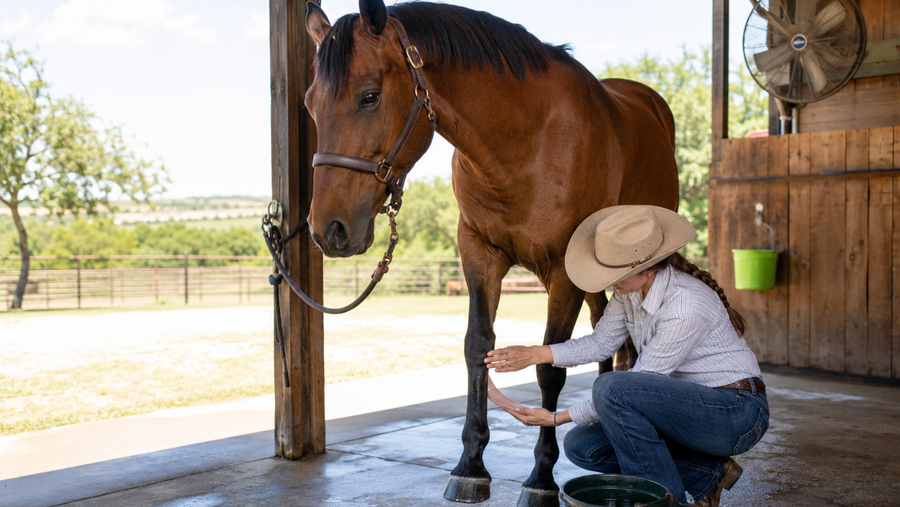
Before you reach for anything, get eyes and hands on the actual area. Separate the hair. Look under the elbow, behind the girth groove, along the sternum, and anywhere the girth edge rides. A rub can hide under hair until pressure exposes it.
Check these first
- Broken skin: if the surface is open, raw, bleeding, crusted, draining, or worsening, stop and treat it like a bigger issue.
- Heat or swelling: warmth, puffiness, or a raised edge can mean the area needs more than another ride.
- Reaction: flinching, biting, kicking, cinchy behavior, or sudden resistance can be a useful warning signal.
- Pattern: a clean line often points to tack pressure. A broad irritated patch often points to sweat, dirt, hair, or trapped friction.
- Symmetry: one-sided rubs can tell you something about saddle position, horse posture, girth tension, or rider balance.
If the horse is sore enough to change behavior, do not argue with him. Horses do not write complaint emails. They move away, pin ears, hold tension, or give you less horse than they gave you yesterday.
What causes girth rubs in hot weather?
Most girth rubs are not caused by one villain. They are usually a stack of small barn realities that show up together.
Sweat and salt
Sweat dries into salt and residue. When that sits under tack, it can make every stride feel like sandpaper.
Dirt under pressure
Fine dust, arena footing, loose hair, and dried mud can collect along the girth line and create a gritty friction point.
Girth edge or placement
A clean rub line may be telling you the girth edge, buckle, keeper, or placement is doing more work than it should.
Body and coat changes
Heat, fitness, shedding, weight change, and workload can alter how tack sits even when the tack has not changed.
The five-minute pre-saddle check
Before the next ride, run this quick check. It is not complicated. It is the kind of plain, unglamorous horsemanship that keeps a small problem from becoming the thing that ruins a week.
- Brush the whole girth path. Do not just curry the pretty parts. Get under the elbow and along the belly where sweat and dirt hide.
- Feel with your fingertips. Look for raised edges, scabs, heat, swelling, thickened skin, or a spot that makes the horse brace.
- Inspect the girth itself. Check seams, buckles, stitching, dried sweat, rough spots, hardened pads, and any place that has become stiff.
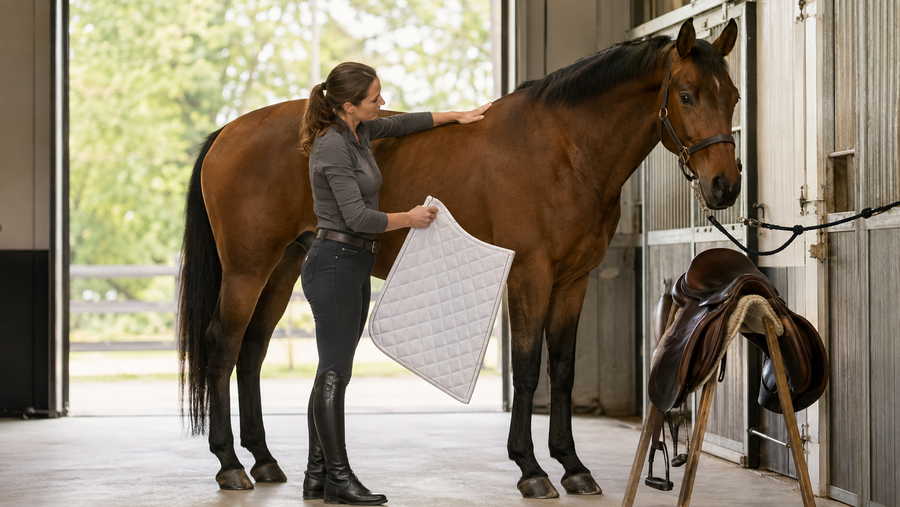
- Check saddle position before tightening. Make sure the saddle is not creeping forward into the shoulder or pulling the girth into a bad groove.
- Tighten in stages. A sudden hard cinch on tender summer skin is a good way to create a bad association.
When not to ride
Some rubs are minor enough to manage with cleaning, rest from pressure, and better tack hygiene. Some are not. Do not saddle over an area that is open, actively draining, sharply painful, hot, swollen, spreading, or changing fast. Do not ride if the horse is also off, dull, feverish, unusually reactive, or showing a bigger body problem.
That is the line. A rub is a barn problem. A wound, infection concern, unexplained swelling, or significant behavior change is a veterinarian conversation.
Where Draw It Out® fits in the routine
Product does not replace inspection, cleaning, drying, tack adjustment, or judgment. It belongs after the basics are handled.
For broad skin-care areas after sweat, dirt, and tack pressure, Rapid Relief Restorative Spray 8oz is the lighter spray-format option for practical barn routines. For more controlled hand placement on rough, dry, rubbed, or flaky areas, Rapid Relief Restorative Cream 8oz gives you a focused cream step. When you want a stay-put salve format for a tack room, trailer kit, or regular skin-care shelf, RESTOREaHORSE® 8oz fits that role.
Always apply products to clean areas as directed on the product label. Avoid loading product under dirty tack or using any topical as a way to ignore a fit, pressure, or veterinary issue.
Build the routine before the problem gets loud
A good summer skin-care shelf is not about collecting bottles. It is about having the right steps ready when sweat, friction, dirt, and tack pressure start showing up.
Shop Rapid Relief SprayShop Rapid Relief CreamShop RESTOREaHORSE®Use the Solution FinderFAQ
Can I ride a horse with a girth rub?
Do not ride over an open, painful, hot, swollen, draining, or worsening rub. If the area is mild, closed, and not reactive, the better answer may still be a tack adjustment, lighter work, or giving the skin a break from pressure until you know why it happened.
Why do girth rubs show up more in summer?
Heat adds sweat, salt, damp hair, dust, and repeated friction. That makes small tack-fit or hygiene problems show up faster than they might in cooler weather.
Should I put product under the girth before riding?
Do not use topical product as a shortcut under dirty tack or on an area that should not be under pressure. Clean the skin, dry it, follow label directions, and fix the tack or friction issue first.
What tack should I check if my horse keeps getting rubbed?
Check the girth material, edge, seams, buckles, elastic, keepers, saddle position, pad bulk, and whether the saddle is creeping forward. Also check both sides of the horse to see whether the rub is symmetrical.
When should I call the vet for a girth rub?
Call your veterinarian if the rub is open, spreading, swollen, hot, draining, unusually painful, associated with lameness or fever, or not improving with basic pressure relief and clean skin care.