Horse Flinches When Brushed Over the Back: What to Check
A new grooming flinch is information, not attitude. Use this calm checklist to separate skin irritation, pressure sensitivity, tack clues, and veterinary red flags.

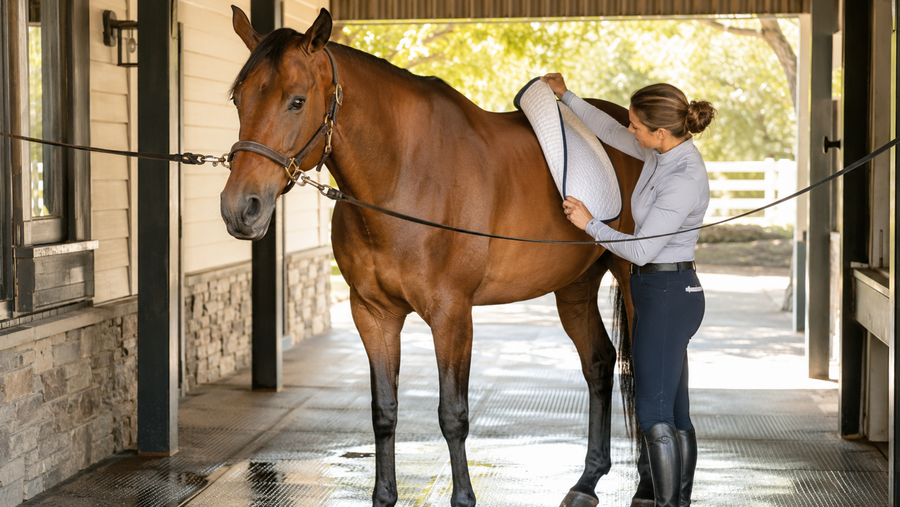
A new saddle pad can change the whole feel of a ride. Thickness, shape, stiffness, seams, shims, heat, and how the saddle sits can all make a horse sensitive after work.
If your horse is sensitive after a new saddle pad, check sweat marks, dry spots, pad edges, wither clearance, saddle balance, girth path, hair rubs, swelling, heat, and whether the sensitivity repeats with that pad. Call your saddle fitter or veterinarian for pain, swelling, open skin, repeated soreness, or movement changes.
A pad is not just a blanket under the saddle. It changes spacing and pressure. A thicker pad can make a good saddle too narrow. A stiff pad can bridge. A seam can rub. A dirty or hot pad can irritate skin.
Use the new pad for a short test ride first. Check before and after. Photograph sweat patterns. If the horse gets reactive or sore, stop using that setup until you know why. If the same mark repeats, get the tack checked before the horse starts objecting louder.
Use the Horse Health Library for tack and post-ride checks. Use What Does My Horse Need? if the horse’s response points toward skin, stiffness, hoof, travel, or uncertainty.
Yes. A new pad can change pressure, saddle balance, heat, friction, and wither clearance.
Not if the horse is sore, swollen, reactive, or showing repeated pressure marks.
The horse decides whether the setup works. Your job is to look after the ride.
A new grooming flinch is information, not attitude. Use this calm checklist to separate skin irritation, pressure sensitivity, tack clues, and veterinary red flags.
A practical horse health guide for fetlock puffiness after deep sand: heat, pain, symmetry, boot marks, footing depth, and vet red flags.
Heat rash under tack can involve sweat, friction, moisture, dirt, pressure, fit, or skin disease. Inspect the area and stop friction before reuse.
!