Horse Sensitive After a New Saddle Pad? What Owners Should Check
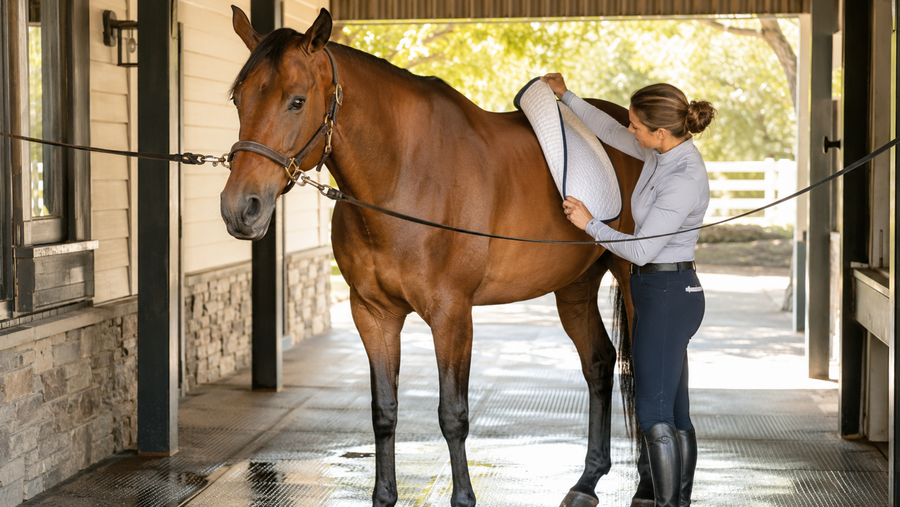
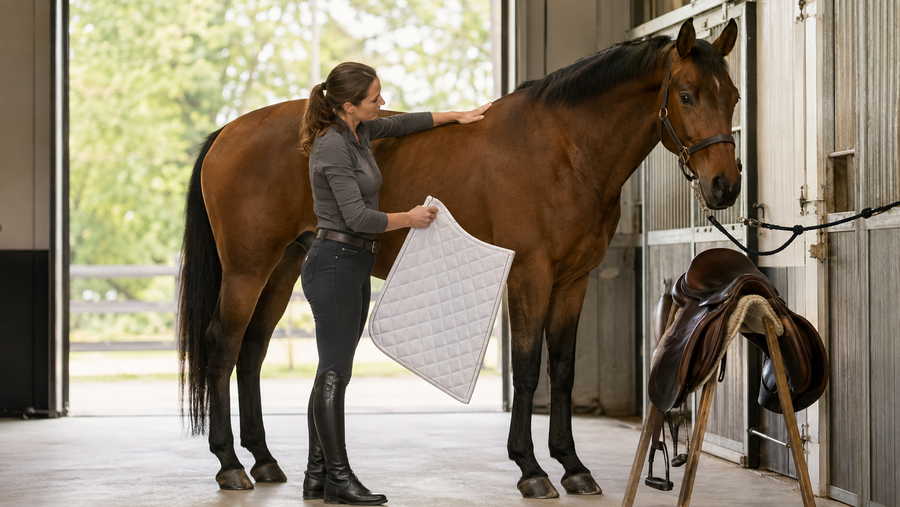
A practical horse health guide for sensitivity after a new saddle pad: sweat marks, dry spots, pad edges, saddle balance, and when to call for help.

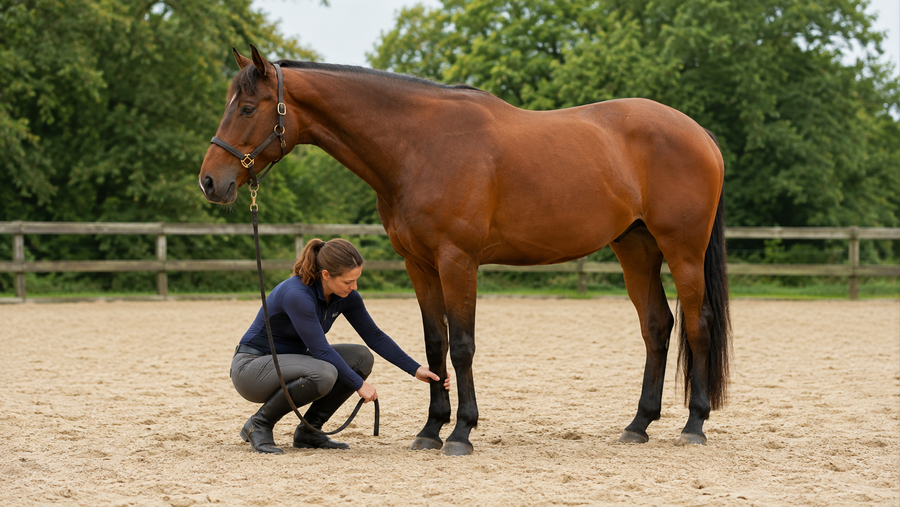
Lower hind legs can look fuller after hauling and standing in a show stall. Limited movement, heat, workload, hydration changes, bedding, and bandaging can all affect what you see. The important job is to separate soft, even filling from swelling that signals pain, injury, infection, or another problem.
If a horse’s hind legs fill after standing at a show, compare both legs for symmetry, heat, pain, wounds, discharge, wrap marks, digital pulses, and movement. Hand walk only if the horse is comfortable and it is safe. Call a veterinarian for one-sided or rapidly increasing swelling, heat, pain, lameness, fever, a wound near a joint or tendon, or filling that does not improve as expected.
Stand the horse square on level ground and look from behind and from the side. Are both hind legs similarly full, or is one clearly different? Soft, even filling in both lower hind legs after long stall time is a different pattern from a single hot, painful leg.
Use clean hands to compare the same structures on each side. Note whether the swelling pits under gentle pressure, where it begins and ends, and whether the horse resents touch. Do not repeatedly squeeze a painful area.
If the horse is sound and comfortable, a short period of calm hand walking may help you see whether soft, even filling changes with movement. Recheck the legs in the same place and light. Improvement can be useful information, but it does not overrule heat, pain, lameness, fever, or a wound.
Do not force exercise to “walk it out” when the horse is lame, painful, weak, or otherwise abnormal. Call the veterinarian and follow instructions.
Record haul time, stall time, weather, water intake, work, footing, and when the filling appeared. Note whether shipping boots, standing wraps, or exercise boots were used. Uneven or overly tight bandaging can create pressure problems, so only use wraps you can apply correctly and consistently.
A label-directed external liniment may be part of a familiar grooming and recovery routine for an otherwise appropriate horse. It should not be used to hide pain, delay evaluation, or make a swollen leg “ready” for another class. Review the horse liniment collection or visit What Does My Horse Need? for general product guidance.
No. Symmetry and improvement with movement can be reassuring observations, but persistent filling or any accompanying heat, pain, fever, wounds, or lameness deserves veterinary advice.
Only use bandages when you know how to apply them correctly and the plan is appropriate for the horse. Ask a veterinarian when swelling is new or unexplained.
Improvement is one data point. The full decision should include heat, pain, wounds, soundness, the whole horse, and professional guidance when anything is uncertain.
A class can be changed. Protect the horse by making the decision from the current evidence.
A practical horse health guide for sensitivity after a new saddle pad: sweat marks, dry spots, pad edges, saddle balance, and when to call for help.
A practical horse health guide for fetlock puffiness after deep sand: heat, pain, symmetry, boot marks, footing depth, and vet red flags.
Heat rash under tack can involve sweat, friction, moisture, dirt, pressure, fit, or skin disease. Inspect the area and stop friction before reuse.
!