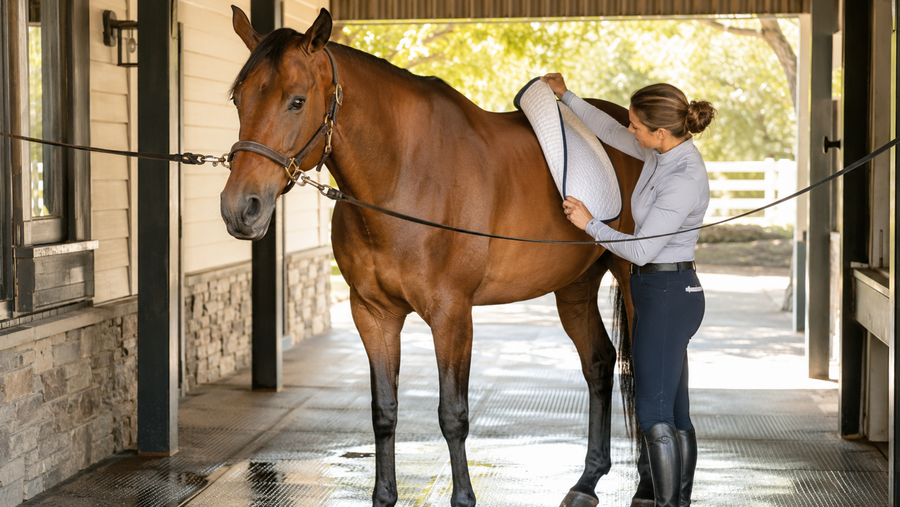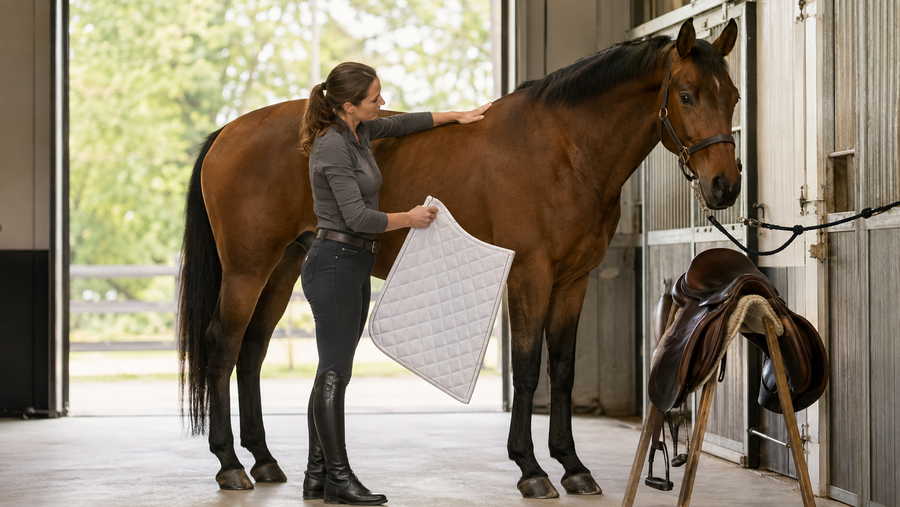
Horse Sensitive After a New Saddle Pad? What Owners Should Check
A practical horse health guide for sensitivity after a new saddle pad: sweat marks, dry spots, pad edges, saddle balance, and when to call for help.

Deep sand can make the lower legs work harder than the ride looks from the rail. Fetlock puffiness after deep footing deserves a careful check before the next ride.
If your horse is puffy around the fetlocks after deep sand, check heat, pain, symmetry, lameness, digital pulse, footing depth, workload, boot marks, and whether puffiness improves with quiet movement. Call your veterinarian for one-sided swelling, heat, pain, lameness, wounds, or swelling that does not improve.
Deep footing increases effort. Horses push through the ground, stabilize joints, and may fatigue faster. The lower legs can show the cost through filling, heat, tenderness, or a shorter stride the next day. Soft ground is not automatically easy ground.
Walk, check, and write down the conditions. If puffiness is soft, even, and improves, keep monitoring. If it is hot, painful, one-sided, or paired with lameness, call the vet. Do not throw another hard ride on top of lower-leg filling just because the horse is willing.
Use the Horse Health Library for leg-care education. If appropriate external support fits after the horse is checked, review the active horse liniment collection.
Yes. Deep footing can increase lower-leg workload and show up as filling or sensitivity.
Call for heat, pain, lameness, wounds, one-sided swelling, or swelling that does not improve.
The arena may look soft, but the legs still paid the bill.
A practical horse health guide for sensitivity after a new saddle pad: sweat marks, dry spots, pad edges, saddle balance, and when to call for help.
Heat rash under tack can involve sweat, friction, moisture, dirt, pressure, fit, or skin disease. Inspect the area and stop friction before reuse.
A practical horse health guide for saddle pressure marks after summer riding: sweat patterns, dry spots, pad fit, saddle balance, and when to ask for help.
!