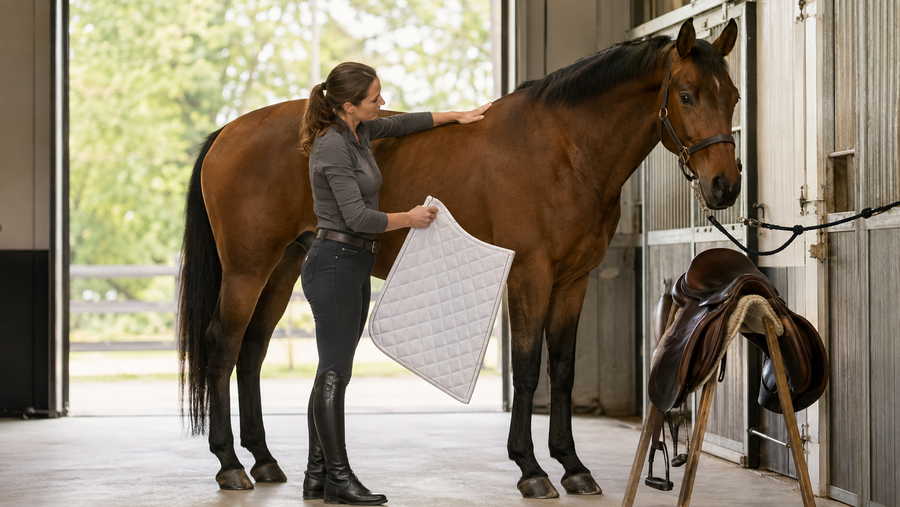
Horse Flinches When Brushed Over the Back: What to Check
A new grooming flinch is information, not attitude. Use this calm checklist to separate skin irritation, pressure sensitivity, tack clues, and veterinary red flags.

Saddle pressure marks after summer riding deserve a closer look before the next ride. Sweat, heat, longer rides, pad movement, rider balance, and changing body condition can all change how tack sits on the horse.
If your horse shows saddle pressure marks, check sweat patterns, dry spots, broken hair, swelling, heat, wither clearance, pad placement, saddle balance, and whether the same mark repeats. Call your saddle fitter or veterinarian if there is pain, swelling, skin irritation, repeated marks, or movement changes.
Sweat can reveal uneven contact. A clean pad print is useful. A repeated dry spot, rub line, or sore area is information. The goal is not panic. The goal is to catch a tack or body change before the horse has to object under saddle.
Untack carefully and look before grooming everything away. Photograph repeated marks. Clean pads and girths often in summer. If the same pattern keeps showing up, pause the setup and get the saddle checked.
Use the Horse Health Library for post-ride checks and What Does My Horse Need? when a pattern points toward stiffness, skin, hoof, or travel support.
No. Some sweat marks are normal, but repeated dry spots, rubs, swelling, or sensitivity should be checked.
Not blindly. Check saddle fit, pad placement, horse body condition, and rider balance together.
The horse’s back tells the truth after the ride. Look while the evidence is still fresh.
A new grooming flinch is information, not attitude. Use this calm checklist to separate skin irritation, pressure sensitivity, tack clues, and veterinary red flags.
A practical horse health guide for sensitivity after a new saddle pad: sweat marks, dry spots, pad edges, saddle balance, and when to call for help.
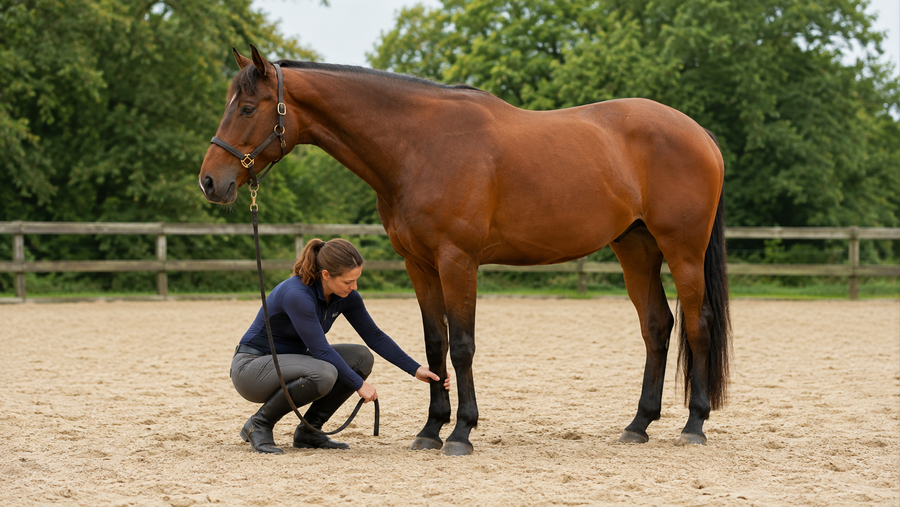
A practical horse health guide for fetlock puffiness after deep sand: heat, pain, symmetry, boot marks, footing depth, and vet red flags.
!