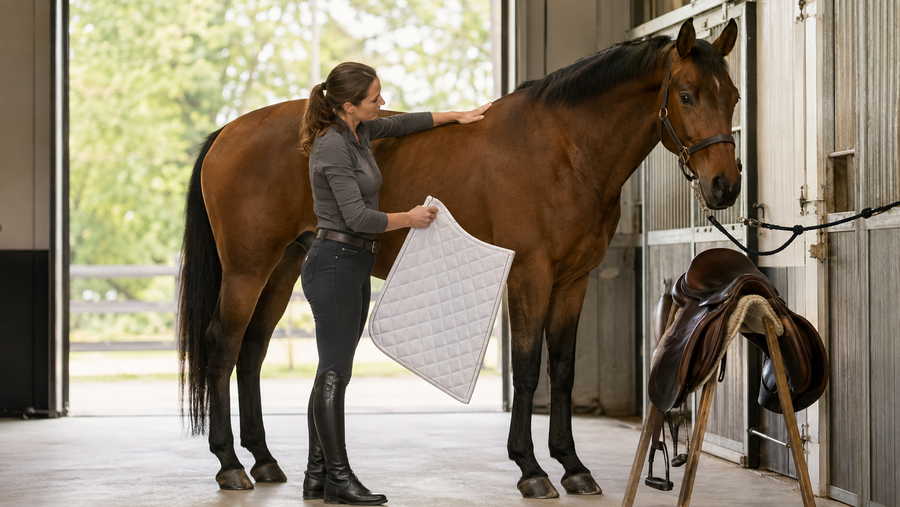
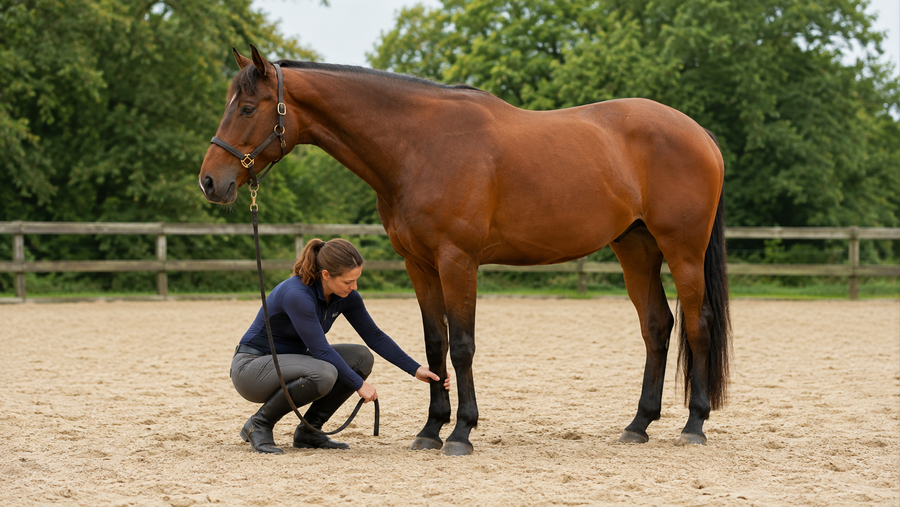
Horse Flinches When Brushed Over the Back: What to Check
A new grooming flinch is information, not attitude. Use this calm checklist to separate skin irritation, pressure sensitivity, tack clues, and veterinary red flags.

Poll sensitivity after braiding can come from tight bands, pulling, mane roots, headstall pressure, neck tension, or a horse that stood braced longer than normal. Do not ignore a horse suddenly protective around the top of the neck.
If your horse is sensitive around the poll after braiding, check mane roots, braid tightness, skin, ears, halter and bridle fit, neck movement, swelling, heat, and whether the horse resists lowering or turning the head. Call your veterinarian for severe pain, swelling, neurologic signs, wounds, head shaking, or behavior that is new and worsening.
Remove braids after the event. Do not leave tight bands in longer than needed. Groom the crest and poll gently, then recheck after the horse has had time to relax. If the horse stays reactive, stop guessing and call the right professional.
Use the Horse Health Library and What Does My Horse Need? guide to sort body-care and skin-care clues. For appropriate external support after work, review the active horse liniment collection.
Tight braids, mane pulling, standing tense, and gear pressure can contribute to sensitivity.
Remove tight braids, check the skin and poll, and avoid adding bridle pressure until the horse is comfortable.
Good grooming should support the horse, not make him pay for presentation.
A new grooming flinch is information, not attitude. Use this calm checklist to separate skin irritation, pressure sensitivity, tack clues, and veterinary red flags.
A practical horse health guide for sensitivity after a new saddle pad: sweat marks, dry spots, pad edges, saddle balance, and when to call for help.
A practical horse health guide for fetlock puffiness after deep sand: heat, pain, symmetry, boot marks, footing depth, and vet red flags.
!