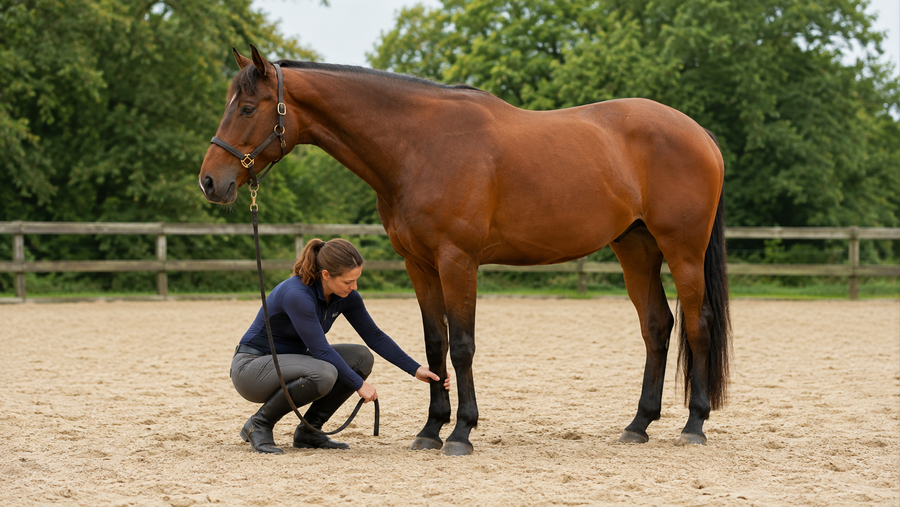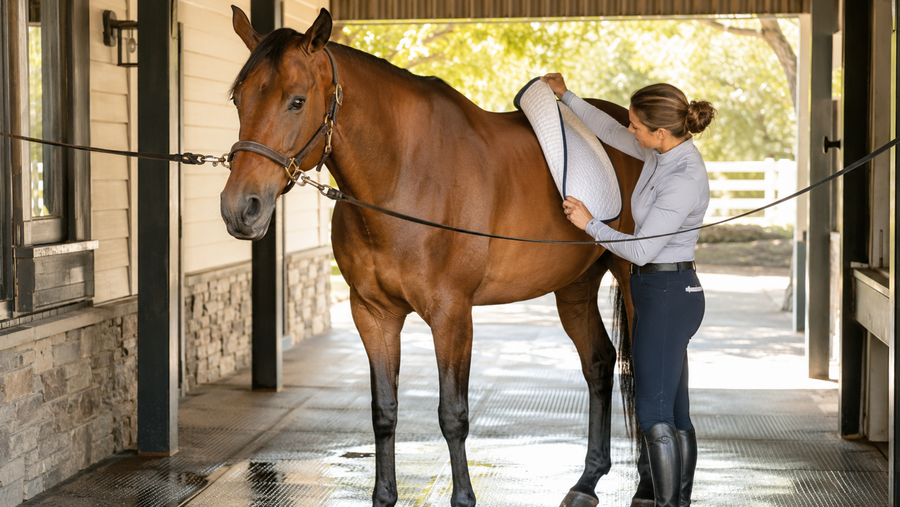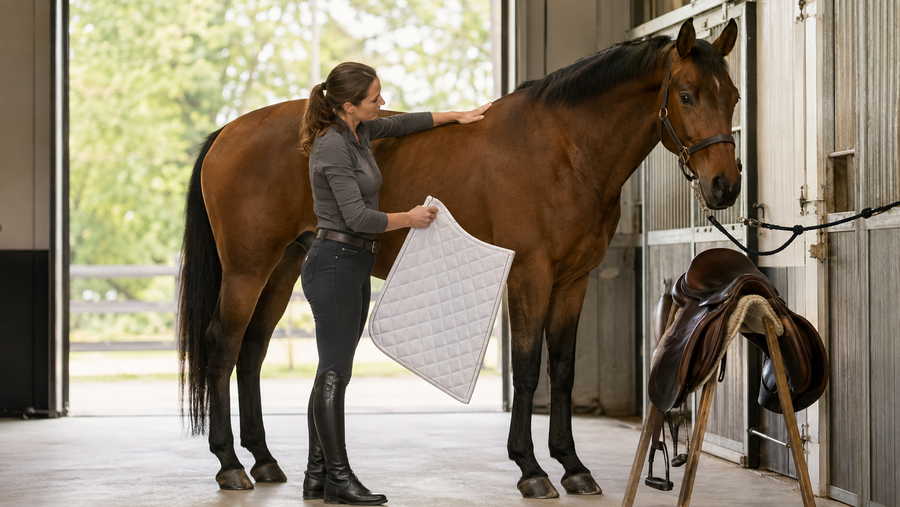
Horse Sensitive After a New Saddle Pad? What Owners Should Check
A practical horse health guide for sensitivity after a new saddle pad: sweat marks, dry spots, pad edges, saddle balance, and when to call for help.

A horse with sudden drooling, mouth blisters, coronary-band lesions, fever, reluctance to eat, or unexplained lameness is not a routine summer-skin or fly-spray problem. Vesicular stomatitis virus, commonly shortened to VSV, is active in the western United States in 2026. Riders need a clear stop-movement, isolate, and call-the-veterinarian plan.
If a horse develops unexplained drooling, oral blisters or erosions, lesions around the lips, nose, ears, sheath, udder, or coronary band, fever, reluctance to eat or drink, or new lameness, stop movement and call your veterinarian promptly. Separate the horse, dedicate its equipment, and follow veterinary and animal-health instructions before hauling, showing, treating lesions, or moving other animals.
USDA's September 18, 2026 situation report counted 49 VSV-affected premises in the 2025-26 outbreak across Arizona, Colorado, and New Mexico: 32 confirmed positive and 17 presumptive positive. Forty-six premises had only equine species clinically affected, and three had only cattle clinically affected.
Since the September 14 report, two new presumptive-positive equine premises were identified in Colorado, one in Delta County and one in Montezuma County. Two previously affected premises were released from quarantine, one in La Plata County and one in Montezuma County. The September 18 report still lists three Colorado premises quarantined, with none currently quarantined in Arizona or New Mexico.
All confirmed cases in this outbreak have been the New Jersey serotype. Counts, counties, quarantine releases, and movement requirements can change quickly.
Read the September 18 USDA APHIS VSV situation report and review current EDCC alerts before hauling or making a show decision.
VSV is a contagious livestock disease that primarily affects horses and cattle. Biting flies and midges are important transmission routes. Contaminated hands, clothing, boots, buckets, tack, grooming tools, trailers, and other shared equipment can also complicate barn biosecurity.
VSV does not usually cause high mortality, but painful lesions can interfere with eating, drinking, movement, and routine care. A suspected case can trigger testing, quarantine, show disruption, interstate movement questions, and international travel restrictions.
Reducing biting-insect pressure is still part of sensible warm-weather barn management. Manure removal, clean pens, fly traps, physical barriers, labeled sprays on intact skin, and reducing standing water can support the broader prevention plan.
That does not make fly control a diagnosis or treatment. Use the Horse Fly Protection guide for routine planning, and follow your veterinarian and state animal-health officials when disease is suspected.
Before hauling from or through an affected area, check current state animal-health requirements, event rules, destination-barn policies, and interstate documentation requirements. A health certificate issued before a new outbreak update may not answer every current movement question.
For Canada-bound horses, USDA APHIS currently lists Colorado as a VSV-affected state and says exports of horses from VSV-affected states are suspended. Under the current Canadian requirements, a state can be considered free of VSV 30 days after its last quarantine is released. Confirm current eligibility before finalizing an international trip through the USDA APHIS Canada export guidance.
If a horse has lesions, fever, unexplained drooling, or a known exposure, stop the trip and call your veterinarian. Do not let an entry deadline, hauling schedule, or one normal temperature reading overrule a disease concern.
Remove visible dirt, saliva, feed, bedding, and manure before applying a veterinarian-approved disinfectant. Organic material can reduce disinfectant performance. Follow the correct concentration and contact time, and pay attention to latches, buckets, hoses, trailer surfaces, tack, grooming tools, footwear, and vehicle touchpoints.
Keep a clean zone for healthy horses, a transition zone for supplies and clothing changes, and an isolation zone for the suspect horse. Do not carry buckets, tools, manure equipment, or clothing from isolation back into the clean barn without the required cleaning process.
Keep your veterinarian's number, state animal-health contact, isolation location, dedicated buckets, disposable gloves, boot-cleaning supplies, thermometer, and a written new-arrival routine easy to find. Use the Horse Health Library and Regional Horse Care guide for broader disease, weather, travel, and emergency-readiness decisions.
Yes. USDA's September 18 report counted 49 affected premises across Arizona, Colorado, and New Mexico: 32 confirmed positive and 17 presumptive positive. Three Colorado premises remained quarantined. Check the latest official report because premises, counties, quarantine status, and movement rules can change.
Yes. Contact your veterinarian when VSV is suspected. Veterinarians and animal-health officials coordinate required testing, reporting, quarantine, and release decisions.
No routine fly spray should be presented as guaranteed VSV prevention or treatment. Insect control can reduce biting-insect pressure as one part of a broader biosecurity plan, but suspected disease requires veterinary evaluation.
Do not haul until the horse has been evaluated and you have appropriate veterinary and animal-health direction. Stop movement, separate the horse, and avoid sharing equipment.
Human infection can occur. Use careful hygiene and the personal protective measures directed by veterinary or public-health professionals when handling suspicious lesions or contaminated materials.
Last reviewed September 20, 2026. Educational information only. Diagnosis, testing, treatment, quarantine, movement, and release decisions belong with veterinarians and applicable animal-health officials. Current federal, state, event, and destination requirements supersede this page.
A practical horse health guide for sensitivity after a new saddle pad: sweat marks, dry spots, pad edges, saddle balance, and when to call for help.
A practical horse health guide for fetlock puffiness after deep sand: heat, pain, symmetry, boot marks, footing depth, and vet red flags.
Heat rash under tack can involve sweat, friction, moisture, dirt, pressure, fit, or skin disease. Inspect the area and stop friction before reuse.
!