Horse Sensitive After a New Saddle Pad? What Owners Should Check
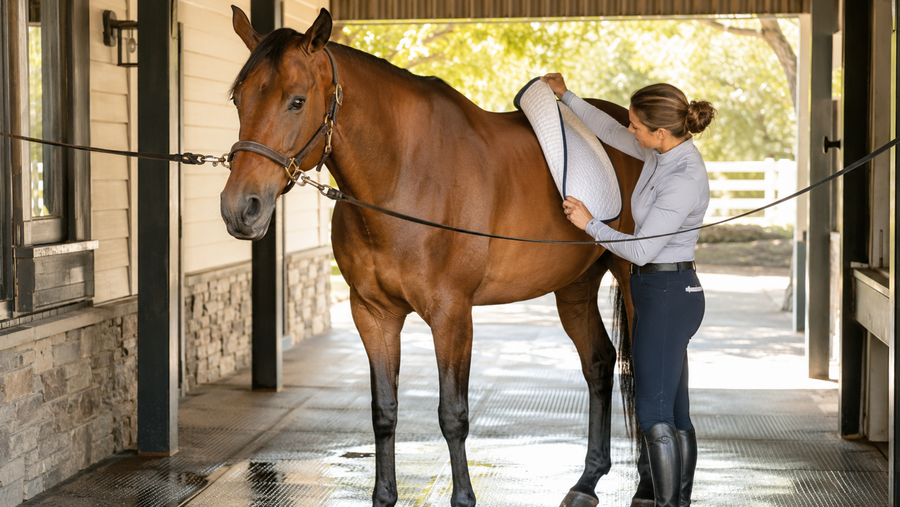
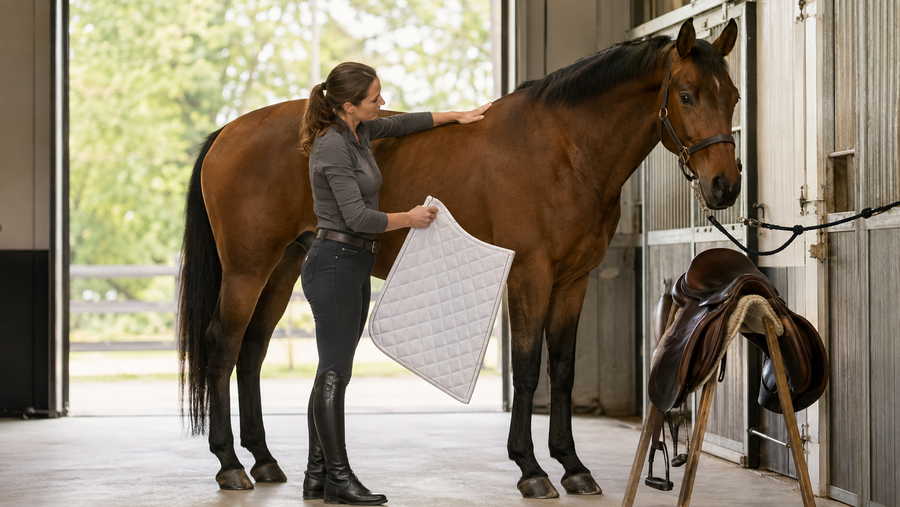
A practical horse health guide for sensitivity after a new saddle pad: sweat marks, dry spots, pad edges, saddle balance, and when to call for help.

Soreness behind the girth is not a place to guess. Pressure, sweat, rubs, bites, tack fit, and deeper discomfort can all show up there.
If your horse is sore behind the girth, remove tack and check both sides for heat, swelling, rubs, hives, bites, hair loss, open skin, and pain response. Do not tighten tack over a sore area. Call your veterinarian for painful, hot, open, spreading, sudden, or severe swelling.
Use Draw It Out® products only when the skin and situation fit the label. For external post-work body support after the horse is checked, review Draw It Out® Liniment Gel. Do not use topical product to hide pain, wounds, or swelling that needs a veterinarian.
Pressure, rubs, bites, dirty tack, poor fit, heat, sweat, or body discomfort can contribute.
Not until you know the cause and the area is not hot, swollen, open, painful, or worsening.
The girth area deserves hands-on attention before the next ride.
A practical horse health guide for sensitivity after a new saddle pad: sweat marks, dry spots, pad edges, saddle balance, and when to call for help.
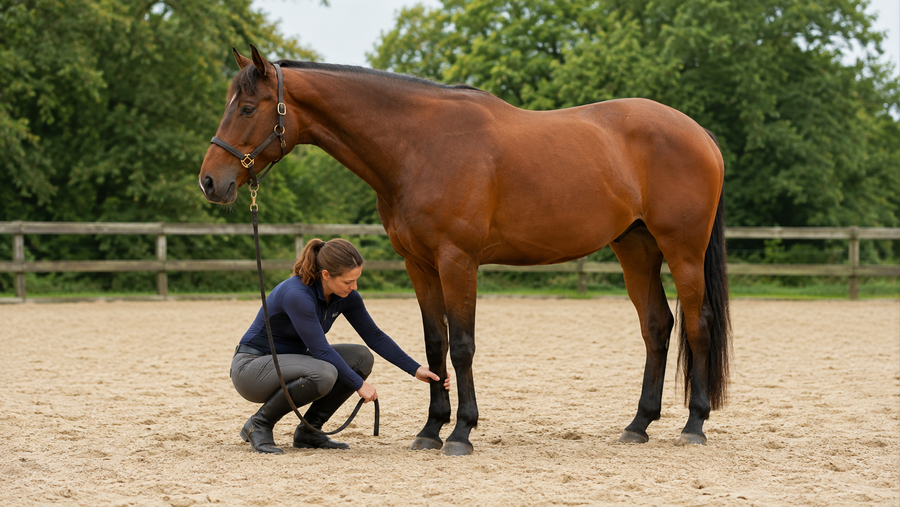
A practical horse health guide for fetlock puffiness after deep sand: heat, pain, symmetry, boot marks, footing depth, and vet red flags.
Heat rash under tack can involve sweat, friction, moisture, dirt, pressure, fit, or skin disease. Inspect the area and stop friction before reuse.
!