


Aug 08, 2026
Can You Use Draw It Out® Liniment With Red Light Therapy for Horses?
A practical guide to sequencing equine red light therapy, massage and Draw It Out® Liniment without confusing separate tools or overstati...

A long trailer ride can leave a horse stiff, stocked up, tight, dehydrated, or simply travel tired. Do not saddle first and explain later. Check the horse in front of you before you ride.
If your horse feels stiff after a long trailer ride, do not just saddle up and hope the first few circles fix it. Start with attitude, hydration, legs, feet, back, and a short walk-off check before deciding whether the horse is ready to ride.
Hauling is work, even when the horse stands quietly the whole way. A horse has to balance through turns, brace through stops, stand on vibration, handle heat, and sometimes drink less than normal. By the time you unload, what looks like simple stiffness may be normal travel fatigue, mild stocking up, hoof soreness, back tension, dehydration, or an injury that needs a veterinarian.
Before you pull the horse off the trailer, look at the whole picture. Is the horse alert? Sweaty? Dull? Scrambling? Standing square? Leaning hard on one side? Did the trailer ride include hard braking, rough roads, heat, or a long delay?
Once the horse is unloaded, pause before tying short, throwing tack on, or rushing to warm-up. Let the horse stand in a safe spot and settle. Watch the breathing, eyes, ears, expression, and how evenly the horse carries weight.
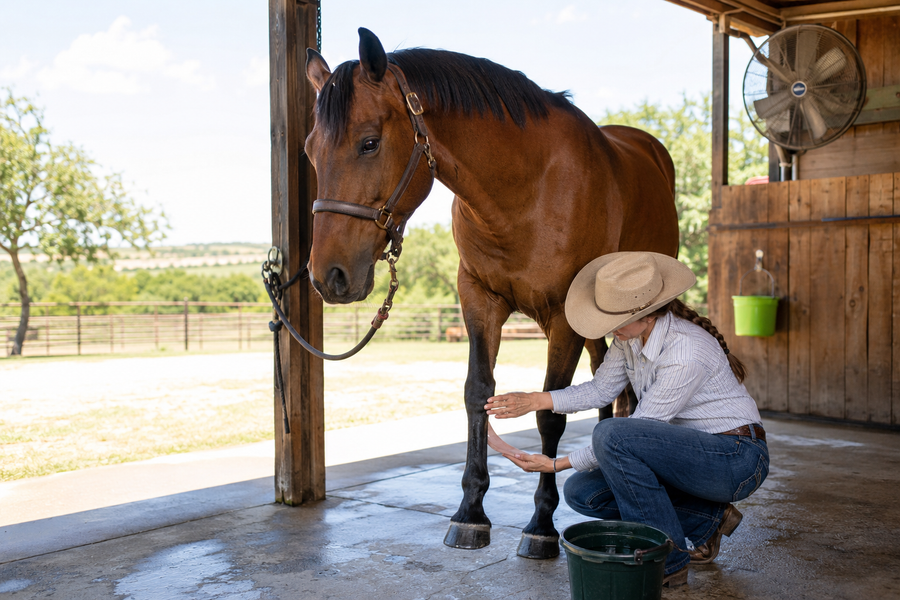
Run your hands down each leg before you decide stiffness is harmless. Compare left to right. Feel for heat, swelling, cuts, filling around the fetlock, stocking up above the pastern, and sensitivity when you touch tendons or joints.
A little filling after standing in a trailer can happen, especially in horses that stock up when stalled or hauled. But new heat, one-sided swelling, sharp sensitivity, a wound near a joint, or uneven weight-bearing deserves more respect.
Walk the horse in hand before riding. Give the horse a few quiet minutes on safe footing and watch the pattern. Does the horse improve after easy walking? Is the stiffness even on both sides or worse on one leg? Is there toe dragging, short-stepping, head bobbing, reluctance to turn, or soreness through the back or shoulder?
Symmetrical stiffness that loosens with easy movement is a different problem than one-sided lameness. If the horse is clearly lame, do not ride. If movement gets worse instead of better, stop and reassess.
Travel stiffness is not always just muscle and joints. Check water intake, manure output, gum color, attitude, appetite, and recovery. A horse that is stiff, dull, not drinking, not passing manure, or acting colicky needs veterinary attention, not another product and a hopeful warm-up.
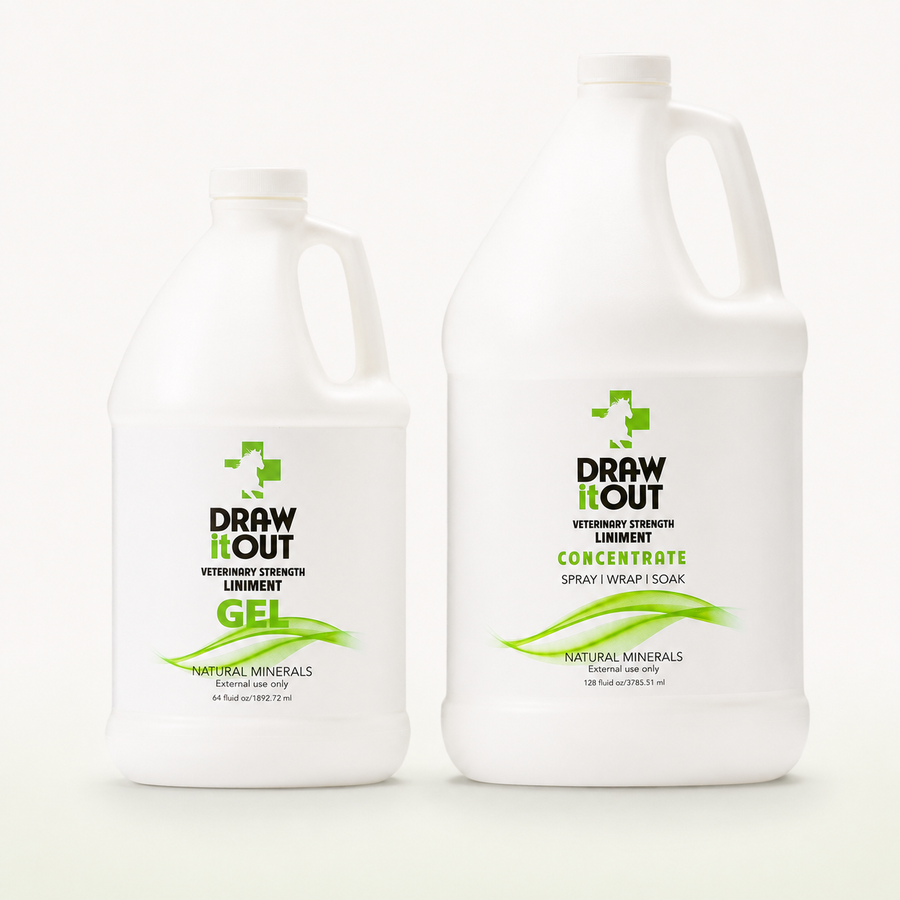
If the horse is sound enough for routine care and you are dealing with normal travel tightness, a simple topical routine can help you stay consistent. Use Draw It Out® 16oz Liniment Gel for targeted post-haul leg, shoulder, back, or hip care after your hands-on check.
For larger barns, repeated hauling, or wrap-based routines, Draw It Out® 32oz Liniment Concentrate gives you a mix-to-use option for wash-downs, leg care, and daily maintenance routines. If the issue is more foot-focused, inspect the hoof before reaching for a leg routine. For ongoing hoof and skin care around the foot, Silver Hoof EQ Therapy® belongs in the conversation.
Call your veterinarian if the horse is non-weight-bearing, clearly lame, painful to the touch, has significant swelling, has a wound near a joint, develops hives or breathing changes, shows colic signs, has abnormal gum color, has a strong digital pulse with foot pain, or does not improve with rest and careful observation.
There is no shame in scratching. There is shame in knowing something is wrong and asking the horse to cover for you anyway.
Some mild stiffness can happen after a long trailer ride because the horse has been balancing, standing, and bracing. It should improve with quiet movement. Clear lameness, swelling, heat, or worsening movement is not something to ignore.
Only after a hands-on check and a quiet walk-off show the horse is comfortable and moving evenly. Do not ride through one-sided lameness, obvious pain, significant swelling, or abnormal behavior.
Start with attitude, hydration, legs, feet, and movement. Check for heat, swelling, cuts, hoof issues, digital pulse changes, dullness, and any unevenness at the walk.
This article is educational and does not replace veterinary diagnosis or treatment. When in doubt, call your veterinarian.
A practical guide to sequencing equine red light therapy, massage and Draw It Out® Liniment without confusing separate tools or overstati...

Why do equine bodyworkers, massage therapists and chiropractors choose Draw It Out®? Compare Gel and Concentrate, professional workflows,...
Can you use horse liniment during the heat of the day? Yes, but the horse's temperature, skin condition, and recovery matter more than th...
!