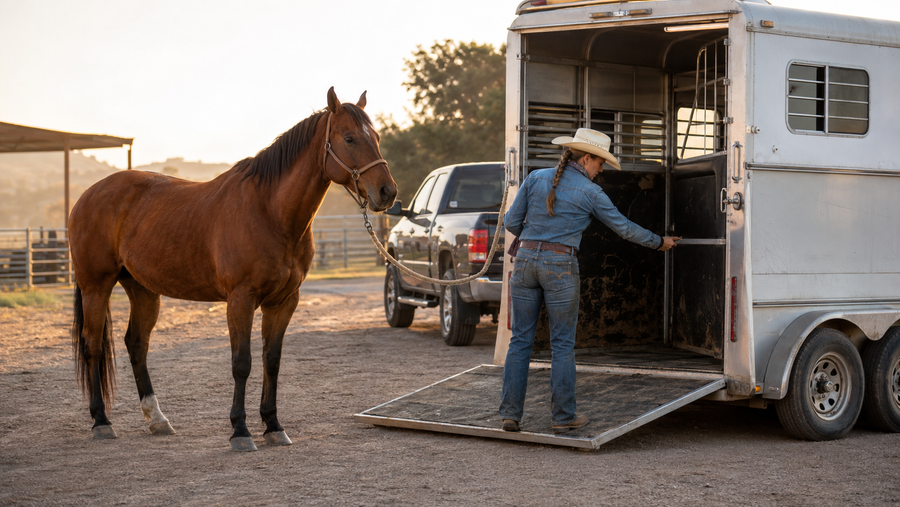
Horse travel guide
Horse Travel Recovery: What to Check After Hauling
Quick answer: After unloading, let the horse settle, check breathing and behavior, offer water, inspect legs and hooves, and watch a short walk on safe footing. Compare every finding with the horse's normal before deciding about turnout, riding, wraps, electrolytes, or topical products.
Hauling affects horses differently. Trip length matters, but so do heat, humidity, ventilation, road conditions, standing balance, water intake, feeding, temperament, and how familiar the horse is with travel. A fixed clock cannot tell you when every horse is ready to work. A consistent arrival check can.
The first 10 minutes after unloading
Minute 0 to 2: settle and observe
Unload on secure footing and give the horse space to stand quietly. Watch breathing, posture, alertness, sweating, and willingness to bear weight evenly. Do not rush immediately into equipment changes or exercise.
Minute 2 to 4: offer water and check basic output
Offer clean water without forcing intake. Note whether the horse drinks, shows interest in hay, urinates, or passes manure. One observation does not tell the whole story, so continue monitoring after arrival.
Minute 4 to 7: inspect legs, hooves, and skin
Remove shipping gear and inspect the skin underneath. Compare all four legs for heat, filling, sensitivity, rubs, cuts, or a shifted shoe. Pick out the feet and check for packed debris or a new hoof concern.
Minute 7 to 10: watch a calm walk
If the horse appears comfortable and the footing is safe, hand-walk briefly and watch the stride. Some horses loosen gradually after standing. A horse that is clearly lame, distressed, weak, or unwilling to move should not be pushed through a walking routine.
What to keep checking after arrival
Hydration
Track actual drinking, not assumptions. Look at attitude, mucous membranes, manure, urine, and environmental conditions. Use the hauling hydration check schedule for 3, 6, and 9-hour trips and overnight stops.
Breathing and temperature
Know the horse's normal resting values and your veterinarian's instructions. Persistent abnormal breathing, cough, nasal discharge, fever, or a horse that looks unwell deserves prompt attention.
Appetite and manure
Reduced interest in feed, changes in manure, pawing, repeated lying down, flank watching, or other colic signs should not be dismissed as ordinary travel fatigue.
Legs and movement
Recheck after the horse has had time to settle. Record new heat, swelling, sensitivity, wounds, gait changes, or a stronger digital pulse.
Walk, rest, turn out, or ride?
The next step depends on the horse and the trip. Light hand-walking may fit when the horse is bright, comfortable, breathing normally, and moving evenly. Quiet rest may fit when the horse needs time to drink, eat, and settle. Safe turnout may help some horses, but only when the environment and horse make it appropriate.
Do not ride by the clock alone. Consider trip length, arrival findings, temperature and humidity, water intake, sleep, the horse's experience, and the demands of the planned work. For a long haul, an overnight stop or recovery day may be more responsible than an immediate training session.
Useful record: departure time, stops, water offered and consumed, temperature and weather, manure, arrival time, leg findings, behavior, and the horse's response several hours later. This turns a vague impression into information you can use on the next trip.
Where products fit after the assessment
A topical product can fit only after the horse has been checked. Use it on clean, dry, intact skin and follow the current label. Do not apply over a wound, unexplained marked swelling, or another finding that needs veterinary evaluation.
- Draw It Out® 16oz High Potency Gel offers controlled placement for a label-directed post-haul body-care routine.
- Draw It Out® Concentrate offers broader format flexibility when mixed and applied as directed.
- Electrolytes should follow the current label and the horse's veterinary or nutrition plan. They do not replace water, monitoring, or professional care.
If shipping boots, standing wraps, or other equipment are used after arrival, check skin, fit, pressure, and timing. Wrapping requires skill and should never be used to hide a change that has not been evaluated.
Post-haul red flags
Contact a veterinarian promptly for:
- Colic signs, repeated lying down, pawing, or persistent reduced appetite
- Fever, abnormal breathing, cough, nasal discharge, or marked lethargy
- New or worsening lameness, weakness, or reluctance to move
- Marked heat, swelling, pain, a puncture, or another significant wound
- Prolonged refusal to drink or another hydration concern
- Any rapid change or behavior that is clearly abnormal for the horse
Build a trailer-side check kit
- Thermometer and a way to record observations
- Clean water and a familiar bucket
- Halters, lead ropes, and safe handling equipment
- Hoof pick, flashlight, clean towels, and basic first-aid supplies
- Veterinarian contact information and the horse's medical details
Horse travel FAQ
How soon can I ride after hauling?
There is no universal number of minutes or hours. Ride only after the horse has settled, is hydrated for the situation, is moving normally, and has no concerning findings. Long or difficult trips may justify more rest.
Is some leg filling after travel normal?
Some horses may show mild filling after standing, but do not assume every swelling is routine. Compare all four legs and consider heat, sensitivity, gait, wounds, and whether the finding changes. Ask your veterinarian when it is marked, painful, asymmetric, worsening, or persistent.
Should every horse receive electrolytes for a trip?
No single schedule fits every horse. Follow the current label and a veterinarian or equine nutrition professional's guidance based on the horse, weather, workload, diet, and travel plan.
Can I use liniment immediately after unloading?
Check the horse first. If the horse is comfortable, the skin is clean and intact, and the label fits the planned use, liniment may be one step in the routine.
Bottom line
Good post-haul care starts with observation. Settle the horse, check hydration, breathing, legs, hooves, appetite, manure, and movement, then choose rest, exercise, equipment, and products from the findings instead of the clock.