
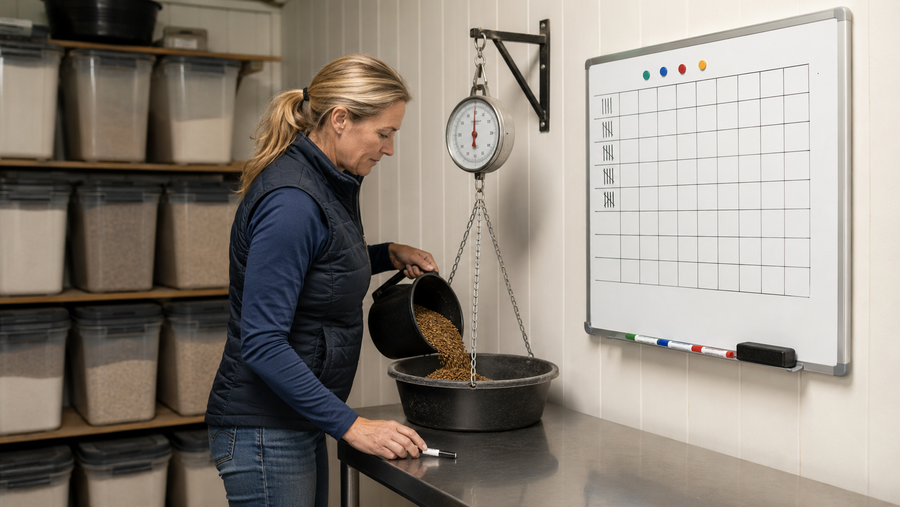
The Feed Room Board: Track Before Supplementing
A product-neutral feed-room tracking system for water, manure, appetite, workload, hauling, changes, response windows, and professional red flags.

Real Rider Resource
Trip length should change how often you check water intake, temperature, attitude, manure, and recovery. It should not tempt you to invent a universal electrolyte dose. The horse's current label directions and veterinary plan control that part.
Use a pre-load baseline and an arrival check. If you make a safe planned stop, offer water without forcing intake. At arrival, unload only when appropriate, offer familiar water, watch attitude, and allow the horse to settle before work.
Plan water opportunities rather than waiting for the horse to look thirsty. Track whether water is actually consumed. Recheck temperature conditions, ventilation, manure, and demeanor. At arrival, prioritize water, hay, quiet movement, and recovery time.
Longer travel requires repeated checks and a lower tolerance for uncertainty. Note each water offer, approximate intake, stops, manure, urine, and any change in attitude. Heat, humidity, heavy sweating, illness, or a horse that refuses water can change the plan and may require veterinary direction.
Hydro-Lyte® with GastroCell® is the current Draw It Out Nutraceuticals electrolyte-support option. Use it according to its current label and the horse's established plan. It does not replace fresh water, appropriate salt access, cooling, complete feeding, or veterinary care.
Read the Travel and Hauling GuideUse the Solution Finder
Contact a veterinarian for colic signs, weakness, fever, persistent refusal to drink, marked depression, breathing distress, or delayed recovery.
A product-neutral feed-room tracking system for water, manure, appetite, workload, hauling, changes, response windows, and professional red flags.
A rider-first show and travel hydration guide for horses that drink less away from home, including intake tracking, familiar-water planning, first steps, electrolyte limits, and veterinary red flags.
One trip can happen. A new or repeated stumble is a reason to stop, observe, and record the pattern. Use this rider checklist before the vet or farrier...
!

