Draw It Out® Horse Health Care News
Windpuffs in Horses: Fetlock Swelling, Daily Checks, and Vet Red Flags
Windpuffs usually describe soft, fluid-filled swellings around the back or sides of the fetlock. Some are long-standing and stable, while a new or changing swelling can point to a different problem.
Quick answer: Compare both legs, check heat, pain, lameness, skin, digital pulse, and recent workload, then document the pattern. A familiar, cool, painless windpuff in a sound horse is different from sudden swelling, but new or changing fetlock swelling deserves professional assessment.
What riders mean by windpuffs
The term often refers to distension of a tendon sheath or fetlock joint pouch. Owners may notice soft bulges that become more visible after stall time or work. The label alone does not identify the structure or cause, so avoid diagnosing every fetlock swelling by appearance.
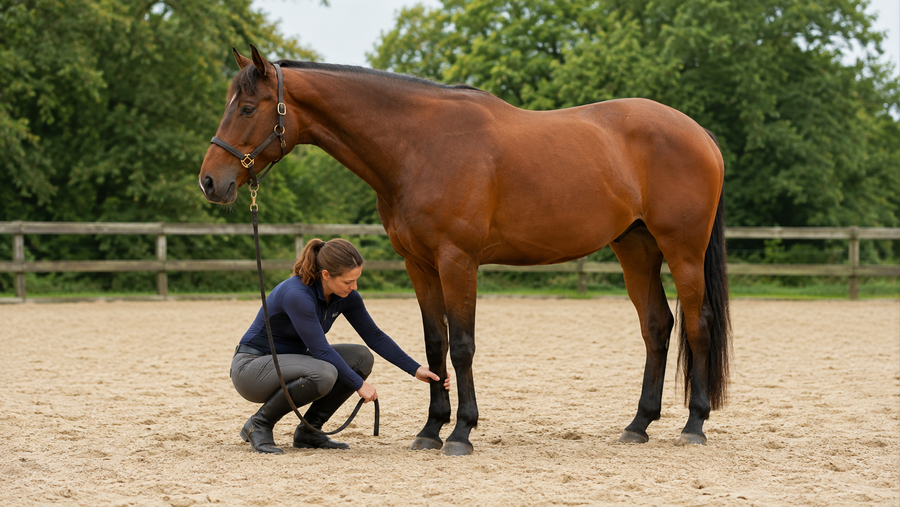
A useful lower-leg check
- Stand the horse square on level ground.
- Compare matching areas on both legs.
- Feel for temperature, firmness, pain, and skin changes.
- Watch the horse walk and turn without forcing movement.
- Review workload, footing, travel, turnout, shoeing, and any recent misstep.
- Photograph the legs from the same distance and angle.
Red flags
Contact your veterinarian for new lameness, significant heat, pain, firm or rapidly increasing swelling, a wound, drainage, fever, a stronger digital pulse, swelling isolated to one leg, or a pattern that does not settle as expected. Sudden lower-limb swelling after work may require imaging and should not be massaged aggressively.
Where routine support fits
When a veterinarian has identified a stable, nonpainful pattern, management may include appropriate movement, workload changes, footing review, and a consistent leg-care routine. Draw It Out® Liniment Gel may fit routine hands-on care on intact skin when used as labeled. It does not diagnose the swelling or repair an injured tendon or ligament.
For broader routing, see the Fetlock Swelling Guide and Horse Leg Swelling Guide.
Frequently asked questions
Do windpuffs always make a horse lame?
No. Long-standing windpuffs can be present in a sound horse. Lameness, heat, pain, or a changing pattern should not be dismissed as a harmless windpuff.
Can I massage a new fetlock swelling?
Do not massage an unexplained acute swelling aggressively. Check the horse and contact a veterinarian when injury is possible.
Will liniment remove windpuffs?
Do not promise that. A topical can support a routine for intact skin after the case is understood, but it does not identify or correct the underlying structure.
Educational content only. This article does not replace veterinary, farrier, medical, or qualified professional guidance.