
Jul 20, 2026
New World Screwworm in Horses: Wound Checks, Reporting & Travel
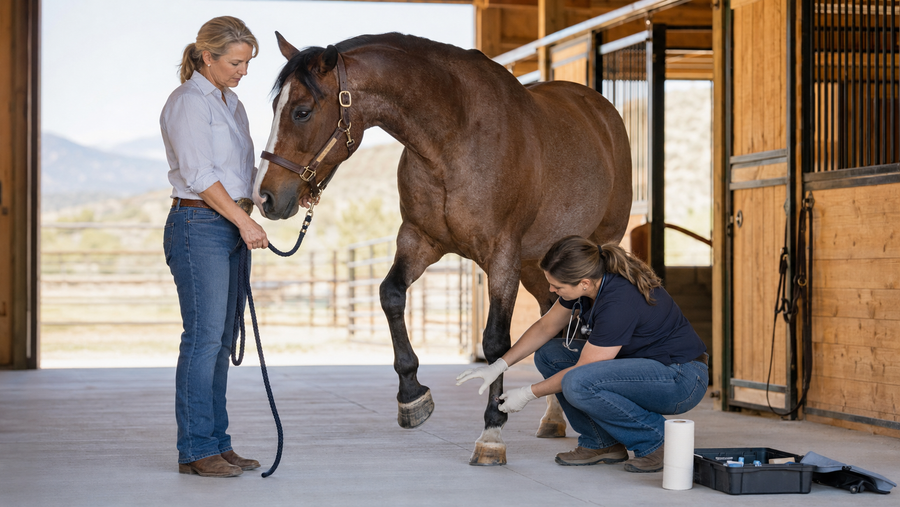
Current New World screwworm guidance for horse owners: what to inspect, when to call a veterinarian, how to report suspected cases, and h...

Summer changes the cost of ordinary work. A familiar ride can take more out of a horse when temperature, humidity, direct sun, travel, and limited airflow stack together. Good summer horsemanship starts by adjusting the plan before the horse is struggling.
In hot weather, track the conditions, the work, how the horse sweats and breathes, water interest, cool-out time, attitude, and next-day movement. Reduce intensity when heat or humidity climbs, provide shade and airflow, cool the horse promptly, and call a veterinarian for weakness, confusion, collapse, labored breathing, an abnormal temperature, or recovery that does not progress.
Horses release much of their body heat through sweat. When the air is humid, that sweat evaporates less efficiently. The horse may keep sweating and breathing hard even after the work stops. Direct sun, a hot trailer, dark footing, and still air can add to the heat load.
This is why the same workout does not have the same cost every day. The right question is not only, “How hard did we ride?” It is also, “What did the weather make that work cost?”
Water intake is influenced by familiarity, temperature, taste, travel stress, forage, salt intake, and the horse’s normal habits. Make water easy to access and learn what normal drinking looks like at home before you need that information at a show.
Do not use skin tenting or gum feel as the only hydration test. They are observations, not a complete diagnosis. A veterinarian can help evaluate a horse that is not drinking, seems dull, or repeatedly recovers poorly in the heat.
External liniment can be one part of an established post-work grooming routine after the horse is cooling normally. It does not replace water, shade, airflow, veterinary care, or a safe workload. Review the horse liniment collection for label-directed external-use options, or use the Horse Health Library for more recovery education.
Get veterinary help for labored breathing, weakness, stumbling, confusion, collapse, a horse that stops sweating despite remaining hot, an abnormal temperature, refusal to drink with other concerning signs, or recovery that stalls or worsens. When in doubt, stop the work and call.
Yes. High humidity slows sweat evaporation, so the horse may release heat less efficiently even when sweating heavily.
Not automatically. Gentle movement can help in some situations, but excessive walking adds work. Prioritize shade, airflow, cool water, rest, and veterinary guidance when recovery is abnormal.
No. An overheated horse needs prompt cooling and, when signs are concerning, veterinary care. Liniment is not a substitute for those steps.
Track today’s heat load and recovery honestly. Tomorrow’s work should be based on the horse you have, not the schedule you hoped to keep.
Current New World screwworm guidance for horse owners: what to inspect, when to call a veterinarian, how to report suspected cases, and h...
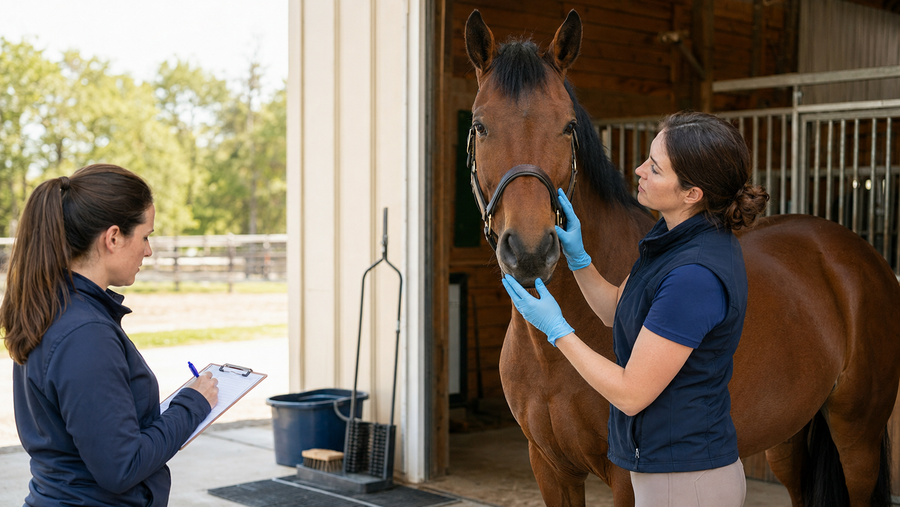
A rider-first 2026 vesicular stomatitis checklist with current western U.S. outbreak context, warning signs, isolation, fly control, bios...
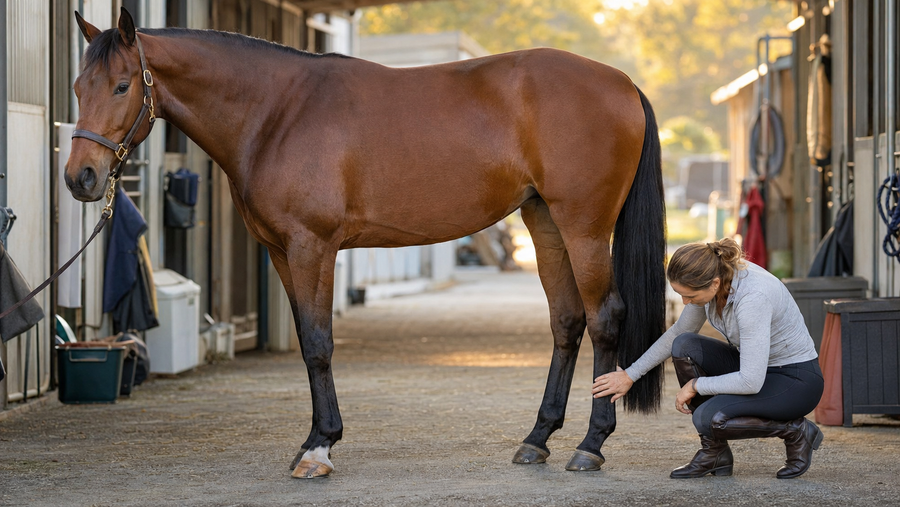
Check symmetry, heat, pain, wounds, wraps, movement, hydration, and lameness when a horse’s hind legs fill after standing at a show.
!