How to Dry a Dog After Swimming: Coat, Paws, Ears & Gear
A practical after-swim drying routine for dogs: coat, paws, ears, wet collars and harnesses, bath timing, airflow, and the warning signs that belong with a veterinarian.

Quick answer: after a dog swims, start with a full-body shake outside, press water out of the coat with a towel instead of aggressive rubbing, dry the paws and between the toes, blot around—not inside—the ears, and check skin folds, collar lines, and harness areas before the dog gets back in the truck or house.
The goal is not to make every hair bone-dry in two minutes. It is to remove trapped moisture from the places that stay wet longest and to notice anything that looks irritated before damp gear goes back on.
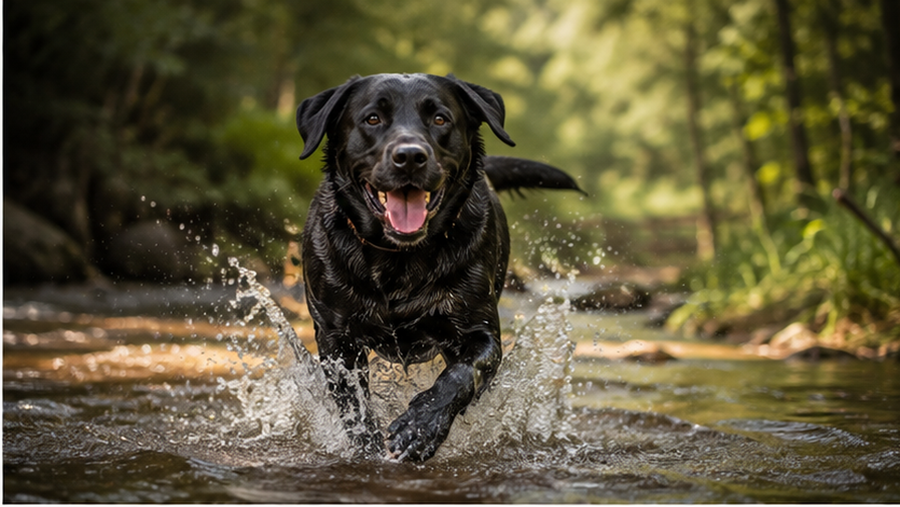
Let the dog do the first job. A good shake removes a surprising amount of water and saves your towels. Then work from the neck and shoulders down the body with a clean towel.
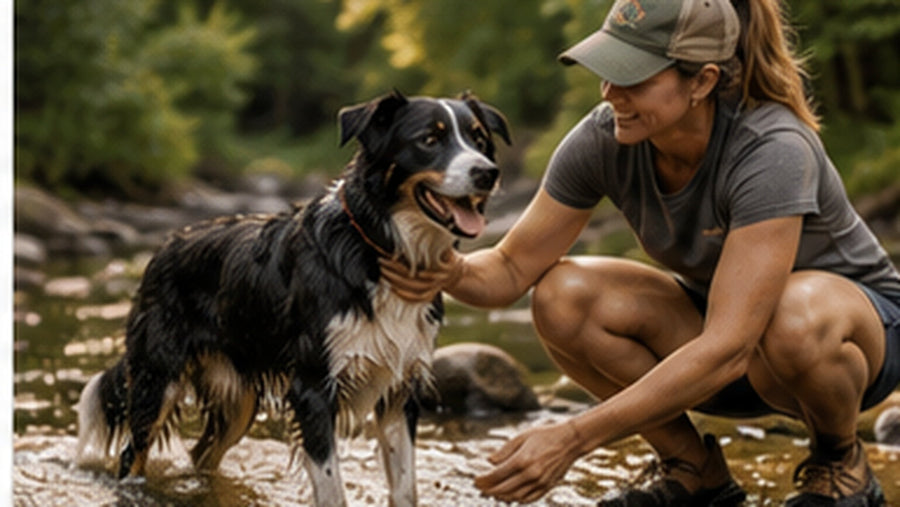
Press and squeeze the coat instead of scrubbing hard. Long or double coats can mat when they are rubbed aggressively while soaked, and frantic toweling makes it easy to miss burrs, grit, or irritated skin.
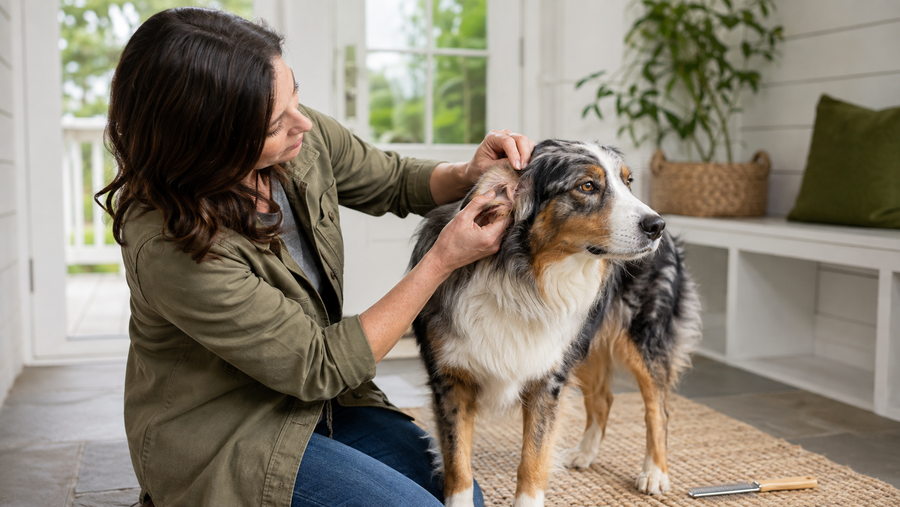
Dry the outer ear flap and the hair around the ear opening with a towel. Do not push a towel, cotton swab, or other object down into the ear canal.
If the ear has a new strong odor, discharge, redness, swelling, obvious pain, repeated head shaking, or persistent scratching, that is a veterinary question rather than a drying problem.
For a deeper ear-specific checklist, read Dog Ears Smell After Swimming? What to Check.
No. A swim does not automatically require shampoo. Clean water, a rinse when needed, thorough drying, and a later brush may be enough. A full bath makes more sense when the coat is genuinely dirty, oily, muddy, exposed to something you want removed, or due for a normal wash.
Use the Dog Bath Timing After Lake, Pool, or Creek Water guide when you are deciding whether the day calls for a rinse, a dry-off, or a real bath.
Keep one towel for the first wet pass and one dry towel for the finishing pass. The first towel can handle muddy legs and the bulk of the water. The second stays clean enough for the chest, neck, ears, and final dry-off.
If your dog is in and out of water often, keep both towels in a dedicated tote with a wet-bag so the rest of the truck does not become the drying rack. The Creek-Day Dog Cleanup Kit lists the rest of the practical truck setup.
Call your veterinarian for limping, a painful paw, bleeding, a puncture, swelling, significant skin redness, persistent itching, ear pain or discharge, abnormal breathing, weakness, collapse, or a sudden behavior change. A towel routine is maintenance, not diagnosis.
No. Pressing, blotting, and squeezing water out of the coat is usually gentler and gives you a better chance to notice skin or coat problems.
Yes. Paws and toe webbing are easy places for moisture, sand, mud, or plant material to remain after a swim.
Do not put cotton swabs or towels down into the ear canal. Dry the outer ear and contact your veterinarian if you notice pain, odor, discharge, redness, or repeated head shaking.
No. Many water days only need a rinse where necessary, a good towel dry, and brushing once the coat is mostly dry.
Dog-care education only. Use dog-specific products according to their current labels. Pain, limping, wounds, significant skin changes, ear symptoms, abnormal breathing, weakness, or rapidly changing symptoms belong with your veterinarian.
A practical after-swim drying routine for dogs: coat, paws, ears, wet collars and harnesses, bath timing, airflow, and the warning signs that belong with a veterinarian.
A simple seven-item creek-day dog cleanup kit for the truck, including towels, rinse water, a brush, wet gear storage, a spare leash, and wash-day shampoo.
Dog coat mats behind the ears or under a harness need a skin check before removal. Learn when gentle combing is reasonable, why scissors are unsafe, and when...
!