Next-day horse care
The Morning-After Mobility Check: What Your Horse Tells You Tomorrow
The next morning can reveal how well a horse handled work, travel, footing, and stall time. Compare with the horse's normal—not with what you hope to see.
Quick answer: before asking for work, observe the first steps, straight-line walk, easy turns, backing, attitude, appetite, water, manure, feet, heat, and swelling. General looseness that improves promptly is different from one-sided, worsening, painful, or neurologic-looking movement. When in doubt, stop and call the appropriate professional.
Current availability: Hydro-Lyte® production has resumed, but current inventory remains sold out while the next run is completed and received. Fluid Flex EQ® is part of the current daily joint-support lineup. Check each live product page for current inventory before planning a purchase.
Run the check before the warm-up hides the pattern
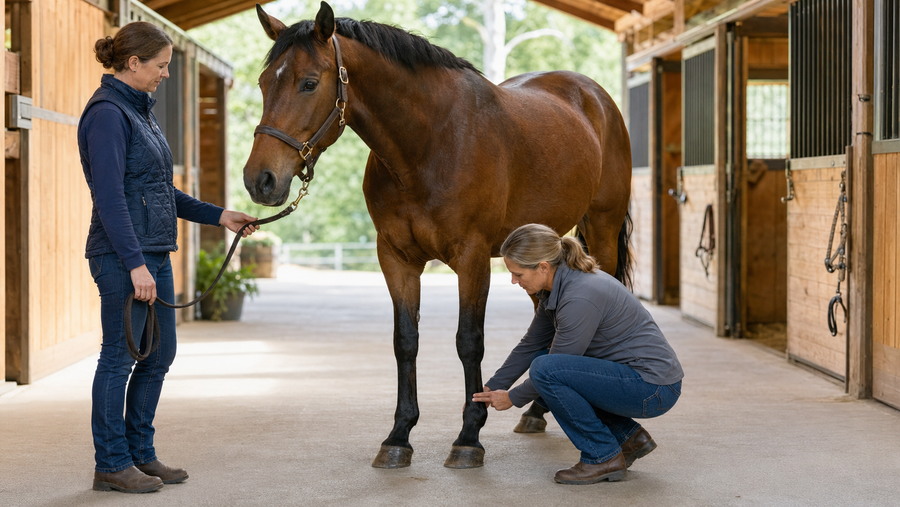
Watch the horse leave the stall or pen without rushing. Note stride length, symmetry, head and hip movement, willingness to turn, and how the horse places each foot. A quiet video from the side and front can help document a change for a veterinarian or farrier, provided the horse can be moved safely.
Movement
Is the horse even? Does one limb land differently? Is backing, turning, or stepping under newly difficult? Does movement improve normally or become worse?
Feet and limbs
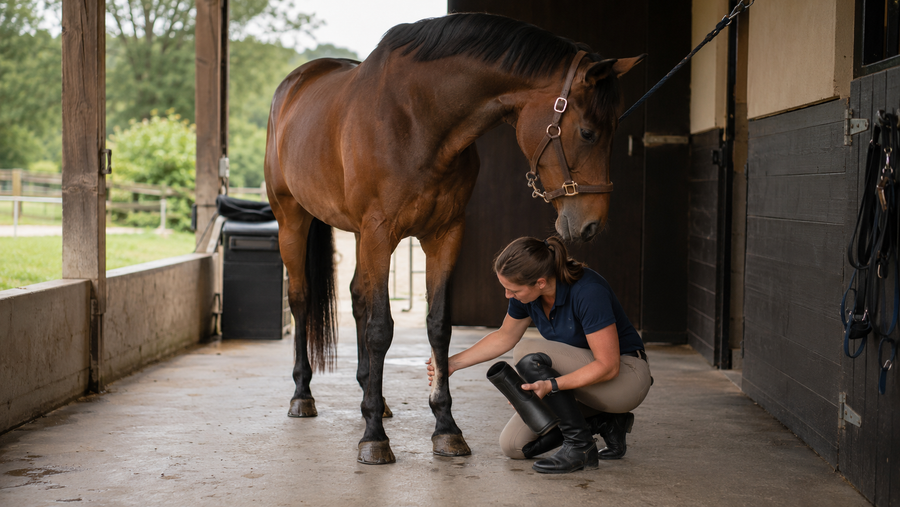
Check for a lost shoe, packed sole, hoof heat, stronger digital pulse, limb heat, swelling, wounds, or tenderness without repeatedly provoking pain.
Whole-horse baseline
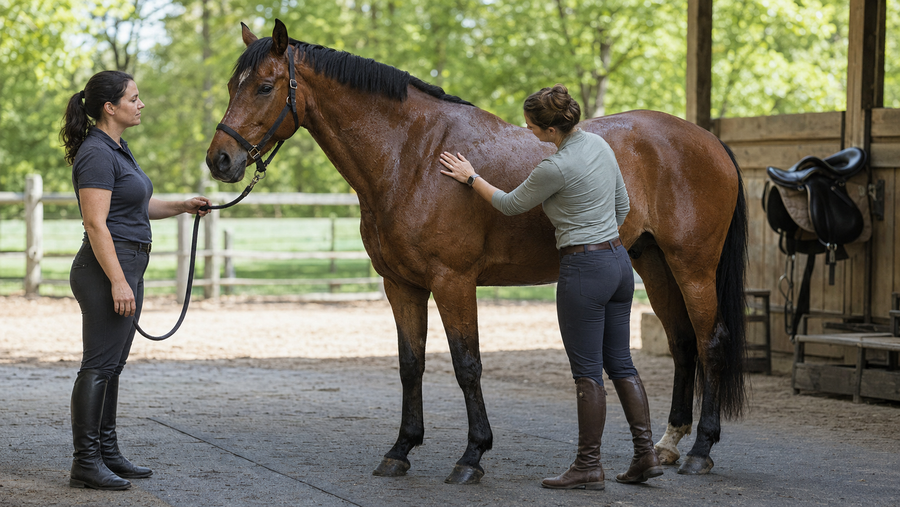
Compare attitude, appetite, water intake, manure, urination, temperature when indicated, and willingness to interact with the horse's usual pattern.
Yesterday's load
Review speed, turns, hills, jumps, footing, hauling, standing time, hydration, cooling, and recovery. Record what changed instead of blaming age or attitude.
Choose the right lane
Hydration concerns belong with water access, salt and diet review, cooling, and veterinary guidance when the horse is abnormal. Mobility concerns begin with soundness, feet, footing, workload, and recovery. Supplements may have a place in an individualized routine, but no supplement should be used as an at-home lameness answer or added before the horse's change is understood.
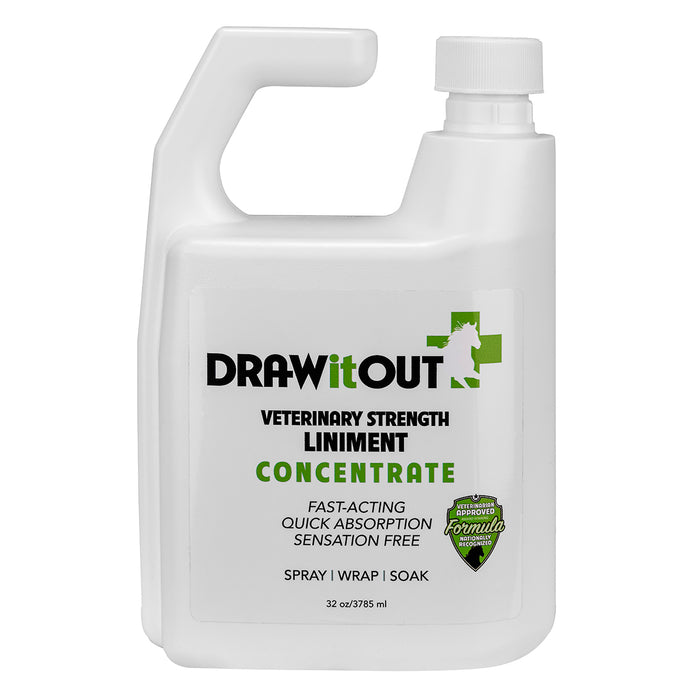
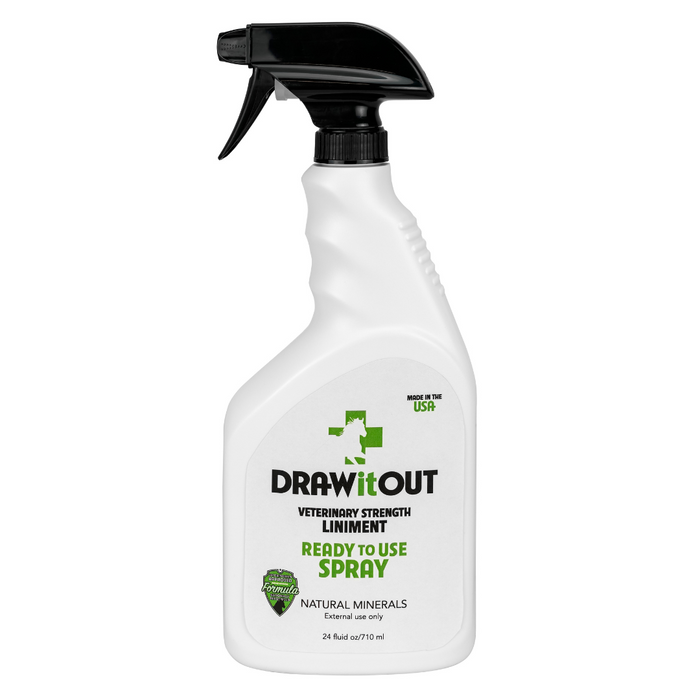
For an otherwise normal horse after ordinary work, topical care may fit the external post-work lane. Apply only according to the label and never use it to justify riding through abnormal movement.
Available topical lane
What riders commonly use next
Draw It Out® 16oz Liniment Gel is currently active and in stock for label-directed external care after ordinary work. It does not diagnose or treat lameness, heat, swelling, hoof pain, injury, or systemic illness.
Use the Solution Finder when the correct care lane is unclear.
Do not wait on these changes
- Obvious or worsening lameness, inability to bear weight, severe pain, stumbling, weakness, or abnormal coordination.
- Heat, swelling, hoof pain, a strong digital pulse, a wound, fever, colic signs, or markedly abnormal behavior.
- Reduced drinking, off-feed behavior, abnormal manure, dark or unusual urine, or failure to recover as expected.
FAQ
Is some next-day stiffness normal?
Horses can feel different after work or travel, but “normal” depends on the individual. A new, one-sided, painful, worsening, or persistent change deserves professional guidance.
How do I check Fluid Flex EQ® and Hydro-Lyte® availability?
Hydro-Lyte® production has resumed but current inventory remains sold out while the next run is completed and received. Check the live Fluid Flex EQ® page for its current inventory and purchase controls.
Should I apply liniment before I know why the horse is off?
No. First assess the horse and seek veterinary or farrier guidance for abnormal movement. A topical product should not be used to mask a problem.
General education only. New or persistent gait change, heat, swelling, hoof pain, weakness, or systemic signs need professional care. Author: Jon Conklin.