Horse electrolyte decisions
When Do Horses Need Electrolytes? Heat, Hauling, Sweat, and Recovery
Electrolyte planning starts with sweat, diet, water, weather, work, and the individual horse. It is not a blanket answer for every warm day.
Quick answer: an equine electrolyte may fit when sweat losses, heat, humidity, hauling, repeated work, or changed routines increase demand. Keep clean plain water available, follow the label, and review the total diet. A horse with suspected dehydration, heat illness, colic signs, weakness, or refusal to drink needs a veterinarian—not a feed-room experiment.
Current availability: Hydro-Lyte® production has resumed. Current inventory remains sold out while the next run is completed and received. Use the live product page to request a restock alert and confirm current availability.
Situations that justify a closer electrolyte conversation
Hot or humid work
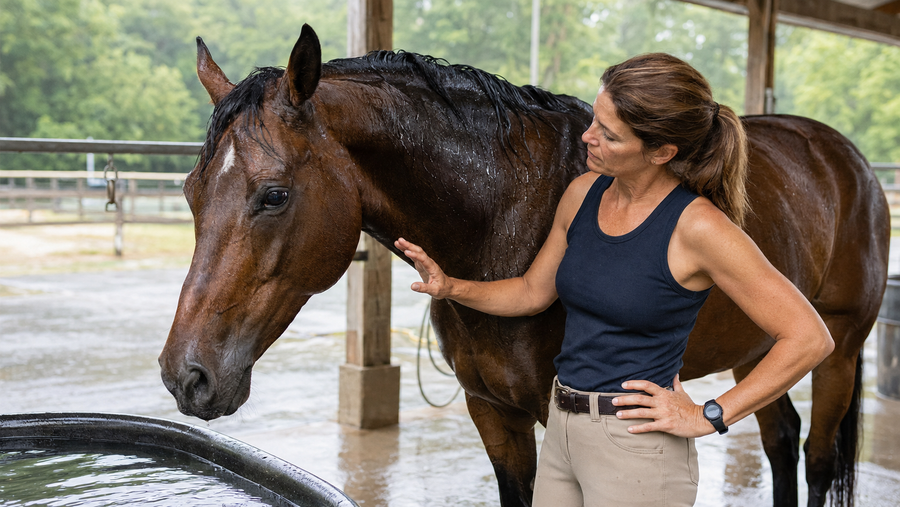
Higher heat load and sweat can change the plan, especially when humidity limits cooling. Adjust the workload first; a supplement does not make unsafe conditions safe.
Hauling and unfamiliar water
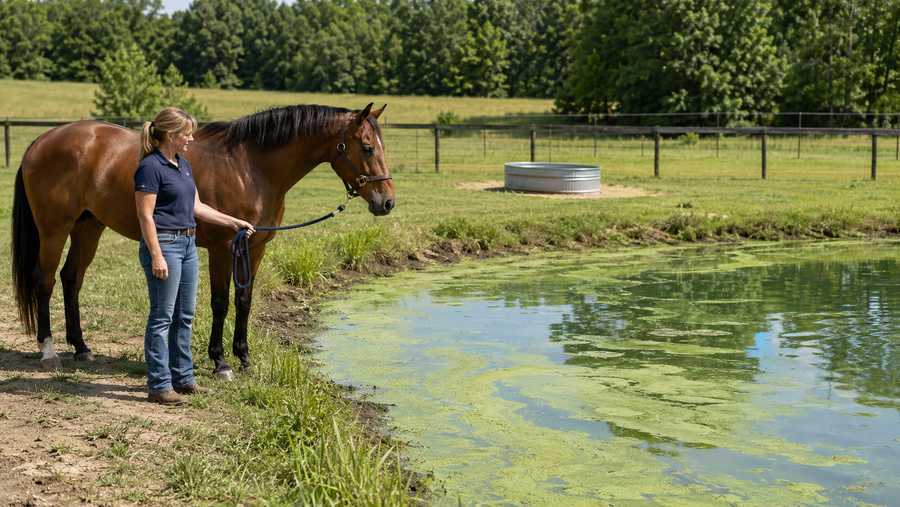
Travel can change water, forage, timing, stress, and stall time. Practice the hydration plan before departure rather than introducing a new product at the event.
Repeated efforts
Several classes, runs, sets, or long miles can create a different demand from one easy ride. Track sweat and recovery across the whole day.
Individual history
Heavy sweaters, horses with medical conditions, and horses that drink poorly away from home need an individualized veterinary plan rather than generic dosing.
What to check before choosing a product
- The complete forage and concentrate ration, including salt and mineral sources.
- The horse's normal water intake, sweat pattern, work, fitness, and acclimation.
- The label's ingredients, serving size, cautions, storage, and competition requirements.
- Whether the horse will reliably drink plain water with the plan in place.
- Any veterinary guidance related to kidney, muscle, metabolic, gastrointestinal, or other health concerns.
Do not guess at a concentrated homemade mixture or double servings to “catch up.” Do not syringe or force a product into a horse that is not drinking unless a veterinarian has directed the plan.
Where Hydro-Lyte® fits conceptually
Hydro-Lyte® with GastroCell® belongs to the electrolyte and gut-support product lane for routine planning. Because current inventory remains sold out while the next production run is completed and received, the strongest route today is education: use Horse Electrolytes in Hot Weather, Horse Electrolytes for Hauling, Shows & Travel, and veterinary guidance for the individual horse. Do not force an unrelated in-stock product into a hydration question.
Measure recovery, not just sweat
Record the conditions, workload, water offered and consumed, cooling method, appetite, manure, and the time it takes breathing and behavior to trend toward normal. A familiar baseline helps identify when a horse is not recovering as expected. If the pattern is abnormal, stop work and seek help.
Electrolytes are not enough when
- The horse is weak, staggering, confused, collapsed, not sweating normally, or failing to cool.
- There are colic signs, severe depression, fever, off-feed behavior, abnormal manure, or repeated refusal to drink.
- You suspect significant dehydration, heat illness, tying-up, or another clinical problem.
Begin appropriate first aid and contact your veterinarian. Do not delay care while waiting for a product to work.
FAQ
Should every horse receive electrolytes every day?
No universal schedule fits every horse. Diet, salt, sweat, weather, work, health, water intake, and label directions all matter.
Can electrolytes make a high-heat ride safe?
No. Workload, conditions, acclimation, fitness, water, shade, airflow, and cooling capacity must be safe first.
What is the current Hydro-Lyte® availability?
Hydro-Lyte® production has resumed, but current inventory remains sold out while the next run is completed and received. Use the live product page to request a restock alert.
General education only. Follow labels and consult your veterinarian for individual electrolyte and hydration needs. Author: Jon Conklin.