Draw It Out® Horse Health Care News
Horse Withers Guide: Saddle Fit, Pressure Marks, and Pain Clues
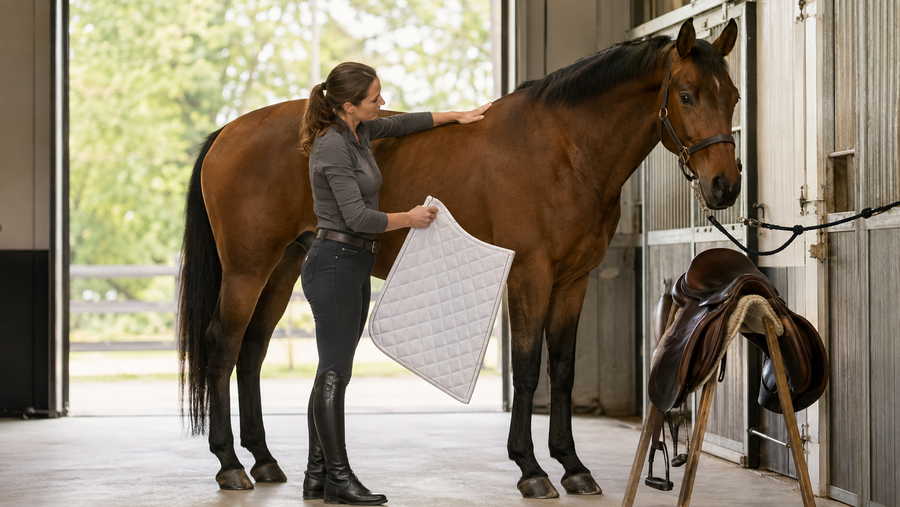
The withers sit at the intersection of saddle clearance, shoulder movement, topline shape, skin, muscle comfort, and rider balance. Repeated marks are information, not cosmetic flaws.
Quick answer: Stop and investigate recurring white hairs, dry spots, swelling, heat, rubs, or pain. Check the horse before tacking, evaluate saddle and pad fit dynamically, and involve a veterinarian when soreness or altered movement persists.
What normal variation looks like
Wither height and shape differ by breed, age, condition, and individual conformation. A prominent wither is not automatically painful, and a low wither is not automatically easy to fit. The full back shape and movement matter.
Pressure clues riders can see
- White hairs or broken hair in a repeated location.
- Swelling, warmth, scabs, or tenderness.
- Uneven sweat or persistent dry spots under load.
- Saddle rocking, bridging, sliding, or pinching.
- Resistance during grooming, saddling, mounting, or transitions.
Fit must be checked in motion
Static clearance is only one part of fit. Tree shape, gullet width, panel or bar contact, rigging, pad thickness, rider balance, and the horse's moving topline all change pressure. A qualified fitter should observe the complete setup with the rider when possible.
Do not pad around a bad fit
More padding can reduce clearance or increase instability. Specialty pads can help only when used for a defined reason in a suitable saddle. Cleanliness matters too, because grit and folded fabric create pressure points.
Routine support comes second
After pressure, skin, lameness, and medical concerns are cleared, Draw It Out® Liniment Gel can fit routine care on appropriate muscle areas and intact skin. It does not correct the saddle. See Horse Stiffness and Recovery Help for routing.
Frequently asked questions
How many fingers of wither clearance should I have?
Finger rules are crude because hand size and saddle type vary. Clearance must remain adequate with the rider mounted and the saddle balanced.
Do white hairs mean saddle pressure?
They can be an important clue, especially when localized and repeated, but a qualified assessment should consider the full history.
Can a sore wither make a horse buck?
Pain can contribute to defensive behavior, but bucking has multiple possible causes. Stop and investigate rather than diagnosing from one sign.
Educational content only. This article does not replace veterinary, farrier, medical, saddle-fitting, training, or other qualified professional guidance.