Real Rider Resource
Spring Horse Conditioning: A Progressive 30-Day Framework
The first month back is not a race to recover last season's workload. It is a structured way to establish a baseline, add one demand at a time, watch recovery, and build the next month around the horse that actually showed up.
Quick answer: Use the first 30 days to build routine before intensity. Start below the horse's remembered workload, favor controlled walking and simple straight work, add only one major variable at a time, and check feet, legs, back, breathing, attitude, and next-day movement. The calendar is a framework, not a medical prescription. Slow down for abnormal recovery and stop for pain, heat, swelling, lameness, or illness.
Red means stop, not modify the workout
Contact your veterinarian for new or worsening lameness, one hot or swollen leg, a strong digital pulse, hoof pain, severe soreness, weakness, fever, abnormal breathing, collapse, colic signs, poor appetite, reduced drinking, or recovery that is clearly outside the horse's normal. Do not use a lighter ride or a topical product to test a horse with a red flag.
Start with the horse's current baseline
Spring energy can hide winter deconditioning. A horse may feel fresh, forward, and willing while the muscles, feet, coordination, and recovery habits are not ready for the old speed, hills, deep footing, long circles, jumping, or hauling schedule. Age, health, previous injury, turnout, climate, and winter workload all change the starting point.
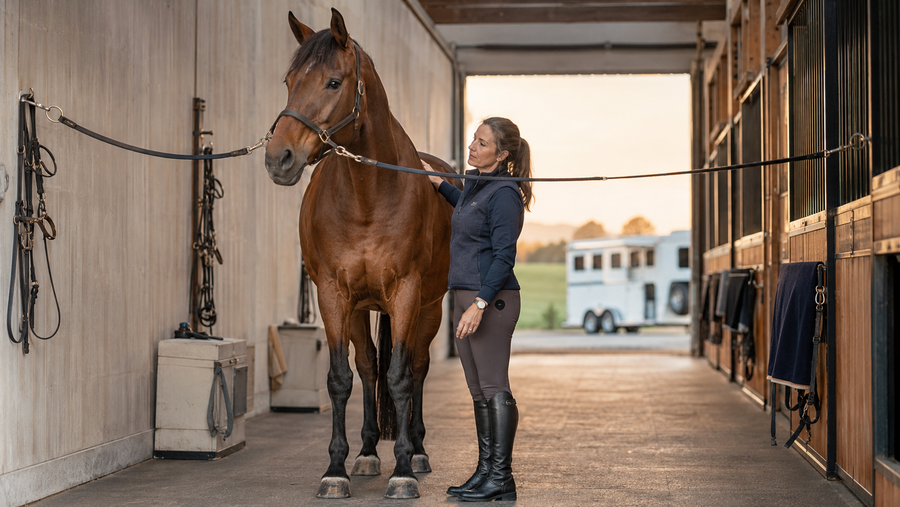
Before day one, review the horse's veterinary and farrier status, body condition, tack, hoof comfort, vaccination and health plan, water intake, and safe footing. Watch the first steps before grooming. Record walk rhythm, willingness to turn and back, normal leg fill, breathing after easy work, and next-morning movement. That baseline makes later changes easier to recognize.
A flexible 30-day framework
Days 1 to 7: establish rhythm
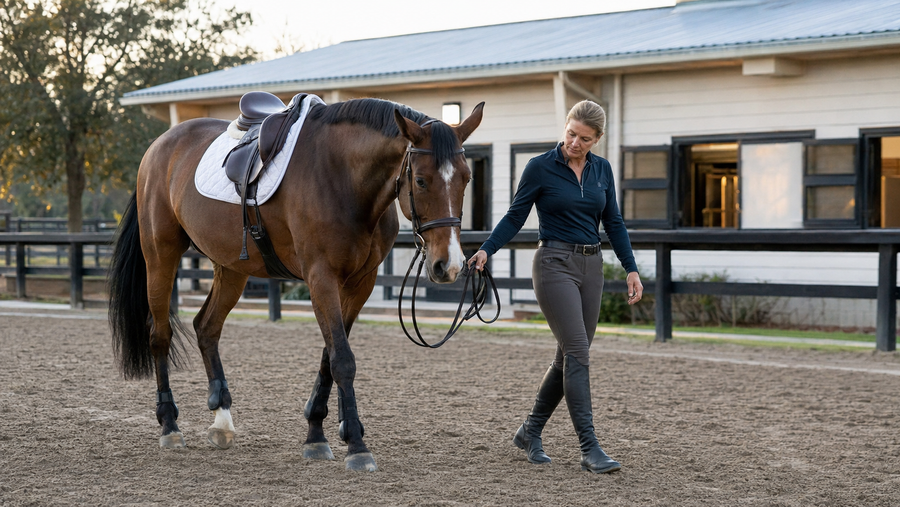
Use easy, controlled sessions to evaluate walk quality, straightness, steering, tack, feet, and recovery. Favor large lines and predictable footing. End while the horse still feels organized. Record what the horse looks like later and the next morning.
Days 8 to 14: add time carefully
When the first week remains comfortable, build duration or simple transitions without adding speed, difficult terrain, and technical work together. Keep rest or easy days in the plan. A willing horse does not need every session to be harder.
Days 15 to 21: introduce one new demand
Choose one main progression, such as modest terrain, longer straight work, another gait, or discipline-specific basics. Keep the other variables familiar. If recovery changes, remove the newest demand and reassess.
Days 22 to 30: confirm consistency
Repeat successful work across different days without chasing a peak effort. Confirm that feet, legs, back, attitude, breathing, and next-day movement remain near baseline. Use the results to plan the following month.
Use a green, yellow, and red decision system
- Green: The horse starts comfortably, works with normal rhythm, cools out as expected, eats and drinks normally, and returns to baseline by the next check. Repeat or make one small progression.
- Yellow: The horse feels unusually tired, tight, heavy, anxious, short, or slow to recover without a clear emergency sign. Hold the workload, simplify the next session, check tack and footing, and seek professional guidance if the pattern persists.
- Red: Pain, lameness, heat, swelling, hoof sensitivity, abnormal breathing, weakness, fever, or a sharp behavior change ends progression and moves the horse to evaluation.
Change one workload variable at a time
Duration, speed, gait, terrain, footing, circles, hills, poles, jumps, cattle work, hauling, and rider demand all add load. When several increase together, a setback teaches you very little. Choose the most important variable, hold the others steady, and repeat before advancing. There is no rigid weekly percentage that fits every horse.
Footing deserves its own note. Deep, hard, slick, sticky, rutted, or thawing ground changes effort and limb loading. If safe footing is unavailable, replace the planned work rather than asking the horse to absorb the risk. Use the daily horse leg-care routine before and after work.
Recovery is part of conditioning
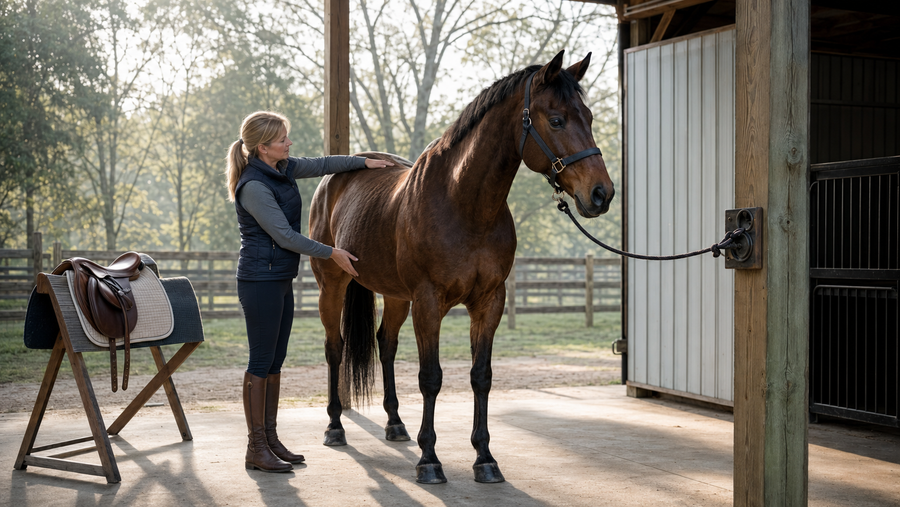
Cool down until breathing and attitude are moving toward normal. Offer water, remove boots, inspect skin and legs, and note how the horse stands after settling. Recovery days may include turnout, easy walking, or rest according to the horse and professional plan. Sleep, forage, water, hoof care, and suitable body condition are part of the system, not background details.
When normal body care fits, Draw It Out® liniment gel may be used according to its label. It does not replace progressive work, rest, hydration, tack fit, or evaluation. Review the horse liniment guide, or use the Solution Finder.
Common first-month mistakes
- Matching the horse's enthusiasm instead of current conditioning.
- Adding speed, duration, terrain, and technical work in the same week.
- Using one good ride as proof that the next milestone is ready.
- Ignoring feet, tack, footing, water, and next-day movement.
- Calling every slow recovery laziness or every fresh response fitness.
- Using liniment gel to push through a workload the horse is not handling.
Spring horse conditioning FAQ
Can a horse get fit in 30 days?
Thirty days can establish a useful base and reveal how the horse responds, but it is not a universal finish line. Starting fitness, age, health, footing, discipline, and recovery all affect the timeline.
Should I ride my horse every day during spring conditioning?
Not automatically. Work and recovery days should match the horse and the plan. Some horses need more easy movement, while others need complete rest or veterinary direction. Judge the response, not a calendar streak.
How fast should I increase the workload?
There is no rigid percentage that fits every horse. Add one main variable at a time, such as duration, terrain, speed, or technical difficulty, then check the horse later and the next morning.
What counts as a conditioning setback?
New heat, swelling, lameness, persistent soreness, abnormal breathing or recovery, appetite change, hoof sensitivity, or a horse that does not return to baseline should pause progression and may require professional evaluation.
Where does liniment gel fit in conditioning?
Liniment gel may fit a normal label-directed pre-work or post-work body-care routine when the horse is moving normally. It does not replace progressive workload, rest, hydration, hoof care, or veterinary evaluation.
Educational note: This framework is general conditioning information, not an individualized medical or rehabilitation plan. Horses returning from injury, illness, or prescribed rest should follow veterinary clearance and milestones.