Spring Leg Filling in Horses: What Quiet Swelling Can Tell You Early in the Season
Spring doesn’t always show up with a problem.
Sometimes it shows up as something easy to miss.
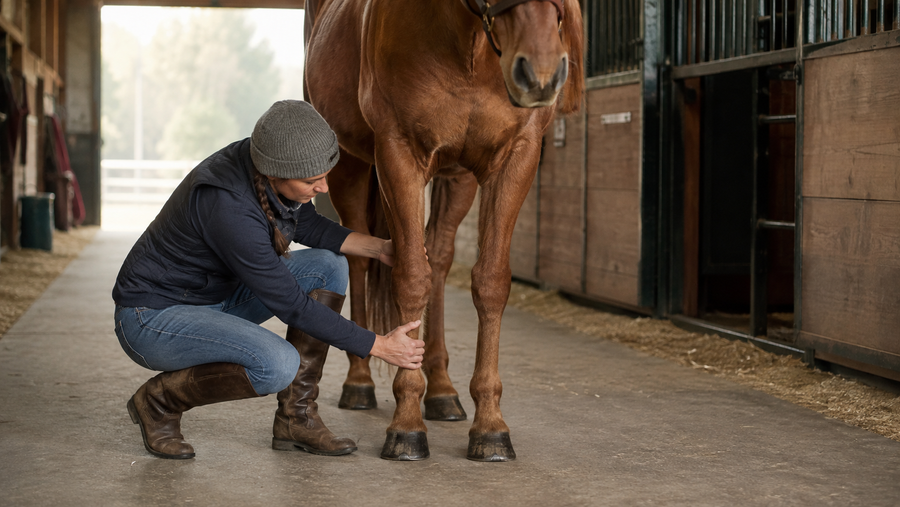
A little puffiness in the lower legs.
A bit of filling that fades after movement.
A morning look that’s different from the night before.
It’s easy to ignore.
But early-season leg filling usually means one thing. Your horse is adjusting.
Why Spring Changes the Picture
Winter routines are rarely as consistent as we think.
Even with turnout, many horses spend more time standing, moving less, and circulating less efficiently through colder months.
Then spring hits all at once.
- Workload increases
- Schedules shift
- Footing changes
- Training becomes more structured again
The body has to catch up fast.
What Leg Filling Usually Means
Most “stocking up” is simply fluid accumulation in the lower limbs.
Not injury.
Not damage.
Just a system that hasn’t fully adapted yet.
Circulation and lymphatic movement lag behind increased workload.
Why It Shows Up Early in the Season
The first few weeks back into regular work expose the gaps.
- More riding than winter allowed
- Inconsistent daily movement
- Cold mornings, warm afternoons
- Changing footing conditions
- Recovery not matching workload
The lower legs are often the first place you see it.
The Key Signal: Movement Changes It
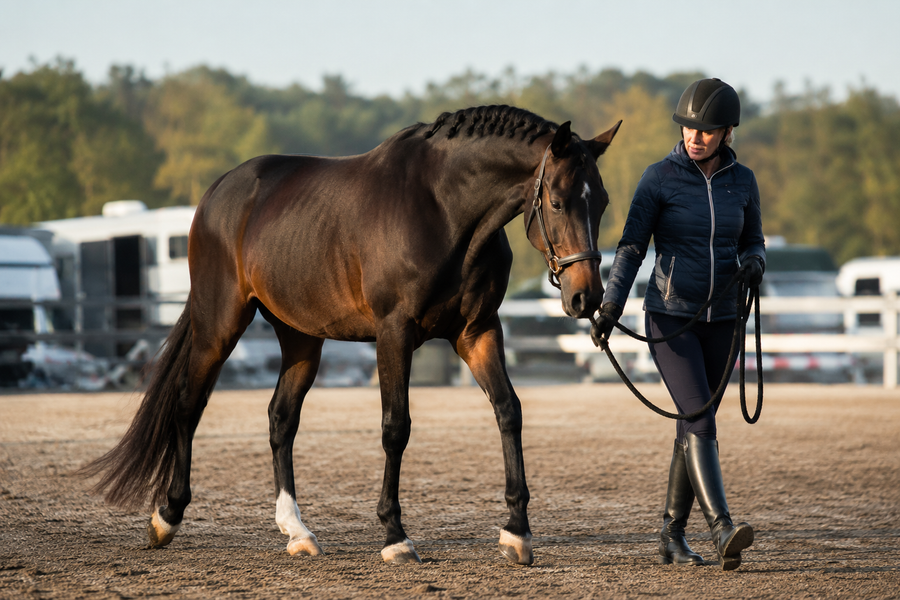
Simple spring leg filling improves with movement.
That matters.
Once the horse starts walking or working:
- Circulation increases
- Fluid clears
- Legs normalize
If movement fixes it, you’re usually looking at adaptation—not injury.
When to Look Closer
Pattern matters more than panic.
- Is it even or isolated?
- Does it stay or resolve?
- Is there heat or sensitivity?
- Is movement helping or not?
Spring adjustment is typically mild, even, and temporary.
Anything outside that pattern deserves attention.
The Real Issue Isn’t the Swelling
The question isn’t “why are the legs filled?”
The question is:
Why isn’t the system clearing efficiently right now?
Spring is a transition from maintenance to performance.
If workload outpaces support, small signals show up first.
This is one of them.
Where Most Riders Get It Wrong
They focus on adding more work.
The better move is supporting recovery.
Tendons, joints, and circulation need time and consistency to adapt.
The Takeaway
Spring leg filling is easy to dismiss.
That’s exactly why it matters.
It’s one of the first signals your horse is adapting to the season.
Notice it early. Respond with consistency.
The horses that stay sound later are the ones managed well when the signals were still small.