

Daily recovery
Liniment Gels
Explore the Draw It Out® liniment gel lineup for everyday use, post-work routines, and targeted recovery support.
Shop liniment gels
USDA is beginning a nationwide study of horse health and management practices, contacting randomly selected equine operations in all 50 states for the first federal study of its kind since 2015.
On July 21, 2026, the U.S. Department of Agriculture announced that its Animal and Plant Health Inspection Service and National Agricultural Statistics Service will launch the 2026 National Animal Health Monitoring System Equine Study. Selected operations are receiving questionnaires in July, and data collection begins in August.
The study is national, voluntary, and confidential. It will examine equine care, health-management practices, disease occurrence, veterinary-service use, and issues affecting at-risk horses or equines moving between jobs or homes.
The last major NAHMS equine study was conducted in 2015. USDA also completed equine studies in 1998 and 2005, making the 2026 effort a new national baseline after more than a decade without one.
That gap matters because the horse industry cannot make good decisions on anecdotes alone. Veterinary access, biosecurity, disease planning, welfare needs, workforce pressures, care costs, and the transition of horses between competition, work, retirement, rescue, and new ownership all compete for attention. A credible national dataset can show which problems are widespread, which practices are changing, and where education or resources are most needed.
Draw It Out® analysis: the value is not that Washington will tell individual owners how to care for a horse. The value is that owners, veterinarians, associations, researchers, rescue groups, retailers, and policymakers can argue from a shared baseline instead of whoever has the loudest story.
USDA says Phase I includes randomly selected operations in all 50 states that have five or more equids. Selected owners began receiving questionnaires by mail in July. The survey can be completed on paper, online, by telephone, or through an in-person interview with a NASS enumerator.
Selection is not limited to one breed, discipline, or type of operation. The national design is intended to reflect the breadth of American equine management, from working and competition barns to breeding, boarding, recreational, transition, and other operations that meet the study criteria.
Owners who want to check possible eligibility can use the official NASS Respondent Portal. Questions about the study can also be directed to the NAHMS contact listed by USDA.
Disease occurrence, prevention, management practices, and the health issues affecting U.S. equine operations.
How operations use veterinary care and where access or management patterns may differ.
The routines, facilities, records, and decision-making practices used across different kinds of horse operations.
Issues affecting horses and other equids that are vulnerable or moving between vocational roles, homes, or stages of life.
USDA's equine-study page also notes that a planned Phase II, involving event questionnaires and biological sampling, is postponed pending resource availability. That boundary matters: the confirmed 2026 launch is the nationwide Phase I operation survey.
National studies become distorted when only the biggest, most polished, or most professionally staffed operations respond. The real horse industry also lives in family barns, ranch programs, lesson facilities, small breeders, rodeo and show operations, boarding barns, retirement settings, and owners doing the daily work themselves.
If selected, participating is a chance to make those realities count. Honest answers about what is working, what is difficult, and where care breaks down are more valuable than trying to make an operation look perfect.
For individual care planning, use the Horse Health Library as the evergreen education hub and the Horse Care by Event Type guide to adapt routines to the job a horse actually does. Those resources serve day-to-day decisions; this USDA study serves the larger industry picture.
The 2026 NAHMS Equine Study is consequential because it will create the first new federal snapshot of U.S. equine health and management since 2015. If a legitimate USDA questionnaire reaches your operation, verify it, answer it carefully, and return it. Better representation gives the whole horse industry better evidence for the next decade of decisions.
This article gives you the background. If you are ready to put the idea into a real horse care routine, these are the next places most riders should go.
Explore the Draw It Out® liniment gel lineup for everyday use, post-work routines, and targeted recovery support.
Shop liniment gelsMatch your horse’s workload, age, routine, and care goals to the Draw It Out® products that make the most sense.
Use the finderLearn how riders support soundness, comfort, and consistency before little issues become bigger problems.
Read the guideReal Barn Proof
Real riders. Real horses. Real routines. These clips rotate automatically so the proof stays fresh without weighing the page down with a long feed.
Why this matters: good horse care should make sense outside the ad. These clips show the kind of everyday use that builds trust one barn at a time.
Further Reading
Horse care works better when the next step is clear. These related reads help connect today’s topic to better daily decisions in the barn.
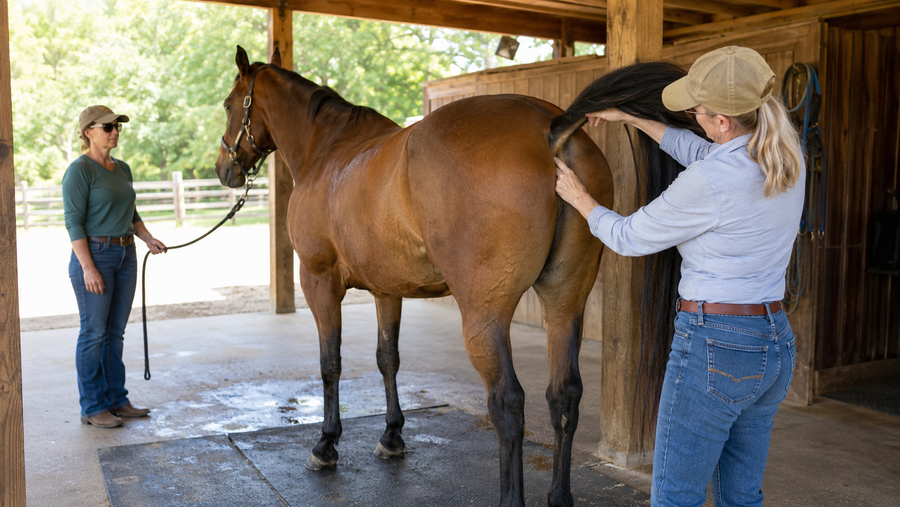
Jul 11, 2026
A practical horse-health guide to tail rubbing in hot weather, covering skin, insects, sweat, gear, parasites, hygiene, and veterinary red flags.
Read article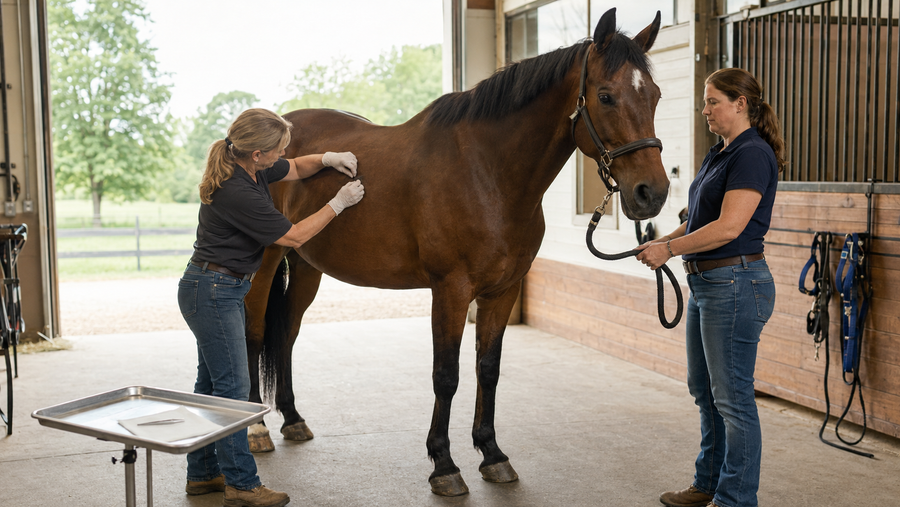
Jul 11, 2026
Found a tick on your horse? Inspect the site, remove it safely when appropriate, record the exposure, watch red flags, and know where Citraqui...
Read article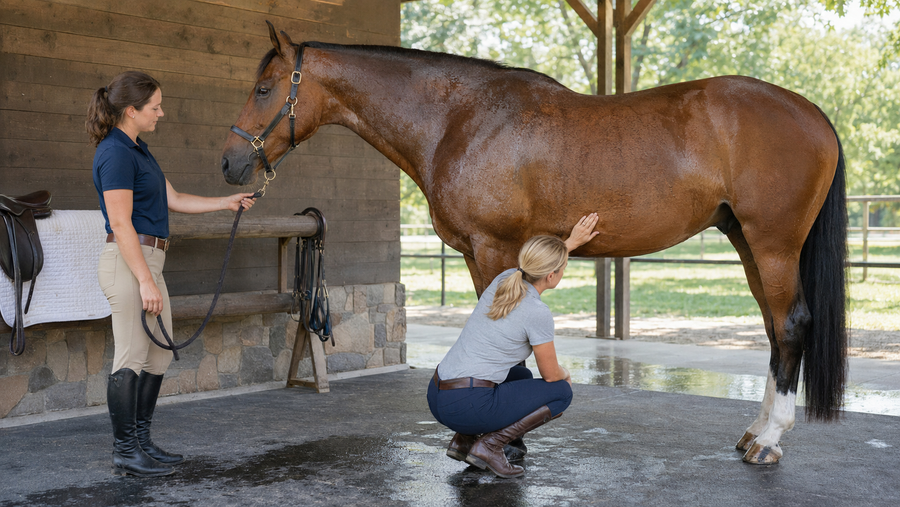
Jul 10, 2026
A practical horse health guide for belly sensitivity after summer sweat: midline checks, girth path, fly bites, skin irritation, and when to c...
Read articleStart with the principle, then build the habit. The right article should make the next barn decision easier, not more complicated.
Next Step
Simple care guides, practical product paths, and rider-trusted tools built for real horses and real routines.
Good care gets easier when the next step is obvious. Read the guide, match the routine, then choose the format that fits how your barn actually works.
Recovery Routine
Want a smarter way to think through post-ride care, heat, swelling, leg support, and daily recovery decisions? Start with the Performance Recovery Hub.
Better recovery starts with a repeatable routine. The hub gives riders a clearer path from workload to product format to aftercare timing.
Rider Favorites
Four core Draw It Out® staples riders keep close for daily recovery routines, wash rack use, targeted support, and quick barn-side care.
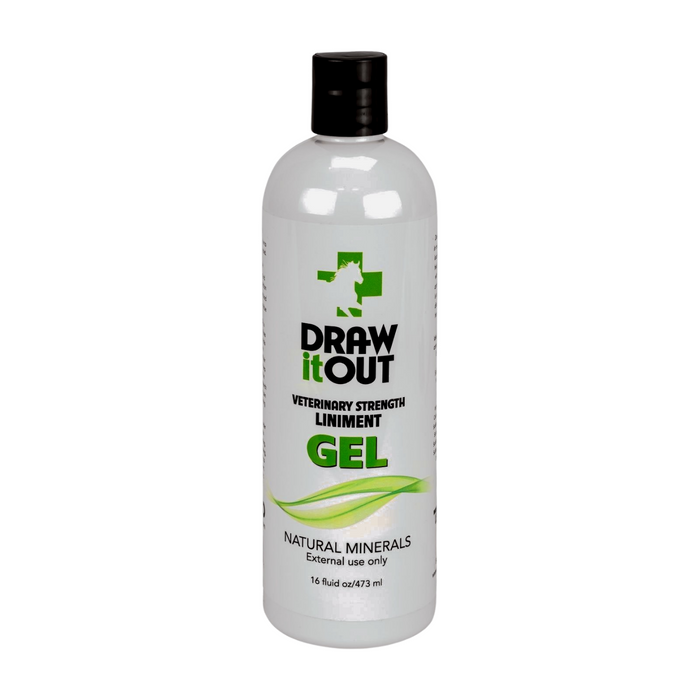
Stay-Put Gel
The everyday liniment gel format riders reach for when they want targeted, no-mess application.
View product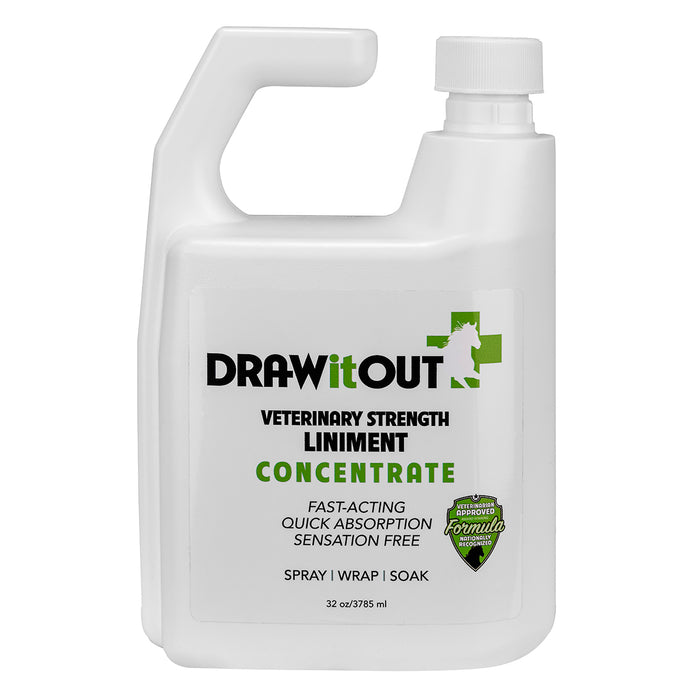
Mix Your Way
A flexible concentrate for riders who want to mix their own routine around workload and barn needs.
View product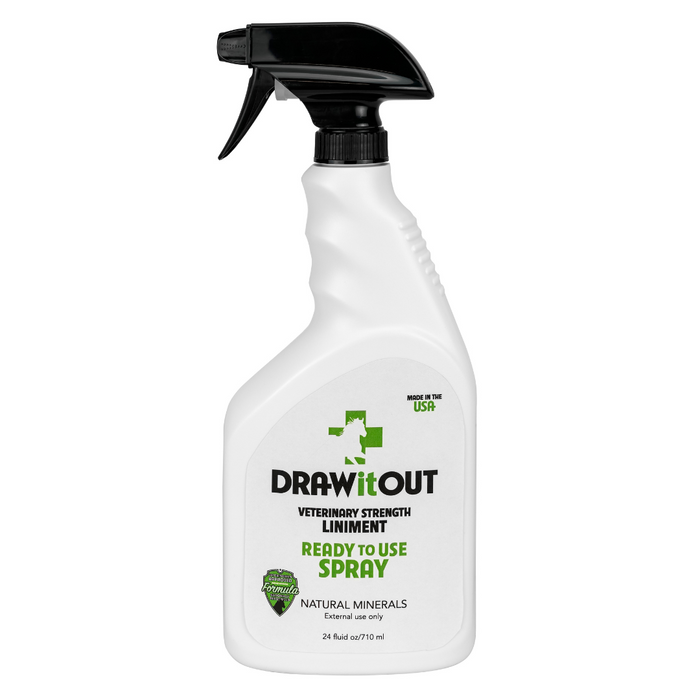
Ready To Use
A ready-to-use spray format for quick application after work, travel, turnout, or daily care.
View product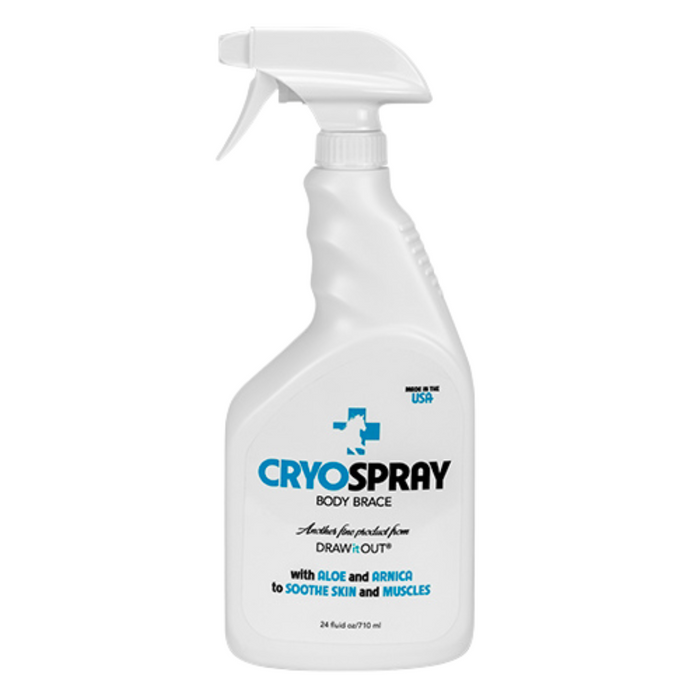
Cooling Brace
A cooling body brace spray for riders who want a fast, practical option after hard work or hot days.
View productFormat matters. Gel, concentrate, ready-to-use spray, and cooling spray each solve a different barn problem. Pick the one your routine will actually use.
!