Daily Leg Checks for Horses: A 3 Minute Guide
In three minutes a day, you can spot soreness, heat, or swelling before they turn into something serious. This is a simple, repeatable routine to check your horse’s legs the same way every time.
Why daily leg checks matter
Legs do all the work and take most of the wear. The earlier you notice a change, the better chance you have to prevent an injury from escalating.
Step by step: your 3 minute routine
1) Look
- Scan each leg from shoulder or hip to hoof.
- Compare left to right at the same landmarks.
- Check for swelling, cuts, scrapes, or asymmetry.
- Add this landmark: check elbows for new lumps, especially shod horses.
If swelling is on the point of the elbow, it may be a shoe boil or capped elbow. Start here: swelling on the point of the elbow.
2) Feel
- Run your hands down each leg.
- Feel for unusual heat, tenderness, or firmness.
- Press lightly for pitting and compare sides.
- Check tendons, fetlocks, and pasterns in the same order every time.
3) Pulse
- Palpate the digital pulse near the fetlock.
- Compare left to right.
- Strong or bounding pulse with heat or pain is a concern.
Bonus 20 seconds: lift and move
- Pick up each hoof calmly. Notice resistance or flinching.
- Walk forward a few steps on level ground.
- Any short stride, guarding, or head bob is a reason to slow down and investigate.
What you are looking for
- Heat: can point to inflammation or infection, especially if it is one sided and new.
- Swelling: common after hard work or stall rest. Cool and even is different from hot and one sided.
- Pain: flinching, guarding, or resistance when touched.
- New bumps or texture changes: may signal tendon or ligament stress.
When to act
- Usually monitor first: cool, even stocking up in both legs that improves with 15 to 30 minutes of movement.
- Call your veterinarian: heat plus pain, any lameness, wounds or drainage, fever, rapid worsening, or strong digital pulse.
First steps if skin is intact
- Cool with hose or sponge and scrape between passes.
- Recheck at 15 to 30 minutes.
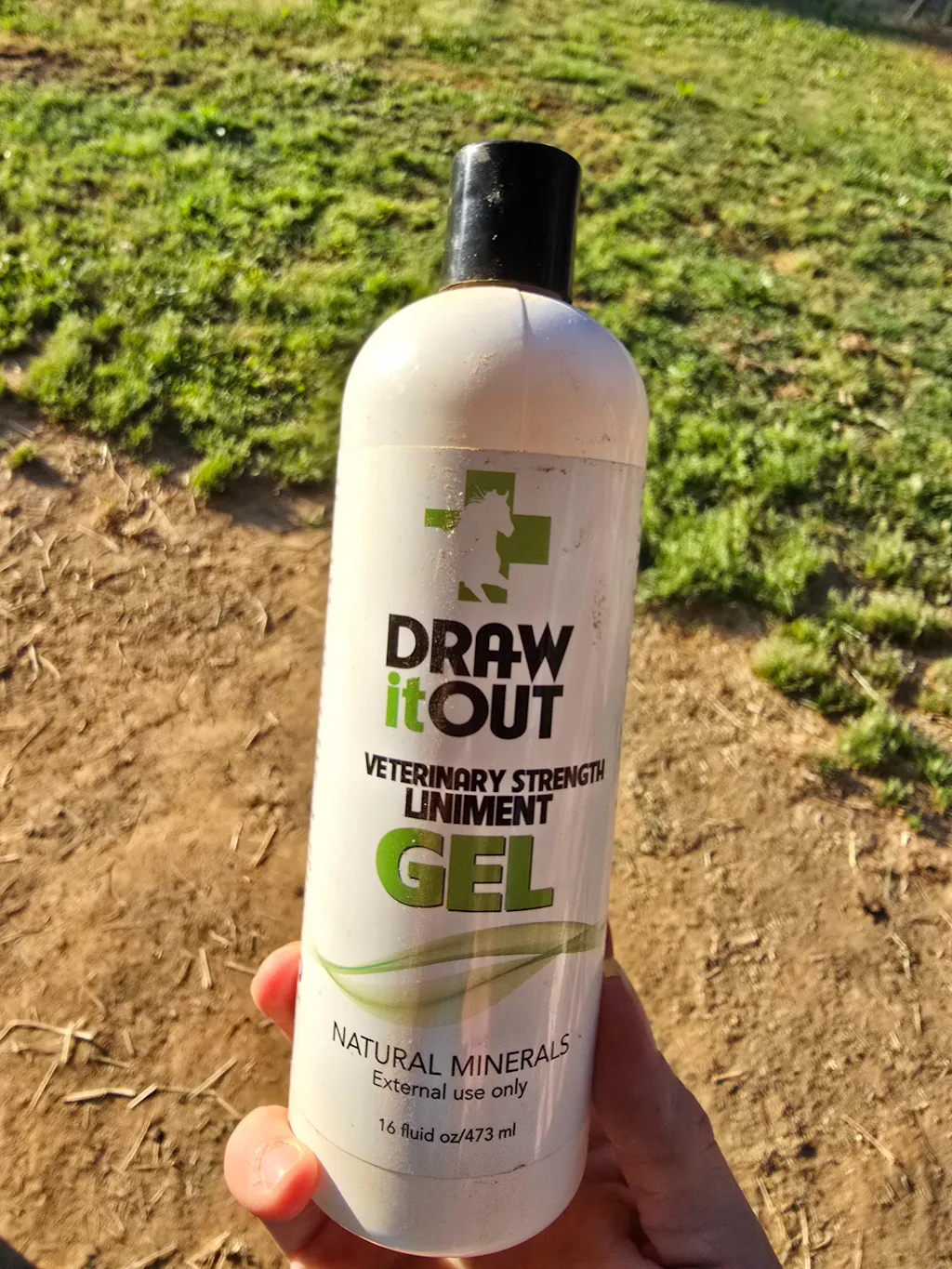
- Apply a thin layer of Draw It Out® 16oz liniment gel and let hair go dry to touch before boots or wraps.
If there are wounds, fever, or non weight bearing lameness, skip DIY beyond cooling and call your veterinarian.
Final thoughts
Checking legs is not just for pros. It is for anyone who wants to ride longer, stay sounder, and protect their horse from preventable injury.
Educational content only. Not veterinary advice. Consult your veterinarian for diagnosis or treatment decisions.