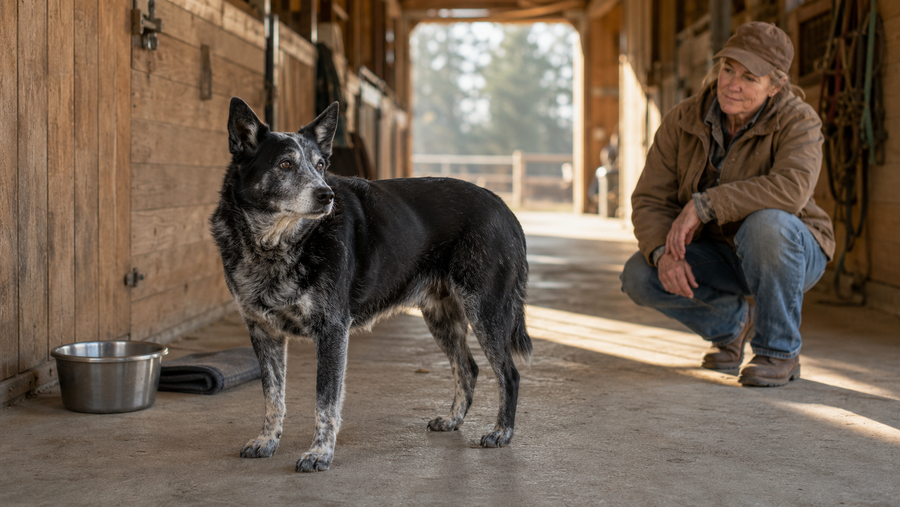
The dog who takes three tries to get off the rug at home may walk straight into the clinic. If your dog keeps getting up stiff after ordinary rest, call your veterinarian. Describe what changed, bring a short video if you can get one safely, and ask what activity is appropriate until the exam. A few easier steps on the way to the water bowl are worth reporting, too.
When to call before you reach for the camera
If your dog suddenly cannot stand, collapses, or struggles to breathe, call an emergency veterinary clinic immediately. If your dog suddenly refuses to put weight on a leg, cries out in pain, or gets worse quickly, call your veterinarian or an emergency clinic right away for guidance. A video can wait. For a dog who can walk comfortably but repeatedly struggles to rise, call your regular clinic and describe the pattern so they can advise you on timing.
Film the part the vet rarely gets to see
When your dog gets up on their own, start far enough back to keep all four feet and the bed in frame. Capture the rise and the first few natural steps on secure footing. A side view can show how your dog gets up. If they happen to walk away, keep filming for a few steps. One ordinary attempt is enough. Skip the stairs, tight turns, and repeated trips back to bed for a better take.
Tell the clinic how long your dog had been resting and whether the clip shows a typical morning or an unusually hard one. If the moment has passed, a written description still helps.
A note you can read over the phone
“Since Tuesday, after her afternoon nap, she tries twice to stand. For the first few steps she takes shorter strides behind. By the water bowl she looks more like herself. Yesterday was an ordinary day for her. I have a video. How soon would you like to see her?”
Use your own details. Mention a recent slip, fall or change in activity, any change in appetite or toileting, and any medicines or supplements your dog takes. If you cannot tell which leg is involved, say so. Describing what you saw is plenty.
Five questions to take to the appointment
-
What did you see in the video and the exam? Point out the moment that worried you. Ask which findings help explain it and what remains uncertain.
-
What movement is appropriate until we know more? Ask specifically about bathroom trips, stairs, walks, and getting into the car. Describe your home setup.
-
Would any test change the plan today? Ask what the test could tell you, what it costs, and what a reasonable recheck would look like.
-
What can I safely do for comfort? Bring the names and doses of everything your dog already takes. Check with the veterinarian before giving medication, including human pain relievers.
-
What change means I should call sooner? Before leaving, write down the warning signs, who to call after hours, and the date or condition for a recheck.
What if my dog loosens up after a few steps?
Tell your vet how long that takes and whether it happens after every nap or only occasionally. Stiffness when rising can accompany joint pain or injury. Improvement with movement alone cannot identify the cause. If your older dog also struggles for traction, our senior dog guide to getting up after rest walks through footing and bed setup. If the change followed a hard weekend, see what to watch after weekend play.
Veterinary references: Cornell’s guide to a lameness exam and AAHA on observing changes at home.