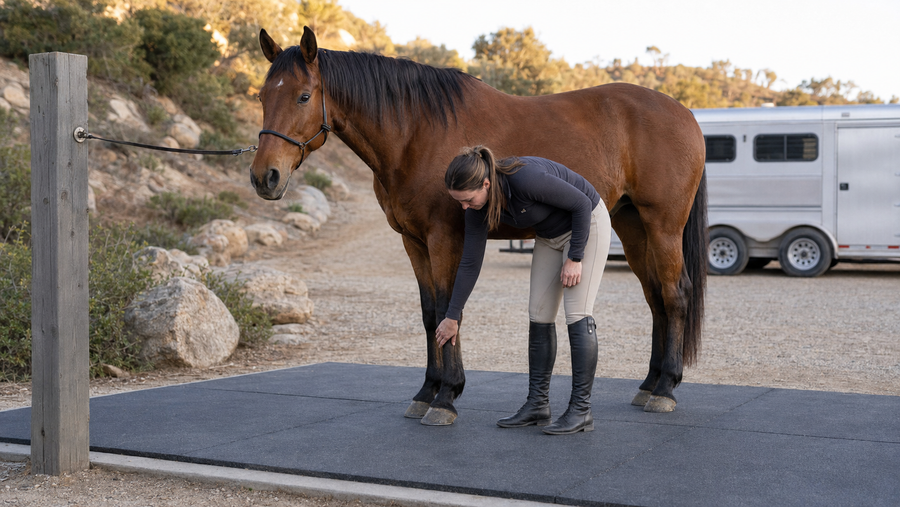
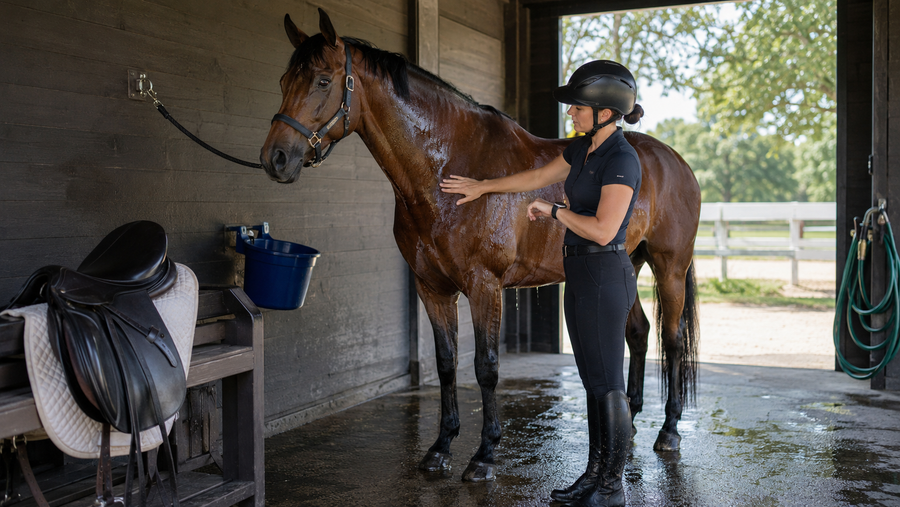
Thrush usually starts where routine slips. Wet footing, packed grooves, dirty stalls, and missed hoof cleaning create the kind of environment that lets small hoof problems become bigger ones.
Thrush Management in Horses
Thrush is one of the most common hoof problems riders run into, and one of the easiest to underestimate. It often starts as a smell, some black discharge, or a frog that looks rougher than it should. Left alone, it can turn into a bigger comfort problem fast. The good news is that thrush management is usually less about heroics and more about routine.
Thrush likes neglect, moisture, and packed debris. Better hoof habits usually do more good than panic treatments after the fact.
What thrush actually is
Thrush is a hoof infection that tends to take hold in the grooves around the frog, especially when feet stay damp, dirty, and oxygen-poor. Horses in wet turnout, dirty stalls, muddy lots, or inconsistent hoof-care routines are usually more vulnerable. It is not only a bad-footing problem. It is often a management problem too.
What riders usually notice first
- foul odor when the hoof is picked out
- black or dark discharge in the frog grooves
- frog tissue that looks soft, ragged, or eroded
- increased sensitivity when cleaning the foot
- a horse that starts protecting the foot more than usual
Why thrush keeps coming back
Because the product is rarely the only issue. Feet go back into the same wet bedding, the same packed turnout, the same missed cleaning routine, or the same overgrown shape that keeps holding debris. If the environment does not change, the hoof keeps getting asked to recover inside the same conditions that caused the problem.
What good thrush management looks like
- Pick out feet consistently, not only when they look bad.
- Get packed debris out of the frog grooves fully.
- Keep stalls, pens, and standing areas drier and cleaner.
- Stay current on trimming so the hoof does not trap more than it should.
- Use a hoof-support product that fits the real job, then keep the routine steady.
Do not separate treatment from hoof care
Thrush management works better when treatment and maintenance happen together. That means cleaning, observation, trimming, moisture balance, and daily decision-making all matter. The product helps. The routine decides whether the improvement sticks.
Where Silver Hoof EQ Therapy® fits
Silver Hoof EQ Therapy® makes sense when the goal is not only to address hoof funk, but also to support the broader condition of the foot. On the site now, it is positioned around antimicrobial protection, moisture balance, and keeping hooves strong, flexible, and easier to maintain. That is why it fits this article better than the old Gem-style insert did. It belongs inside a real hoof-care routine, not as a random product interruption.
Why prevention is still the cheaper move
Once a horse is uncomfortable, every step in the process becomes harder. Picking feet becomes a fight. Turnout gets more complicated. Work gets affected. Prevention is simpler. Cleaner feet, better footing, a more consistent schedule, and a product that supports the hoof before it gets ugly usually cost less than waiting for the smell to tell you you waited too long.
Keep the routine practical
The best hoof routine is not fancy. It is repeatable. Pick feet. Watch the frog. Notice odor early. Keep the environment drier. Stay on trim schedule. Use a product that matches the actual hoof problem. Then keep doing it long enough for the hoof to look like it belongs to a horse whose routine makes sense.
FAQ
What causes thrush in horses?
Thrush usually develops when damp, dirty, oxygen-poor hoof conditions allow infection to take hold around the frog and its grooves.
What are the first signs of thrush?
Common early signs include foul odor, dark discharge, a soft or ragged frog, and tenderness when the foot is cleaned.
Can thrush come back after treatment?
Yes. If the environment, trimming schedule, and cleaning routine do not improve, thrush often returns.
How often should I pick out hooves if I am trying to prevent thrush?
Daily is the standard. Consistent cleaning is one of the simplest ways to lower the chances of packed debris and wet buildup becoming a bigger hoof problem.
Where does Silver Hoof EQ Therapy® fit in a hoof routine?
It fits as part of a broader hoof-care plan focused on protection, moisture balance, and keeping the hoof cleaner, stronger, and easier to maintain over time.