

Heat
A warmer area along the back of the cannon bone or tendon region deserves attention, especially when compared left to right.

Bowed tendon first steps
A bowed tendon is not normal soreness. It is a serious soft tissue injury that needs veterinary diagnosis, a controlled plan, and patience. The first job is not to find a product. The first job is to stop, protect the horse, and get the right help.
Quick answer: If you suspect a bowed tendon, stop work, keep the horse quiet, contact your veterinarian, and follow their instructions. Do not ride through it. Do not massage aggressively. Do not wrap incorrectly. Do not use Draw It Out® liniment gel or any topical product as a bowed tendon treatment. After veterinary diagnosis, topical body-care products may fit only where your veterinarian says they belong.
A bowed tendon is usually associated with injury to the flexor tendon structure, often seen as swelling or a bowed appearance along the back of the cannon bone. It may happen suddenly, or it may become noticeable after work when heat, swelling, sensitivity, or a change in movement appears.
This is not the same conversation as a tired back, routine post-ride stiffness, or a horse that needs a normal cooldown. Tendon injuries are slow, serious, and easy to make worse when riders rush.
Vet-first rule: If you suspect a bowed tendon, stop work and call your veterinarian. No blog, product page, barn aisle opinion, or social media comment replaces a hands-on veterinary diagnosis.
Do not keep riding to “see if it warms out.” Tendon injuries can worsen when the horse continues working.
Limit unnecessary movement while you wait for veterinary guidance. Follow your vet’s instructions for stall rest, hand-walking, turnout, or confinement.
A bowed tendon needs professional evaluation. Your veterinarian may recommend ultrasound, controlled rest, bandaging, medication, imaging, or a structured rehab plan.
Note heat, swelling, sensitivity, lameness, when it appeared, what work the horse did, footing, and any recent workload changes.
Only a veterinarian can diagnose the injury, but riders are often the first to notice something is wrong. The key is to take early signs seriously.
A warmer area along the back of the cannon bone or tendon region deserves attention, especially when compared left to right.
A curved or thickened appearance along the tendon area can be a warning sign and should not be brushed off.
A horse that reacts to normal touch, grooming, wrapping, or palpation may be telling you the area is painful.
A shortened stride, lameness, hesitation, unevenness, or reluctance to move forward needs professional evaluation.
Compare left to right: One of the simplest barn checks is comparing both legs by sight and touch. A difference does not diagnose the problem, but it tells you to slow down and get help.
Outside appearance does not tell the whole story. A leg can look dramatic and still require imaging to understand what is actually happening inside the tendon. A leg can also look less dramatic and still involve damage that needs careful management.
Ultrasound helps your veterinarian evaluate the injury, track progress, and decide when the horse may move to the next stage of controlled activity. Without that information, rehab becomes guesswork.
That is the hard part. Tendon rehab does not care about show schedules, futurities, entry fees, or how good the horse was going last month. The structure needs time, controlled loading, and rechecks.
Many tendon rehab plans include phases of rest, controlled hand-walking, gradual exercise, and repeated veterinary evaluation. The exact timeline belongs to your veterinarian, not a chart on the internet.
| Phase | What matters most | What not to rush |
|---|---|---|
| Initial concern | Stop work, control movement, call the veterinarian | Do not ride, lunge, massage hard, or experiment with products. |
| Diagnosis | Veterinary exam and imaging when recommended | Do not assume severity from appearance alone. |
| Early plan | Rest, monitoring, bandaging, and care instructions from the veterinarian | Do not invent your own exercise plan. |
| Controlled movement | Small increases only when cleared by your veterinarian | Do not increase work because the horse “looks better.” |
| Return to work | Progressive loading, footing control, rechecks, and patience | Do not chase the old schedule before the tendon is ready. |
Tracking does not replace veterinary care, but it helps you communicate clearly. A written log is often better than memory, especially during a long rehab period.
Useful question: “Is this better, worse, or different than yesterday?” That is the daily rhythm that keeps rehab honest.
Draw It Out® liniment gel is not a bowed tendon treatment. It does not repair tendon fibers. It does not replace rest. It does not replace imaging. It does not replace veterinary direction.
Once your veterinarian has diagnosed the injury and given a care plan, topical body-care products may have a place in the broader routine only where your veterinarian says they are appropriate. That may mean surrounding body areas, larger muscle groups, or general routine support away from the injured structure. It may also mean no topical product at all near the injury.
Plain answer: Do not use Draw It Out® liniment gel as a bowed tendon cure, treatment, or shortcut. Use it only as part of a responsible care routine after veterinary guidance.
Most damage during tendon rehab comes from rushing, guessing, or trying to make the calendar more important than the tissue. The hard choices early often protect the horse later.
Your veterinarian may discuss options such as platelet-rich plasma, stem cell-based treatments, shockwave, laser, controlled exercise protocols, or other therapies depending on the horse, injury, budget, and available care. Those are veterinary decisions.
The important point is this: advanced tools do not make tendon rehab instant. They still need correct rest, progressive loading, follow-up imaging, and a rider willing to protect the long game.
Better frame: Modern therapy may support the plan. It does not replace the plan.
After the immediate injury plan is in place, step back and look at the whole horse. Footing, workload, shoeing, conditioning, warmup, cooldown, body balance, turnout, tack, and rider decisions all matter.
This is where prehabilitation becomes valuable. It is the small, boring, repeated work that helps protect future rides. It does not promise that injuries never happen. It gives the horse a better system to live inside.
Stop work, keep the horse quiet, and contact your veterinarian. A suspected bowed tendon should not be treated like normal soreness or managed by guesswork.
Common signs may include heat, swelling, a bowed or thickened appearance along the tendon area, sensitivity to touch, shortened stride, lameness, or a sudden change in movement. A veterinarian should evaluate the horse.
No. Draw It Out® liniment gel is not a bowed tendon treatment and does not repair tendon fibers. Tendon injuries require veterinary diagnosis and a controlled care plan.
Only follow your veterinarian’s guidance. Do not apply liniment gel to open skin, irritated skin, unusual heat, swelling, or a painful area unless your veterinarian specifically says it is appropriate.
Not always. Some horses return to useful work after careful diagnosis, a controlled rehab plan, and veterinary follow-up. The outcome depends on severity, location, management, discipline, and how carefully the recovery plan is followed.
Timelines vary widely. Tendon healing is slow, and the correct plan depends on veterinary diagnosis, imaging, severity, and rechecks. Do not return the horse to work based on appearance alone.
Ultrasound can help your veterinarian evaluate the injury, monitor healing, and guide return-to-work decisions. External swelling alone does not tell the full story.
Only wrap according to veterinary guidance. Incorrect bandaging can create pressure, heat, uneven support, or new problems.
A bowed tendon is where good horsemen slow down. Stop work. Call the veterinarian. Follow the plan. Protect the horse from the rider’s impatience. Draw It Out® belongs in responsible routines, not as a shortcut around diagnosis.
Start Here
This article gives you the background. If you are ready to put the idea into a real horse care routine, these are the next three places most riders should go.
Simple rule: read the article for context, use the Solution Finder for direction, then build the routine around the product format your horse will actually use consistently.
Real Barn Proof
Real riders. Real horses. Real routines. These clips rotate automatically so the proof stays fresh without weighing the page down with a long feed.
Why this matters: good horse care should make sense outside the ad. These clips show the kind of everyday use that builds trust one barn at a time.
Further Reading
Horse care works better when the next step is clear. These related reads help connect today’s topic to better daily decisions in the barn.

Apr 11, 2026
“Counterirritant” sounds technical, but most riders already know what it feels like: heat, ice, sting, or strong sensory action. This guide ex...
Read article
Apr 11, 2026
Spring footing doesn’t stay consistent long enough for hooves to adapt. That constant change creates stress you may not see right away.
Read article
Apr 11, 2026
When your horse feels completely different depending on the ground you ride on, that’s not in your head. It’s one of the clearest signals you’...
Read articleStart with the principle, then build the habit. The right article should make the next barn decision easier, not more complicated.
Next Step
Simple care guides, practical product paths, and rider-trusted tools built for real horses and real routines.
Good care gets easier when the next step is obvious. Read the guide, match the routine, then choose the format that fits how your barn actually works.
Recovery Routine
Want a smarter way to think through post-ride care, heat, swelling, leg support, and daily recovery decisions? Start with the Performance Recovery Hub.
Better recovery starts with a repeatable routine. The hub gives riders a clearer path from workload to product format to aftercare timing.
Rider Favorites
Four core Draw It Out® staples riders keep close for daily recovery routines, wash rack use, targeted support, and quick barn-side care.
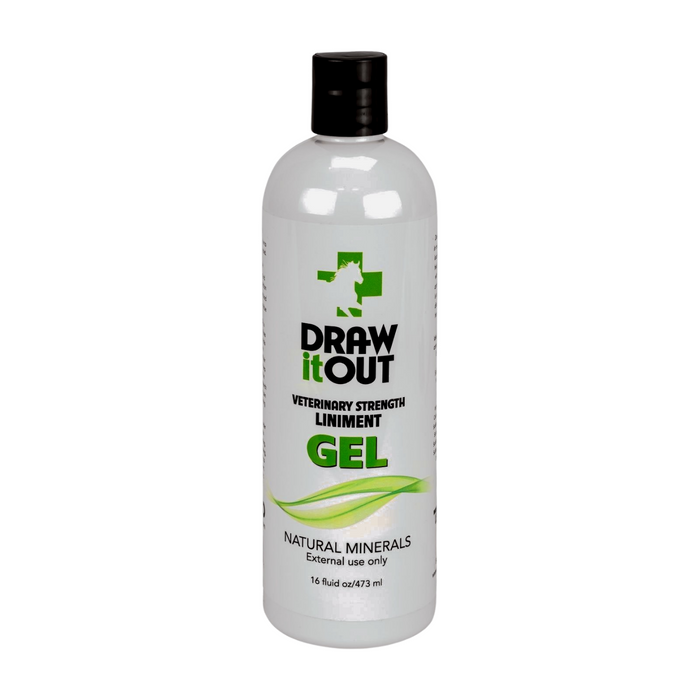
Stay-Put Gel
The everyday liniment gel format riders reach for when they want targeted, no-mess application.
View product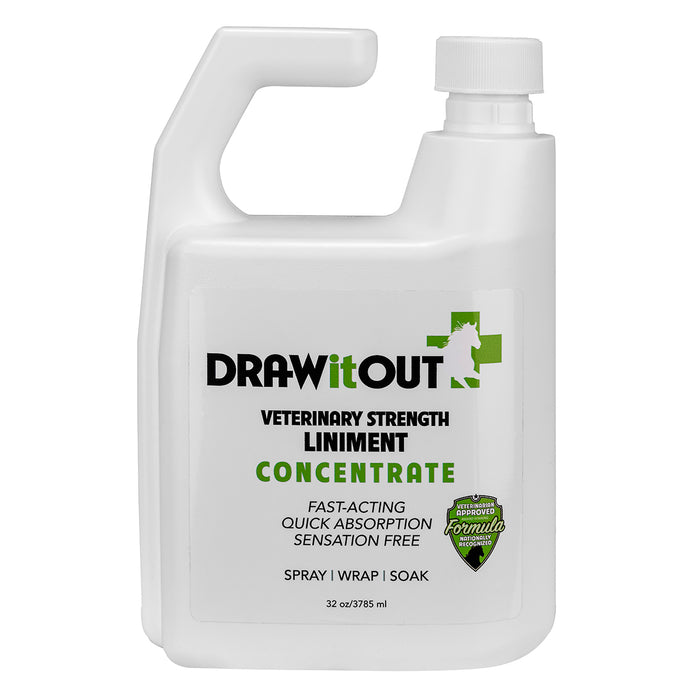
Mix Your Way
A flexible concentrate for riders who want to mix their own routine around workload and barn needs.
View product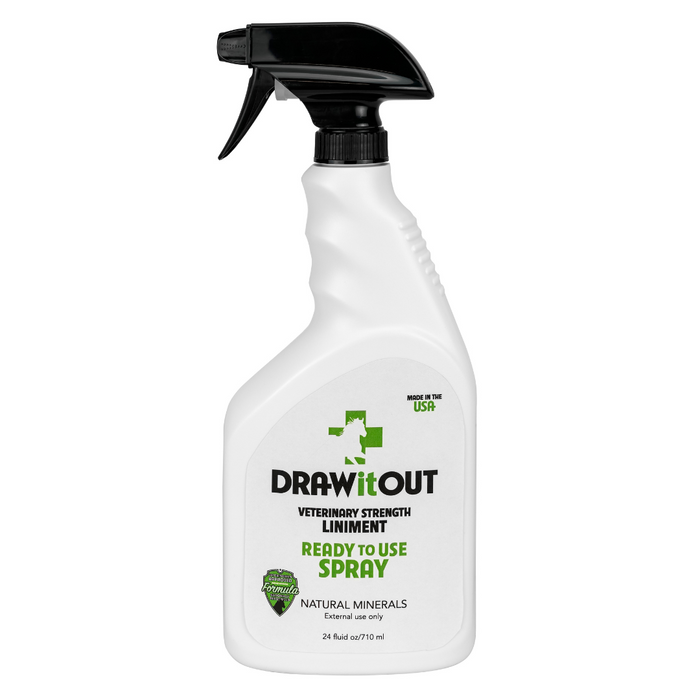
Ready To Use
A ready-to-use spray format for quick application after work, travel, turnout, or daily care.
View product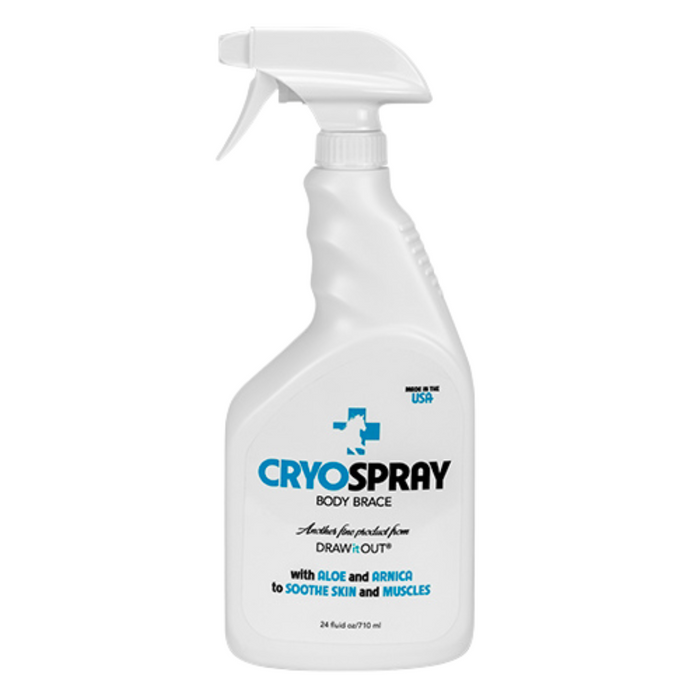
Cooling Brace
A cooling body brace spray for riders who want a fast, practical option after hard work or hot days.
View productFormat matters. Gel, concentrate, ready-to-use spray, and cooling spray each solve a different barn problem. Pick the one your routine will actually use.
!