Horse leg care guide
Daily Horse Leg Check: A 3-Minute Routine
Quick answer: A useful daily horse leg check takes about three minutes. Watch the horse walk, look at all four legs and hooves, feel each leg from top to bottom, compare left with right, and record anything that differs from the horse's normal. Check before applying any topical product so you do not cover up a change that needs attention.
A daily leg routine is not about finding something wrong every day. It is about learning what normal feels like for one horse. Once you know the usual temperature, shape, sensitivity, digital pulse, and way of moving, small changes are easier to recognize and describe to a veterinarian or farrier.
The three-minute daily horse leg check
Watch the horse move
Before touching the legs, watch the horse walk on a safe, level surface. Notice stride length, head movement, hesitation, toe dragging, and whether the horse turns comfortably in both directions. Do not force movement when the horse is clearly uncomfortable.
Look at all four legs and hooves
Stand where you can compare pairs. Look for a new change in outline, filling, cuts, rubs, mud irritation, a loose shoe, a sprung clinch, packed debris, or an uneven stance. Check both the inside and outside of each leg.
Feel and compare
Use the flat of your hand and the same light pressure each day. Move from the upper leg down across the joints, tendons, fetlock, pastern, and hoof wall. Compare the matching area on the opposite leg. Note new heat, swelling, sensitivity, or a reaction that is unusual for this horse.
Check the hoof and digital pulse
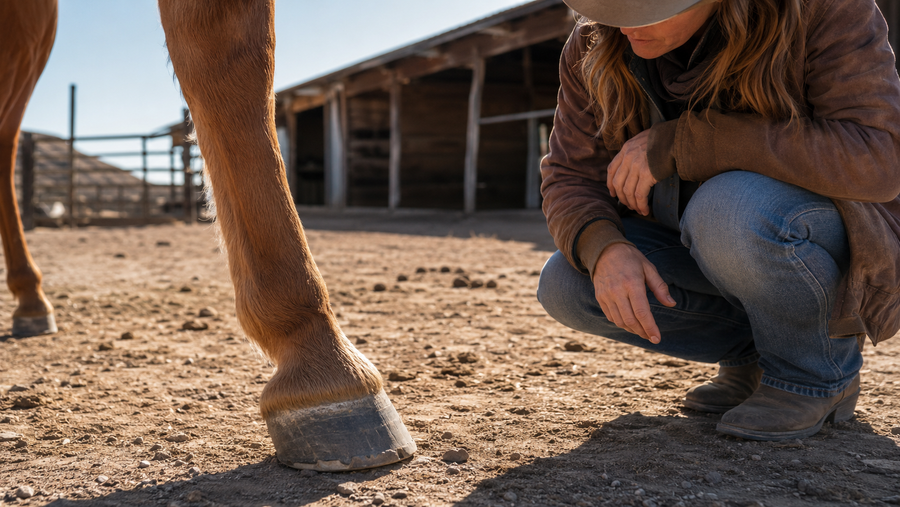
Pick out each hoof and look for stones, odor, discharge, punctures, or a shifted shoe. If you already know how to find the digital pulse, compare it with the horse's normal. A stronger pulse can be useful information, but it is not a diagnosis by itself.
Write down the change
A short note is enough: date, leg, exact location, heat, swelling, sensitivity, gait change, recent workload, footing, and whether the finding changed after rest. A photo taken from the same angle can help track the outline over time.
Check before work and after work
Before work
The pre-work check establishes today's baseline. If the horse is not moving normally, has a new wound, or shows marked heat, swelling, or sensitivity, pause the plan and investigate before riding.
After work
The post-work check shows how the horse responded to that session, surface, weather, and equipment. Compare it with the pre-work check and recheck after the horse has cooled.
Context matters. A leg may look different after hard footing, deep footing, a long trailer ride, reduced turnout, a new shoeing cycle, or a heavier-than-usual training day. The goal is not to label the cause from one sign. The goal is to notice the change and make the next responsible decision.
What deserves prompt professional attention?
Contact your veterinarian promptly when a leg change comes with:
- New or worsening lameness
- Marked heat, swelling, or pain
- A puncture, deep cut, draining wound, or injury near a joint or tendon sheath
- A suddenly stronger digital pulse with hoof pain or reluctance to move
- Fever, lethargy, reduced appetite, or abnormal behavior
- A rapidly changing problem or a finding that does not settle as expected
If you are unsure, describe what you see and feel instead of trying to name the condition. Clear observations help the professional decide how urgently the horse should be examined.
Where liniment fits after the check
Liniment can fit a label-directed grooming or post-work routine after you have checked the horse. Apply only to clean, dry, intact skin and follow the current label for amount, frequency, and use with wraps or other equipment.
Targeted placement
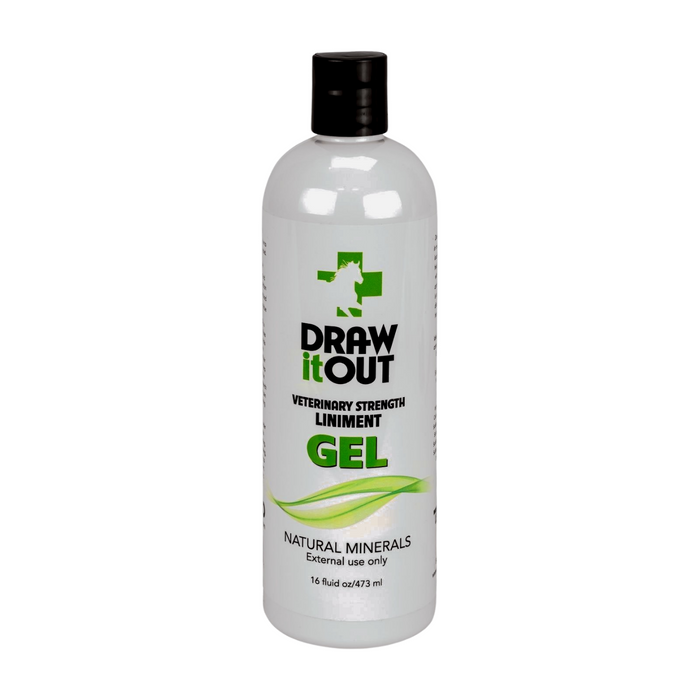
Draw It Out® 16oz High Potency Gel offers controlled placement for a specific area within a routine.
Broader routine
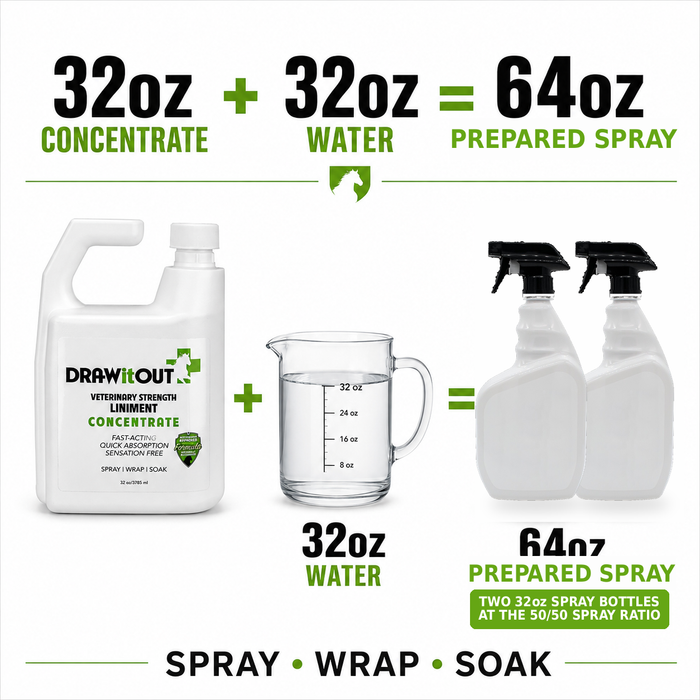
Draw It Out® Concentrate provides format flexibility. Use the current label for dilution and application directions.
Good order of operations: observe, feel, compare, decide, then apply. A topical product should support a responsible routine, not delay evaluation of lameness, a wound, marked swelling, or another concerning change.
Make the check consistent
- Check in the same order every day so you do not skip a leg.
- Use the same hand pressure and compare matching areas.
- Keep the horse on safe, level footing for the movement check.
- Record changes after hauling, hard work, deep footing, shoeing, or time off.
- Teach everyone handling the horse what findings should be reported.
For a broader routine, use the horse-care solution finder or review the Draw It Out® liniment collection. Product choice comes after the horse check, not before it.
Daily leg-check FAQ
How often should I check my horse's legs?
A brief check every day builds the most useful baseline. On riding, hauling, or competition days, checking before and after work gives better context.
Is one warm leg always an emergency?
Not always, but a new difference deserves a closer look. Compare the opposite leg and consider gait, swelling, sensitivity, hoof findings, workload, and how quickly the change developed. Call your veterinarian when the finding is marked, worsening, painful, or paired with lameness or illness.
Should I apply liniment before checking the leg?
No. Check first. You want an accurate baseline before adding a topical product, water, ice, wraps, or massage.
Can I wrap over liniment?
Only when the product label permits it and the person applying the wrap has the skill to do so correctly. Never improvise over broken or irritated skin, unexplained swelling, or a painful area.
Bottom line
The value of a daily horse leg check is repetition. Learn normal, compare all four legs, document meaningful changes, and escalate concerns early. Then choose any topical routine by the label and by what the horse needs that day.