Horse Muscle Loss and Topline Changes: What to Check First
Separate muscle loss from fat loss, record topline changes, recognize veterinary red flags, and plan nutrition and exercise around the cause.
Free U.S. shipping at $50+
No code needed.
Shipping details
A horse has a real foaling date, but some associations use a standard January 1 age date for competition and recordkeeping.
AQHA states that a horse's age is computed on the basis of January 1 for most show purposes. Other registries, racing jurisdictions, and countries may use different dates. Always check the organization governing the event instead of assuming one universal rule.
Foals, growing horses, mature athletes, and seniors have different needs. Training readiness depends on physical development, handling, workload, feet, nutrition, and behavior. Older horses may need closer body-condition, dental, mobility, hydration, and temperature management.
A birthday or foaling-date anniversary is a good reminder to review records rather than feed a sugary treat. Check vaccination and dental timing with your veterinarian, farrier schedule, weight trend, saddle fit, insurance information, emergency contacts, and the horse's workload.
Choose a calm grooming session, hand walk, turnout, photo, or favorite safe activity. Avoid decorations that flap, restrict vision, create ingestion hazards, or make the horse uncomfortable. Any treat should fit the horse's normal diet and medical needs.
Talk with your veterinarian when age is accompanied by weight loss, difficulty chewing, reduced performance, stiffness, repeated colic, drinking changes, poor hoof quality, or a sudden behavior change.
No. That depends on the registry or competition system. The horse's actual foaling date still matters for care.
Dentition can help estimate age, especially in younger horses, but it becomes less precise as horses get older.
Sources and further reading: AQHA Showing Glossary for its January 1 age rule.
This article is educational and does not replace diagnosis, treatment, or individualized advice from your veterinarian, farrier, qualified professional, or insurance adviser.
Separate muscle loss from fat loss, record topline changes, recognize veterinary red flags, and plan nutrition and exercise around the cause.
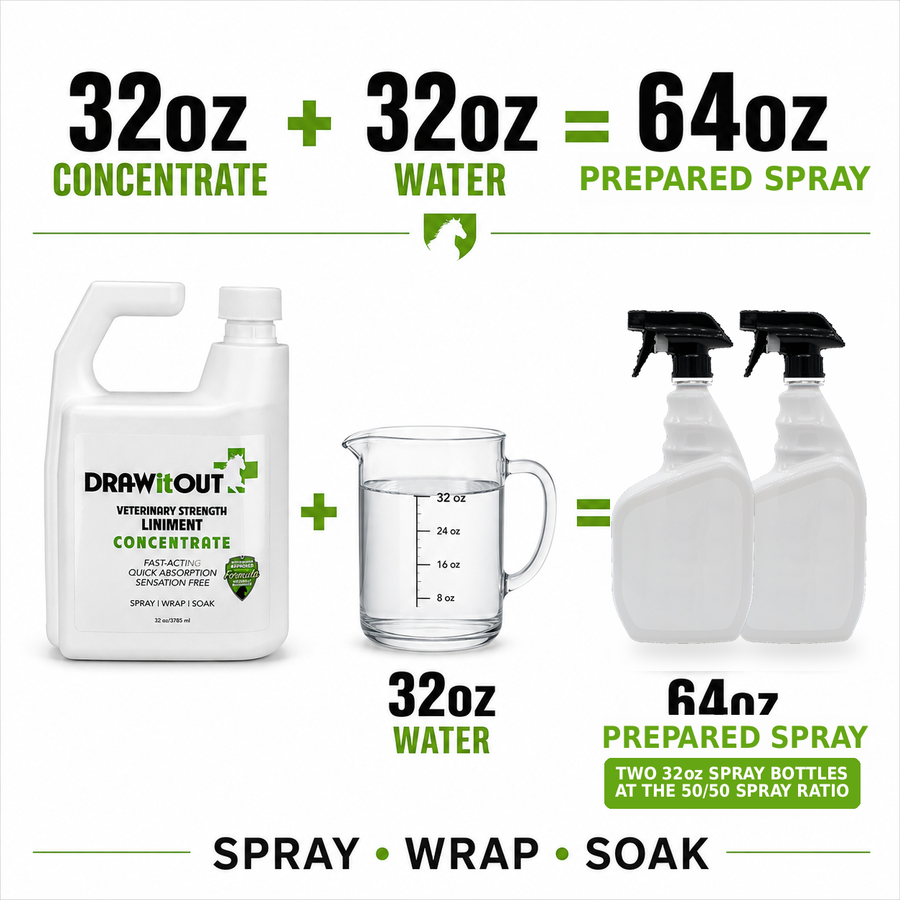
See the 32oz horse liniment concentrate math, cost per prepared ounce, mixing discipline, and the exact barn routines where concentrate earns its space.
Compare horse liniment gel and concentrate by coverage, mixing, routine, and barn size, then choose the Draw It Out® format that fits.
!