Back Soreness in Horses: Early Signs and What Riders Should Check
A sore back rarely begins and ends with one tender spot. The useful work is identifying the pattern, checking the whole horse, and knowing when to stop riding and bring in the right professional.
Quick answer
Possible signs of back soreness include flinching or guarding during grooming, resistance while saddling, a shortened stride, hollowing under the rider, reluctance to bend, trouble with transitions, or a change in willingness. Those signs can have many causes. Stop escalating the workload, compare the horse’s normal behavior, check tack and the full movement chain, and involve a veterinarian promptly when pain, lameness, swelling, neurological signs, or worsening symptoms are present.
Start with the change, not the label
“Back sore” is a description, not a diagnosis. It tells you where the horse appears uncomfortable, but it does not tell you why. The source may involve workload, saddle fit, rider balance, footing, muscle fatigue, compensation from a limb or hoof, slipping, a recent haul, or a medical issue. The mistake is deciding on a cause before completing the basic checks.
Write down what changed: the first day you noticed it, which direction or gait exposes it, whether the horse improves or worsens with movement, and what happened in the prior 48 hours. That timeline gives your veterinarian, saddle fitter, farrier, bodyworker, or trainer something useful to work with.
Early signs riders often notice
On the ground
- Flinching, dipping, guarding, or moving away from pressure.
- New sensitivity during grooming or blanketing.
- Difficulty backing, turning tightly, or stepping under.
- Changes in topline posture or muscle symmetry.
While saddling
- Pinned ears, tail swishing, biting, or moving away.
- Dropping, bracing, or holding the breath as the girth is tightened.
- New white hairs, dry spots, rubs, swelling, or uneven sweat patterns.
- A saddle that shifts, bridges, rocks, or sits differently than usual.
Under saddle
- Hollowing, rushing, bucking, crow-hopping, or refusing to go forward.
- Difficulty bending one direction or holding a lead.
- Shortened stride, poor transitions, or loss of impulsion.
- A sudden drop in performance without an obvious training explanation.
After riding
- Tenderness that remains after normal cooling and recovery.
- Heat, swelling, asymmetry, or spasm.
- Greater stiffness the next morning.
- Increasing resistance each time the horse is worked.
How to check the horse without turning it into a pain test
- Watch first. Observe the horse standing, walking, turning, backing, and lowering the head. Do not chase a dramatic reaction.
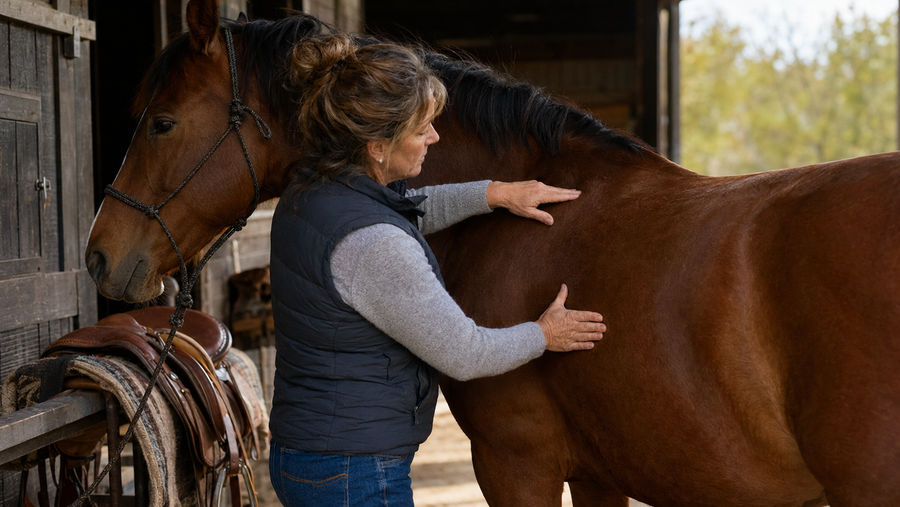
- Compare both sides. Use flat hands and consistent pressure from the withers through the topline, loin, and hindquarters. Notice asymmetry rather than trying to make the horse flinch.
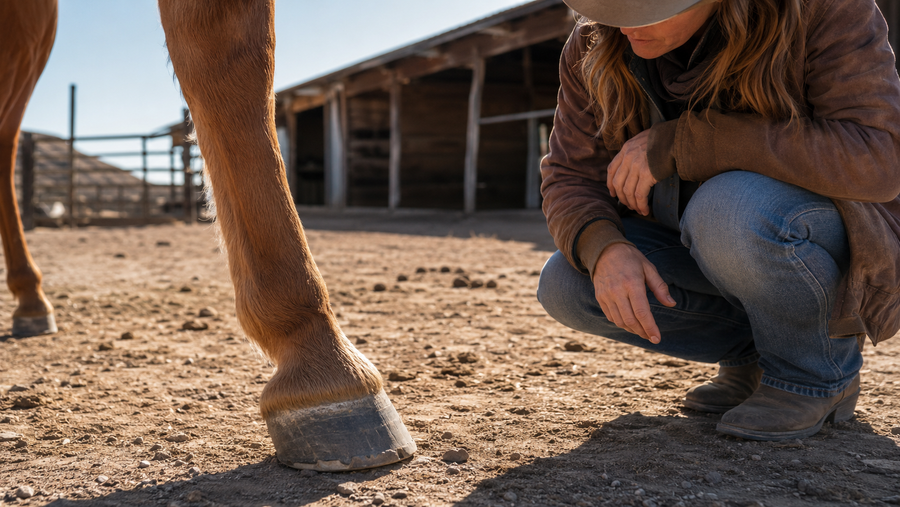
- Check the legs and feet. Back discomfort can be part of compensation elsewhere. Look for heat, filling, hoof tenderness, altered stance, or uneven wear.
- Inspect skin and coat. Rubs, scurf, insect irritation, rain-related skin trouble, or a small wound can create a response that looks deeper than it is.
- Recheck after quiet movement. If the horse is sound and no red flags are present, a brief hand walk can show whether ordinary stiffness improves or the problem becomes clearer.
Stop riding and call for help when
- The horse is lame, unwilling to bear weight, or rapidly worsening.
- There is significant heat, swelling, trauma, or an open injury.
- The horse shows weakness, stumbling, incoordination, collapse, or other neurological signs.
- Back pain is severe, sudden, recurrent, or paired with fever or systemic illness.
- The horse reacts dangerously during saddling or mounting.
- Your instincts say the situation is outside routine barn care.
Check the saddle in context
A saddle can fit last season and become wrong today. Changes in conditioning, body weight, topline development, age, flocking, pads, rider position, or even hair coat can alter how pressure is distributed. Look for symmetry, adequate clearance, balanced contact, and stability, but do not treat sweat marks alone as a diagnosis.
If back soreness repeats, schedule a qualified saddle-fit evaluation with the horse standing and moving under the actual rider. Photograph the saddle placement and note which pad, girth, and shims were used. Randomly stacking pads can make pressure worse and muddy the evidence.
Look beyond the saddle
The back links the front end, hind end, and rider. Hoof balance, hock or stifle discomfort, fatigue, deep footing, hard ground, poor warm-up, a one-sided rider, repetitive patterns, or a hard trailer trip may all change how the topline works. Treating only the tender area can miss the reason it became tender.
That is why a good plan assigns the right job to the right person: veterinarian for medical evaluation, farrier for hoof balance, saddle fitter for pressure and stability, trainer for workload and movement, and rider for honest daily observation.
What routine care can—and cannot—do
After a horse has been evaluated appropriately and a normal-care plan is clear, quiet recovery practices may support consistency: progressive warm-up, sensible workload, cool-down, hydration, turnout or hand walking when appropriate, and a topical used according to its label. Those steps help create a repeatable routine. They do not diagnose the cause, numb a warning sign, or make an unsound horse ready to ride.
Targeted topical support after the checks
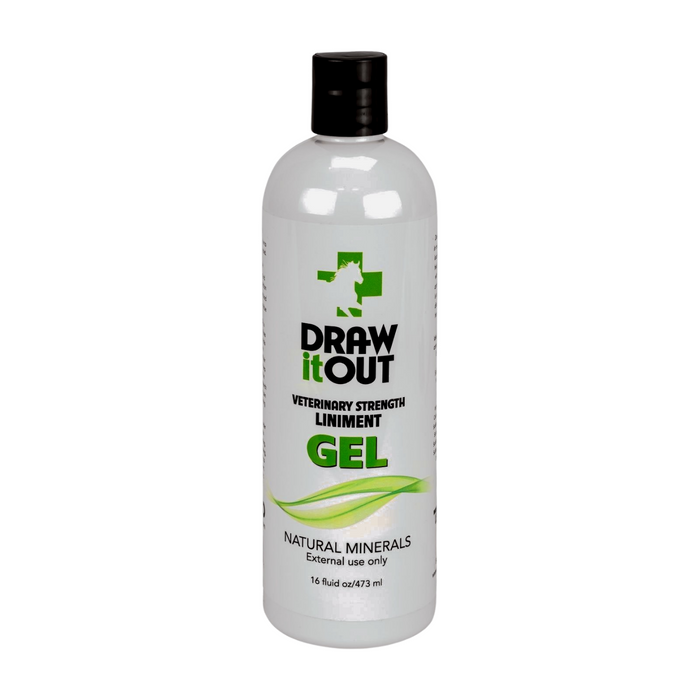
Draw It Out® 16oz Liniment Gel is the ready-to-use, stay-put format riders commonly choose when targeted placement makes sense. It is odorless, colorless, and made without menthol, camphor, capsaicin, alcohol, witch hazel, or DMSO. Use only according to the label and only after deciding that routine care—not diagnosis—is the proper lane.
See the 16oz Liniment GelUse the Solution FinderBack soreness FAQ
Why is my horse’s back sore after riding?
Possible contributors include workload, saddle fit, rider balance, footing, fatigue, compensation from another area, or a medical problem. A hands-on examination and movement assessment are more useful than assuming one cause.
Can a saddle suddenly stop fitting?
Yes. Conditioning, weight, topline, age, pads, flocking, and rider position can change fit. Recurrent soreness deserves a qualified evaluation under real riding conditions.
Should I ride a horse with a sore back?
Do not ride through unexplained pain or altered movement. Stop, assess the horse, and involve the appropriate professional. Continuing may worsen the underlying problem and teach the horse that saddling predicts discomfort.
Can topical gel fix back soreness?
A topical can fit a normal recovery routine when used according to its label, but it cannot determine or correct the underlying cause of soreness. Diagnosis and treatment belong with qualified professionals.
Get practical horse-care guidance
Join the Draw It Out® herd for rider-first notes on stiffness, hauling, skin, hoof care, and recovery routines.
Educational information only. This article does not diagnose or treat a horse and does not replace veterinary advice. Follow product labels and stop any routine if the horse reacts poorly.